Setup & Safe Storage · Guide
Can you put a gun safe in a shed? Only if you fix three things first
A detached shed is the hardest environment a safe can live in: an unheated box with no eyes on it, usually no power, and often no concrete under it. None of that is fatal, but all three need an answer.
By Mike M.Updated Researched
#adReader-supported: we may earn a commission if you buy through our links, at no extra cost to you. It never decides a ranking. How we rate · Disclosure
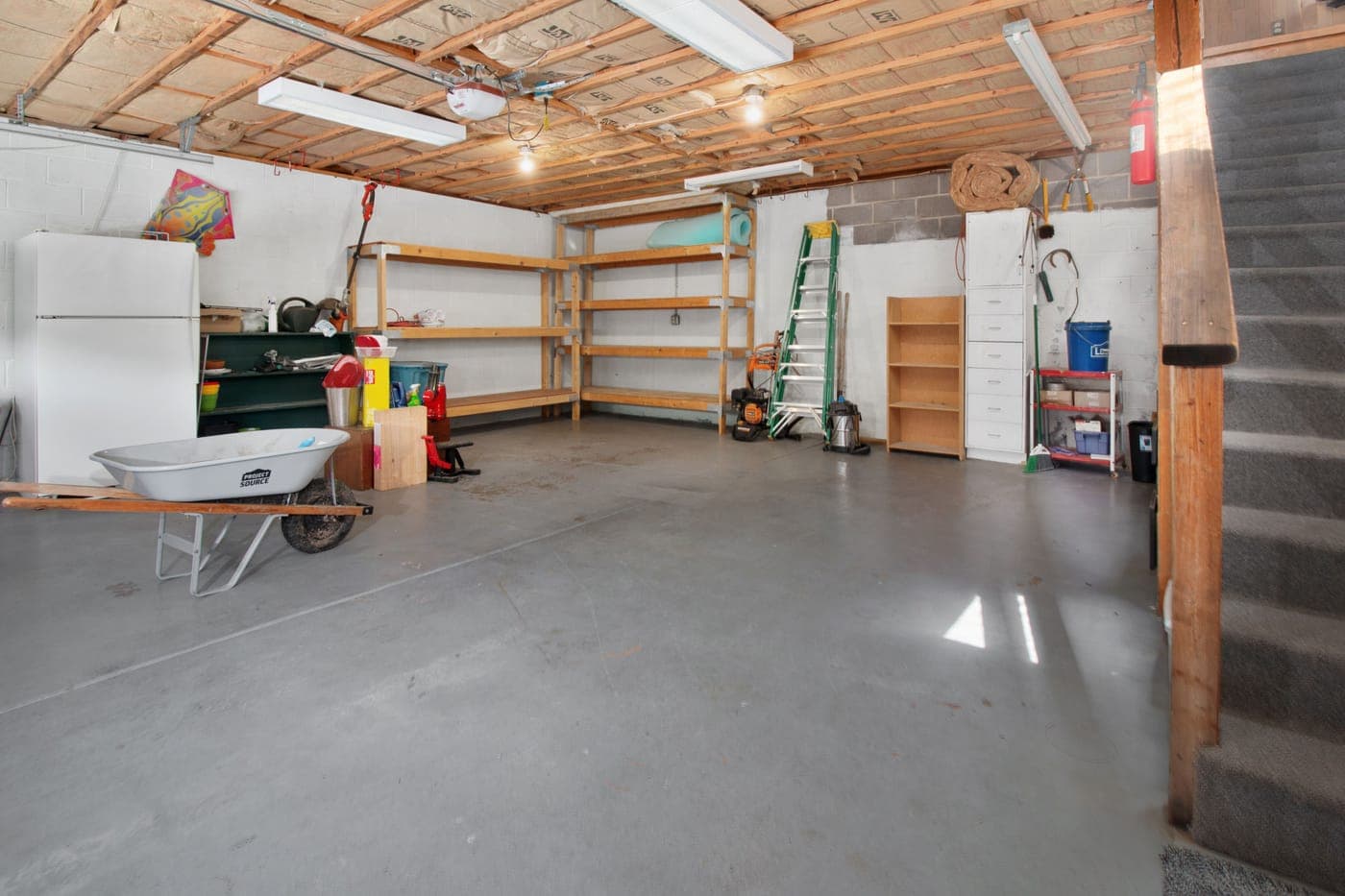
"Can a gun safe be in a shed" is a real search with a real reason behind it: houses are full, garages are full, and a shed is the space nobody else wants. It is also the one placement where every assumption a safe is designed around stops holding.
Everything below is drawn from published manufacturer guidance, government material and makers' specifications, checked 2026-10-17. Each product cited carries a dated CPSC recall search on its card. If the real question is where the safe should go, where to put a gun safe compares the options.
Problem one: the floor and the anchor
An anchor is what turns a heavy box into security, and a typical shed gives you nothing to anchor into. Timber floors on skids, plywood over joists, and paving slabs laid on sand are all common, and none of them will hold a lag bolt against a determined pull.
- Concrete pad, poured, with the safe anchored into it: acceptable. Four 3/8 inch concrete anchors at least 3 inches deep, which is the specification on the anchoring kits in our bolt-down guide.
- Timber floor over joists: marginal. You can bolt through into a joist, but the floor structure is the weak link, not the bolt, and a 500 lb safe is a point load on a floor built for a lawnmower.
- Slabs, gravel or skids: no. The safe can be walked, tipped or dragged out whole, and moisture comes up from underneath.
Weight helps but it does not substitute. The safes we document run from 115 to over 1,000 lb, and anything a shed floor can carry is also something two people with a dolly can remove. Our floor-capacity guide has the arithmetic.
Problem two: humidity, with no outlet
With no power, a warming rod is out and desiccant is in. Measure first, with a hygrometer that holds minimum and maximum readings, then size a desiccant unit on the safe's interior volume: a 750 g silica gel canister covers up to 57 cu ft and recharges in a home oven, and a rechargeable electric unit charges indoors then sits cordless in the safe. Our dehumidifier rankings list the published coverage figures and electric vs rechargeable explains the two mechanisms.
Two more things that matter more in a shed than in a house: do not store ammunition out there if you can avoid it (see how to store ammo long term), and visit the safe on a schedule rather than when you need something, because the point of a min/max hygrometer is that somebody reads it.
Problem three: nobody is in earshot
A safe in a bedroom closet is protected by the house: locked doors, occupancy, noise, neighbours. A detached shed removes all of that. An attacker gets unlimited quiet time with the door, which changes what the safe has to be:
- A burglary listing stops being optional. A UL Residential Security Container listing means the design resisted a timed hand-tool attack (UL's notice); see UL RSC explained and the listed safes.
- A mechanical lock is the better choice. Nothing to go flat in a place you visit rarely, and nothing for cold to affect. See electronic vs mechanical locks.
- Concealment is worth something here. No visible brand box in the recycling, no shed window with a safe in view, and nothing about the shed that says it is worth opening.
It is worth being honest that secure storage is the point of all of this. RAND's review of personal firearm storage is a useful starting point on what the practice is for, and a shed is the placement that most erodes it.
Fire in an outbuilding
The one place a shed is arguably no worse: fire. It is detached, so a house fire may not reach it, and an outbuilding fire may not reach the house. The counterpoint is that a light timber structure burns fast and collapses onto its contents, and a fire rating describes a safe in a furnace rather than under a fallen roof. FEMA's published statistics on garage and outbuilding fires are a sobering read on how these start: stored fuels, tools and electrical faults, which is exactly what sheds contain.
Practical conclusion: do not keep petrol, two-stroke cans, batteries on charge or a mower in the same outbuilding as a safe full of firearms. Our gun safe fire ratings page covers what the rating does and does not promise.
What to buy if it has to be the shed
Our picks for this
A shed-specific shortlist
One safe with a published water claim, one with a burglary listing and a mechanical-dial option, and the two items that make an unpowered location survivable.
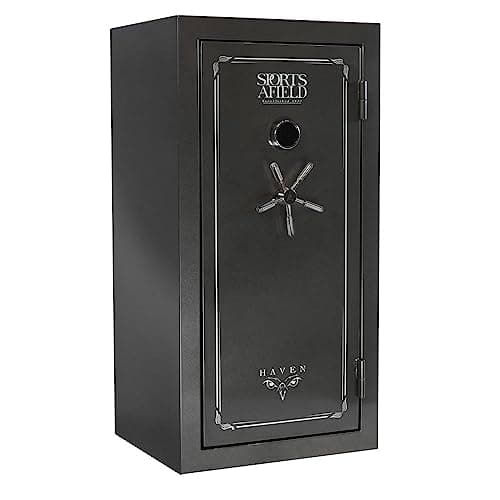
Best for flood-prone basements (maker water claim)
Sports Afield Haven SA5930HX
Access box5.0/10The only gun safe in our registry with a published water claim ('waterproof in 2 ft for 7 days', maker-stated), with a waterproof bolt-down kit included and a warranty that names natural flood.
Check price · Amazon#ad · Price as of October 19, 2026 · Disclosure for the link to Sports Afield Haven SA5930HX
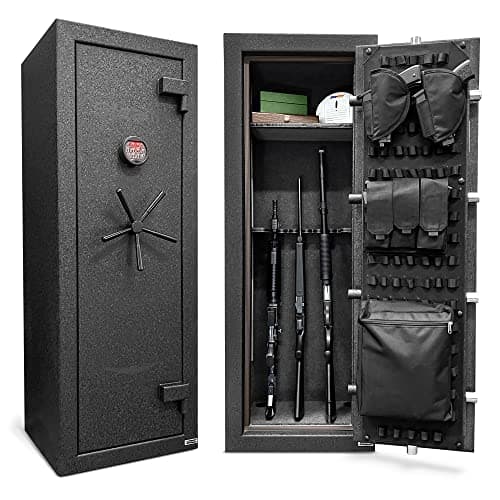
Best compact UL RSC gun safe
Stealth UL14
UL RSC7.4/10A UL-listed Residential Security Container at 365 lb and 20 in wide, with a mechanical dial available as an upgrade. The listing is what you want where nobody is in earshot.
Check price · Amazon#ad · Price as of October 19, 2026 · Disclosure for the link to Stealth UL14
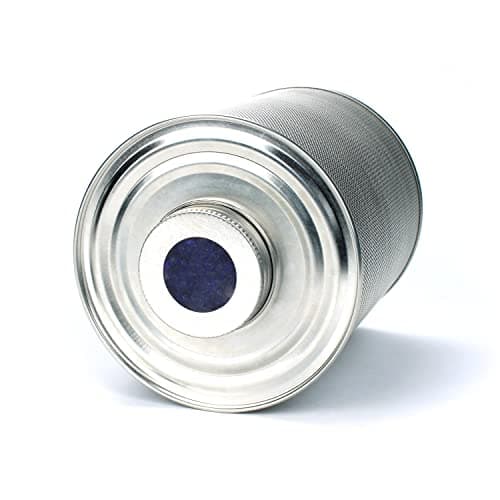
Best no-power silica gel option
Hydrosorbent SG-750 Silica Gel Canister (750 g)
Accessory5.8/10750 g of indicating silica gel for up to 57 cu ft, oven-rechargeable. In a shed with no outlet this is the humidity plan, not an accessory.
$72.77Amazon#ad · Price as of October 19, 2026 · Disclosure for the link to Hydrosorbent SG-750 Silica Gel Canister (750 g)
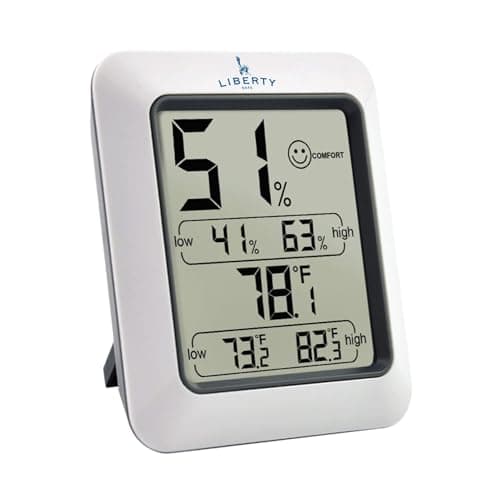
Best in-safe hygrometer
Liberty Safe Humidity and Temperature Monitor
Accessory7.3/10An in-safe humidity and temperature reader. Fit it the day the safe arrives and read it every visit, because a shed's numbers are not the house's.
$16.00Amazon#ad · Price as of October 19, 2026 · Disclosure for the link to Liberty Safe Humidity and Temperature Monitor
The Sports Afield Haven and the Stealth UL14 pull in different directions, and which matters more depends on your shed: a damp floor and a leaky roof argue for the water claim, a quiet lane and no neighbours argue for the listing.
Better options, in order
- An interior closet. Conditioned, concealed, and framing to anchor into. See best gun safes for a closet.
- An attached garage. Slab to bolt into and a shared wall with the house, with the humidity problem still to solve: best gun safes for a garage.
- A basement, off the slab. Stable temperature, manageable humidity, excellent floor.
- A smaller safe indoors plus a cabinet outside. Keep the firearms in the house and the bulky, less sensitive kit in the shed.
- The shed, done properly. Concrete pad, anchored, listed safe, mechanical lock, desiccant and a hygrometer you actually read.
The checklist
- Is there a concrete pad, and can I anchor into it?
- Can the route take the safe, and the floor take the load?
- Mechanical lock, or a battery I will remember in an outbuilding?
- Desiccant sized to the interior, plus a min/max hygrometer?
- Is the shed storing fuel, chargers or a mower? Move them or move the safe.
- Does anything visible from outside suggest what is in there?
How we scored this
Every pick, checked against the paperwork
Here is exactly what goes into a score: whether an independent lab listed the safe (UL for burglary under UL 1037, UL or Intertek for fire), the maker's published steel, lock and bolt-down specs, the owner's manual, a dated CPSC recall search, and a public rubric applied the same way to every safe. Every figure links to where it came from, so you can confirm the pick in a couple of clicks and buy with confidence.
Scores are our editorial judgment of that documented evidence. Commissions never set a score or decide a pick. The rubric and its weights are published.
Questions
Frequently asked
Can a gun safe be stored in a shed?
Will a gun safe rust in a shed?
Is a garage better than a shed for a gun safe?
How do you secure a safe in a shed with no concrete?
Does a shed's temperature swing damage firearms?
Keep reading
Related on Bolt & Vault
- Where to put a gun safeEvery placement compared, with the trade-offs stated.
- Best gun safes for a garageThe nearest comparable environment, with a slab to anchor into.
- Are gun safes waterproof?What the one water claim in this category actually says.
- Gun safe humidity levelsThe target range and how to hold it without power.
- How to bolt down a gun safeAnchoring into a pad, and what not to bolt into.
Receipts
Sources
- EPA — a brief guide to mold, moisture and your home (condensation on cold surfaces)
- Liberty Safe — the impact of humidity on firearms (maker guidance)
- FEMA / US Fire Administration — published statistics on garage and outbuilding fires (PDF)
- SA Consumer Products — Sports Afield Haven SA5930HX: maker water claim and bolt-down kit (checked 2026-10-17)
- Stealth Safes — UL14: UL RSC listing, mechanical dial option, weight (checked 2026-10-17)
- Hydrosorbent — rechargeable silica gel range and published coverage figures
- Liberty Safe — humidity and temperature monitor product page (checked 2026-10-17)
- UL — Residential Security Container Standard Revised (UL 1037 RSC levels)
- RAND — research review on personal firearm storage practices
- CPSC — recall database searched per brand on this page
Every figure above is traceable. Ratings come from the listing body or the maker's own spec pages (linked on every product), recall status from dated CPSC searches, and law summaries from official sources. Prices come live from Amazon so the number you see is the number you pay. Read the full method.