Safe Ratings Explained · Guide
Gun safe fire ratings: who measured the number on the sticker?
Nearly every gun safe sold in America advertises a fire rating, and nearly none of those ratings came from an independent laboratory. Here is how to tell the difference, and what the figure covers even when it is real.
By Mike M.Updated Researched
#adReader-supported: we may earn a commission if you buy through our links, at no extra cost to you. It never decides a ranking. How we rate · Disclosure
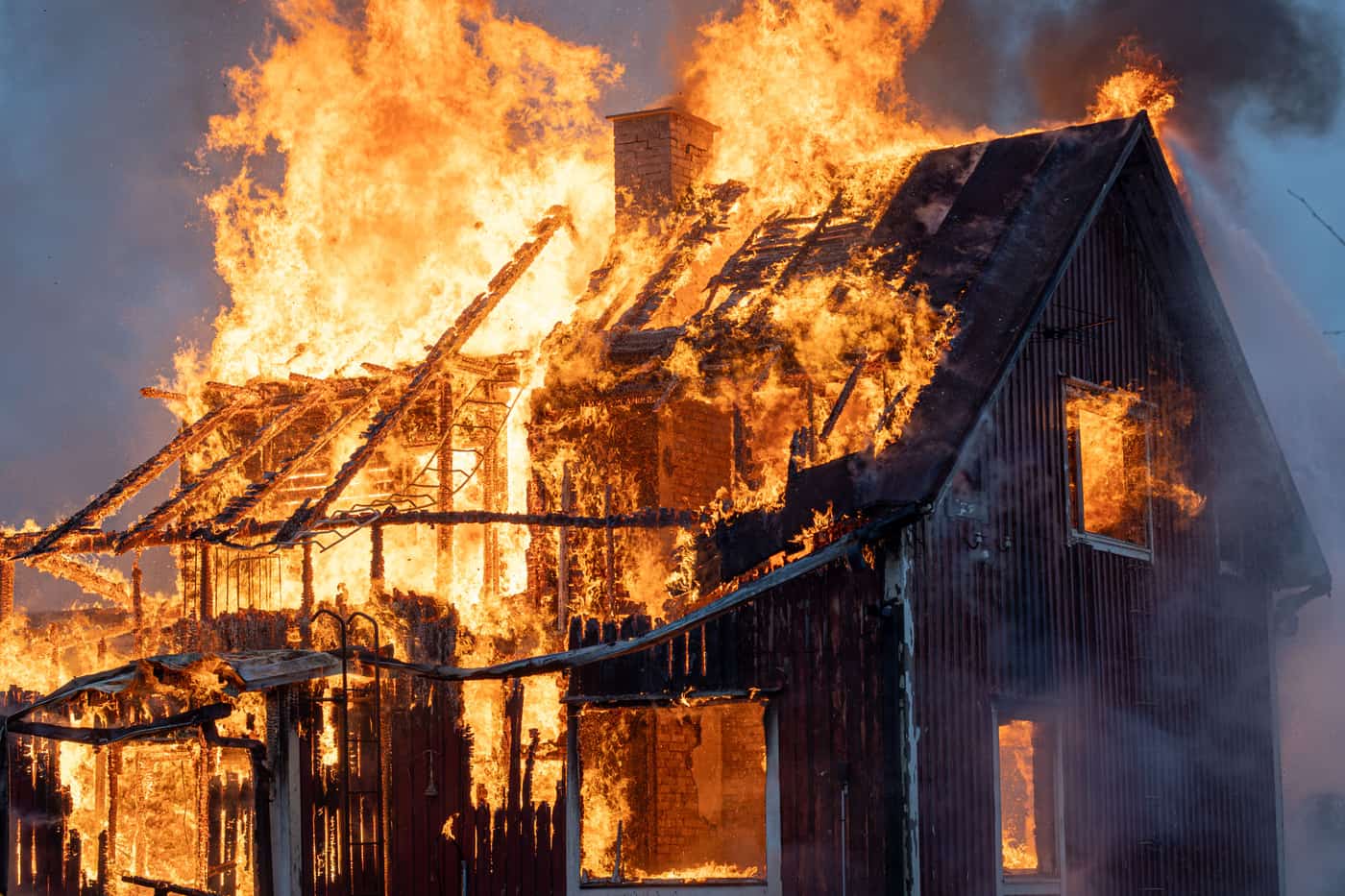
"Gun safe fire rating" is one of the most-searched phrases in this category, and the honest answer is awkward: the ratings exist, they are usually not fabricated, and they are also usually not comparable. Two safes advertising 60 minutes may have been measured on different furnace curves, to different interior temperature limits, by people with different incentives.
We do not test safes. Everything below is drawn from manufacturers' published specifications and the certification bodies' own descriptions of their marks, checked 2026-10-17. Each product we cite carries a dated CPSC recall search on its card.
The short version
Why gun safes so rarely carry a UL fire class
A gun safe is a large box that has to resist prying. Document safes achieve their fire classes with poured amalgamate or thick gypsum in a small, sealed shell; a gun safe uses one or two layers of fireboard inside a formed steel body with a door gap big enough to swing a 500 lb door. Getting a large body through a UL 72 classification is expensive, and the market does not reward it: buyers compare minutes, not classes.
So brands test in-house and advertise the result. That produces the pattern you see across our registry: the same brand will have a UL-listed lock and a UL RSC burglary listing and still describe its fire performance in its own words. Liberty is the clearest example, calling the Franklin's 110-minute figure "certified" without naming who certified it.
Comparing claims side by side
That table contains the whole argument of this page. The AMSEC BFX6030 claims 120 minutes at 1,200°F and says ETL verified it. The Hollon Republic RG-22 claims 120 minutes at 1,400°F, a higher temperature, and names nobody. The Steelwater HD593924 goes further still, 2 hours at 1,875°F, also unverified.
Read that the way a buyer should: the unverified numbers escalate because nothing stops them escalating. That is not an accusation against any particular company, it is what happens in a market where the measurement is self-reported. When the figure is verified it tends to be more modest, and the modest verified figure is worth more.
How to check a fire claim yourself, in two minutes
- Find the sentence, not the badge. On the maker's own product page, look for who performed the test. "UL classified," "ETL verified" and "tested by Intertek" are claims about a third party. "Certified," "verified," "tested" and "rated" on their own are not.
- Check the temperature and the interior limit. A rating with a duration but no furnace temperature is not a rating. One Hollon series page in our registry states 75 minutes with no temperature at all.
- Search the certifier's directory. UL's certifications database and Intertek's ETL Verified directory are public. If a listing exists, it is findable.
- Ignore the fire picture on the listing. Stock imagery of a safe in flames is marketing, and an unverified claim with a dramatic photo is still unverified.
What a gun safe fire rating covers, even when it is real
A fire rating is a statement about interior air temperature over time. Four things it does not tell you, all of which matter in a real house fire:
- What the walls reach. The rating is measured at points inside the interior; the inner surface of the wall runs hotter. Contents pressed against the walls do worse than contents in the middle.
- What water does. Firefighting puts a great deal of water into a house, and almost no gun safe carries a water rating. See are gun safes waterproof.
- What happens if the floor fails. Document safes are sometimes impact tested; gun safes almost never are. A safe on a ground floor above a basement may end up in the basement.
- Whether the lock survives. An electronic lock is a circuit board and a motor on the outside of a hot door. A safe can hold its interior temperature and still need drilling to open afterwards.
The deeper point is the one we make in are fireproof safes really fireproof: no safe is fireproof, every rating is a clock, and how long you need depends on your house, your contents and how fast your fire service arrives.
Safes in our registry with a verified fire rating
Our picks for this
Verified first, then the honest unverified ones
The first two carry ETL-verified fire ratings; the second two are the strongest unverified claims in our registry, included so you can see what the difference looks like on a spec sheet.
- American Security (AMSEC)No image
Best for independent burglary and fire ratings
American Security BFX6030
UL RSC9.1/10ETL-verified 120 minutes at 1,200°F, plus a UL RSC Level 1 burglary listing. The strongest fire evidence on any gun safe we document.
Check price · Amazon#ad · Price as of October 19, 2026 · Disclosure for the link to American Security BFX6030
- American Security (AMSEC)No image
Best for independently verified fire protection
AMSEC SF6030
Access box6.4/10ETL-verified 60 minutes at 1,200°F on a 12-gauge body with a 3/16 in plate door. No burglary listing, and dealer-sold rather than Amazon.
Check price · Amazon#ad · Price as of October 19, 2026 · Disclosure for the link to AMSEC SF6030
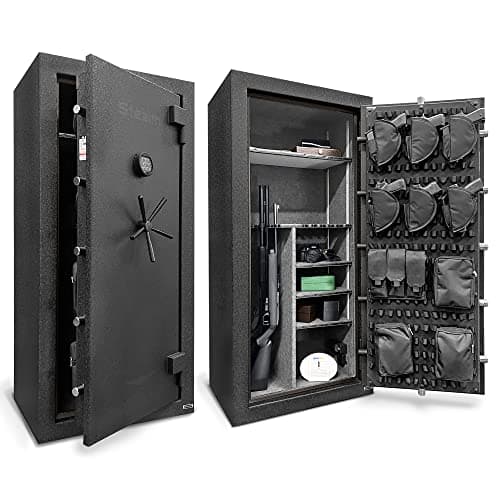
Best overall: a UL RSC with room for a collection
Stealth UL28
UL RSC7.5/10A UL RSC burglary listing with a maker fire claim of 60 minutes at 1,200°F and an interior limit of 350°F stated. No lab named.
$1,799.99Amazon#ad · Price as of October 19, 2026 · Disclosure for the link to Stealth UL28
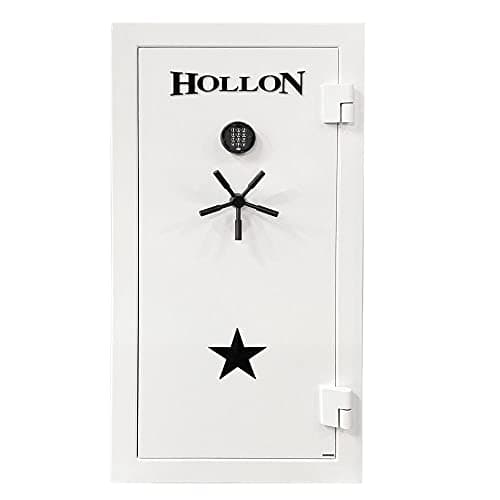
Best for thick plate steel
Hollon Republic RG-22
Access box5.5/10A 3-gauge plate door and a 120-minute claim at 1,400°F. The thickest door steel here and the fire figure names nobody.
$3,032.00Amazon#ad · Price as of October 19, 2026 · Disclosure for the link to Hollon Republic RG-22
What a fire rating means for ammunition in the safe
This is the question buyers ask least and should ask most. SAAMI's published storage recommendations are for cool, dry storage in original cartons, away from heat sources, and a safe interior in a house fire is the opposite of cool. Two practical consequences:
- Do not treat the fire rating as permission to store large quantities of ammunition in the safe. The rating describes the interior temperature, not what the contents do at that temperature.
- Keep ammunition in sealed cans, separately where you can, which is also the right answer for humidity and for child access. See how to store ammo long term and best ammo storage.
The checklist
- Who tested it? Name a lab or treat it as a maker claim.
- What temperature, for how long, to what interior limit?
- Is there a burglary listing as well, and is it a UL RSC? Fire and theft are separate tests.
- Is there any water rating? Almost certainly not, so plan for it.
- Will the papers go in a UL-classified chest inside the safe instead? Usually the better answer.
If you want the shortlist rather than the method, best fireproof gun safes ranks the category on exactly this evidence, and fire rating vs burglary rating explains why one safe rarely leads on both.
How we scored this
Every pick, checked against the paperwork
Here is exactly what goes into a score: whether an independent lab listed the safe (UL for burglary under UL 1037, UL or Intertek for fire), the maker's published steel, lock and bolt-down specs, the owner's manual, a dated CPSC recall search, and a public rubric applied the same way to every safe. Every figure links to where it came from, so you can confirm the pick in a couple of clicks and buy with confidence.
Scores are our editorial judgment of that documented evidence. Commissions never set a score or decide a pick. The rubric and its weights are published.
Questions
Frequently asked
What is a good fire rating for a gun safe?
Are gun safe fire ratings UL certified?
Is a 1,200 degree rating worse than a 1,400 degree rating?
Will a gun safe protect documents in a fire?
Does a gun safe fire rating cover the lock?
Keep reading
Related on Bolt & Vault
- Safe fire ratings explainedThe UL 72 classes in full, including what each one protects.
- Are fireproof safes really fireproof?Why every rating is a clock rather than a property.
- Is a 30 minute fire rating enough?How to pick a duration for your own house.
- Best fireproof gun safesThe category ranked on who verified the rating.
- Are gun safes waterproof?The other half of a house fire, and the rating almost nobody has.
Receipts
Sources
- Safe & Vault Store — published explanation of the UL fire classes (Class 350 / 150 / 125)
- Intertek — what the ETL Verified mark means
- Intertek — ETL Verified mark directory (public search)
- UL Solutions — product sourcing and certifications database (public search)
- American Security (AMSEC) — BFX6030 via the Internet Archive: ETL-verified 120 min at 1,200°F
- American Security (AMSEC) — SF6030 via the Internet Archive: ETL-verified 60 min at 1,200°F
- Stealth Safes — UL28 product page: maker fire claim with a stated 350°F interior limit (checked 2026-10-17)
- Hollon Safe — 2 Hour Republic series: 120-minute claim at 1,400°F with no lab named (checked 2026-10-17)
- Steelwater Gun Safes — HD593924: 2-hour claim at 1,875°F with no lab named (checked 2026-10-17)
- Liberty Safe — Franklin 29: 110-minute figure described as certified with no certifier named (checked 2026-10-17)
- SAAMI — Recommendations for Safe Ammunition Storage and Handling
- CPSC — recall database searched per brand cited on this page
Every figure above is traceable. Ratings come from the listing body or the maker's own spec pages (linked on every product), recall status from dated CPSC searches, and law summaries from official sources. Prices come live from Amazon so the number you see is the number you pay. Read the full method.