Home & Fire Safes · The rankings
Best burglary safes: no safe is burglar proof, so buy the rating
"Burglar proof" is a marketing phrase with no standard behind it. A UL RSC listing means one person with hand tools failed for five minutes. TL-30 means thirty minutes against power tools. Almost everything else means nothing was measured.
By Mike M.Updated Researched
#adReader-supported: we may earn a commission if you buy through our links, at no extra cost to you. It never decides a ranking. How we rate · Disclosure
Quick picks
The rankings at a glance
| # | Product | Best for | Score | Price |
|---|---|---|---|---|
| 1 | AMSEC BF1512 The only safe in our registry carrying both a UL RSC Level I burglary rating and a UL-attributed 60-minute fire rating, behind a 1/2 in solid steel plate door. 288 lb for a small interior, and dealer-sold rather than an Amazon buy. | Best burglary safe overallUL RSC | 7.1 /10 | Check price · Amazon |
| 2 | 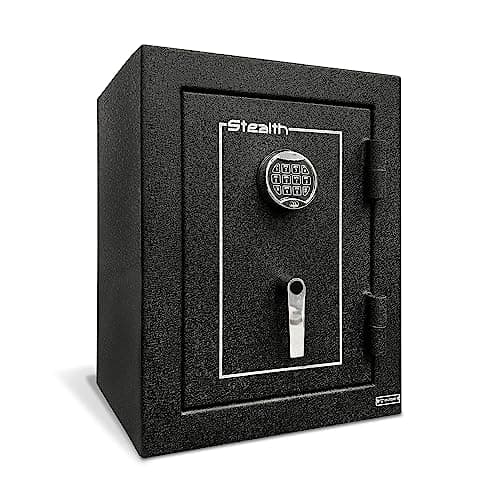 Stealth HS4 Stealth states a UL RSC burglary rating and fits a UL-listed electronic lock behind a hard plate with a re-locker. The 60-minute fire figure is a maker claim with no lab named, so buy this one for the burglary rating. | Best RSC-rated safe sold on AmazonUL RSC | 5.6 /10 | $1,199.99Amazon |
| 3 | American Security BFX6030 UL RSC Level 1 for burglary and an ETL-verified 120 minutes at 1,200°F for fire: both numbers come from outside labs. 1,081 lb and dealer-only, which is the price of that pairing. | Best burglary rating with real capacityUL RSC | 9.1 /10 | Check price · Amazon |
| 4 | 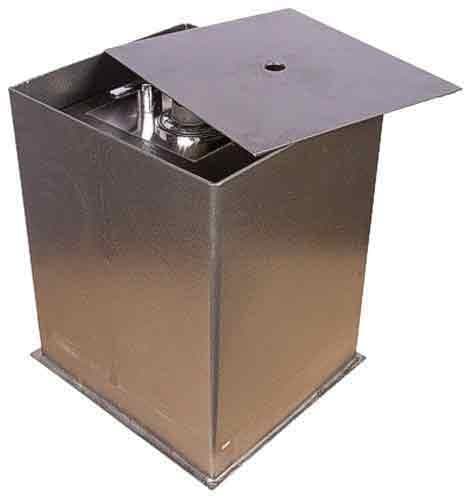 Hollon B2500 Floor Safe A 1/2 in solid steel door and a UL-listed S&G Group 2 dial set into a concrete floor. Hollon calls it B-rated, which is a construction description rather than a listing of the container, but concealment and concrete do work the listing never measures. | Best safe a burglar never findsAccess box | 7.2 /10 | $654.00Amazon |
| 5 | American Security RF6528 A UL TL-30 listing is a commercial rating: thirty minutes of net working time against an expert with power tools. 3,455 lb, dealer-only, and the fire claim names no lab. | Best when the contents justify TL-30UL TL-rated | 8.7 /10 | Check price · Amazon |
#ad · Prices come live from Amazon, last checked October 19, 2026. Scores are ours, built from certifications, published specs and recall records. Photos are illustrative stock. Tap a row for the full write-up.
Search for a burglar proof safe and you will be sold steel gauges, bolt counts and the word "impenetrable". None of those are ratings. A rating is a document from a laboratory that describes an attack the safe survived: who attacked it, with what, and for how long. Four of the five safes on this page carry one. The fifth is here because concealment does something no rating measures, and we say so plainly.
We do not test safes. Every figure below is the maker's or the certifying body's published specification, linked at the value it supports and checked 2026-10-19, and each brand carries a dated CPSC recall search on its product card.
Why nothing sold to a household is burglar proof
Every burglary rating is a stopwatch, not a guarantee. UL's UL 1037 standard covers residential security containers, and UL 687 covers burglary-resistant safes: the commercial tier where the TL ratings live. Both describe a tester working for a fixed number of minutes. Pass the clock and the safe is listed. Nobody certifies that a safe can never be opened, because given enough time and the right tool, every one of them can.
That reframes the question usefully. You are not buying invulnerability; you are buying minutes, in a house where the person breaking in wants to be gone fast and is working with whatever was already in the vehicle. Five rated minutes behind an anchored door is a different proposition to a 90 lb box with a "solid steel" sticker on it, and the rated minutes are the only part of that sentence anyone measured.
The four levels you will actually meet
Our TL-15 vs TL-30 vs RSC explainer walks the whole ladder, and UL RSC rating explained covers the residential standard in depth, including the look-alike phrases that imitate it.
How we ranked them
The published rubric at how we rate, with burglary evidence weighted hardest because that is what the search is for:
- Who issued the rating. A UL or ETL document first. A maker's own claim second. An unattributed adjective last.
- What the door and bolts are, as published. A 1/2 in steel plate door is a different object to a 12-gauge sheet-metal door with a steel-look paint finish, and the difference is on the spec sheet.
- Whether the lock is itself listed, and what protects it. A UL-listed lock behind a hard plate with a re-locker is the part of the safe a professional actually goes for.
- Anchoring, honestly weighted. A rating applies to a safe that cannot be carried away. Bolt holes and included hardware count.
- Fit for a real home. Weight, footprint and whether you can buy it at all. TL-30 is the best rating here and the worst fit for most houses.
The published evidence, side by side
Read the burglary row and the fire row together and the trade becomes visible. The BF1512 is the only product here with an outside-lab claim in both columns at a size a household can place, and it pays for that with 288 lb around a 15 x 12 x 13 in interior. The Stealth HS4 is the one with an RSC rating you can order on Amazon, and its fire number is a maker claim at 1,200°F with no lab named. The RF6528 wins the burglary column outright and weighs 3,455 lb, which is a conversation with a structural engineer rather than a purchase.
One pattern is worth naming: the safes with the strongest burglary evidence are the ones you cannot buy on Amazon. Three of the five are dealer-sold. That is not a coincidence so much as a market: lab listings cost money, and the brands that pay for them sell through dealers who can explain them.
The B-rate problem, and why a floor safe is still here
Hollon describes the B2500 as a "B-Rated Floor Safe for Foundations". By our own rule that should put it below every listed safe on the page, and on rating evidence alone it is. It is ranked fourth anyway, because a floor safe changes the attack instead of resisting it.
A safe set into a slab has no sides to pry, no back to cut and no way to be wheeled out. Its door sits flush under carpet or a mat, and a burglar working in minutes has to find it first. The published hardware is also genuinely good: a 1/2 in solid steel door, five chrome-plated bolts, a drill-resistant hard plate and a UL-listed Sargent & Greenleaf Group 2 dial with a relocker. What it does not have is a fire rating or a laboratory listing of the container, and installation means cutting concrete, which is not reversible. Our floor safe rankings cover that trade in full, and floor safe vs wall safe compares it with the in-wall option.
The rating assumes the safe is still in the house
Every burglary rating is issued against a safe that is anchored. An unbolted 191 lb home safe on a hard floor is a two-person carry, and a dolly makes it a one-person carry. At that point the attack happens somewhere else, with unlimited time and a cutting wheel, and the five rated minutes are irrelevant.
- Use every hole the maker drilled. The HS4 publishes four bolt-down holes with hardware included; the BF1512 has one recessed anchor hole. Both are there because the maker expects them used.
- Anchor into structure, not into a floating floor. How to bolt down a gun safe covers concrete and wood-framed floors, and the hardware that actually holds in each.
- Check the floor can take it before you buy. Can your floor support a gun safe does the arithmetic for upstairs rooms, which matters once a safe passes about 600 lb.
- Put it where it is awkward to work on. A corner, a closet, bolted with the hinge side against a wall. Where to put a safe covers placement and the trade with fire exposure.
Burglars go for the lock and the drywall, not the plate steel
Thickness arguments assume an attack on the strongest part of the safe. Real forced-entry attempts go for the seams: the lock, the hinge side, the thin back panel, and in a wall safe the drywall around it. That is why the lock specification matters as much as the door.
Two of the picks name a UL-listed lock, which is a listing of the lock rather than the container: the HS4 uses a UL-listed electronic lock behind a hard plate with an internal re-locker, and the B2500 uses a UL-listed S&G Group 2 dial behind a hard plate with an external relocker. A re-locker is the part that fires if someone punches or drills the lock body, dropping an independent bolt that the original mechanism can no longer retract. Electronic vs mechanical locks compares the two entry types on speed, batteries and service, and how hard is it to break into a gun safe walks the attack methods the rated minutes assume.
How to verify a rating claim before you buy
You do not have to take our word for any of this, and you should not have to take the seller's either. Four checks take about five minutes on any product page:
- Find the standard, not the adjective. "UL RSC", "UL 1037", "RSC Level I", "TL-15" and "TL-30" are standards. "Burglar proof", "bank grade", "maximum security" and "theft resistant" are not.
- Check whether the maker says it, or only the retailer. This is the single most useful test. Dealer listings routinely attach an RSC claim to safes whose own manufacturer page never mentions one. Open the maker's page for the exact model number.
- Separate the lock listing from the container listing. "UL-listed lock" is a real and useful claim, and it is not the same as the safe being listed. Both the Stealth HS4 and the Hollon B2500 carry a listed lock; only the HS4 states an RSC rating for the container.
- Match the model number exactly. Ratings are issued per model, and a brand's flagship listing says nothing about the entry model two rows down the same page. A suffix letter can be the difference between a listed safe and an unlisted one.
If a page passes all four, you have a rating. If it fails the second one, what you have is a retailer's copywriting. Our brand evaluations apply exactly this test at scale: the Cannon review searched every live listing on the maker's own store for UL, RSC, ETL and Intertek, and reports what was and was not there.
Common mistakes
- Treating "burglar proof" or "anti-theft" as a rating. Neither phrase has a standard behind it. Ask which standard and which lab.
- Buying steel gauge instead of a listing. Gauge is one input to a rating, not a substitute for one. Gauge explained converts the numbers to inches.
- Assuming a fire safe resists burglary. Most fire chests are built to insulate, not to resist, and their own pages say nothing about burglary. Fire rating vs burglary rating separates the two.
- Leaving it unbolted because it is heavy. Weight without anchoring is a delay, not a defense.
- Buying TL-30 for a house. At 3,455 lb the question stops being which safe and becomes which room and which floor.
- Forgetting the contents schedule. A rating is also an insurance conversation; ask your insurer what storage a scheduled item requires before you buy.
In detail
The picks, in full
Rank 1
Best burglary safe overall
AMSEC BF1512
The only safe in our registry carrying both a UL RSC Level I burglary rating and a UL-attributed 60-minute fire rating, behind a 1/2 in solid steel plate door. 288 lb for a small interior, and dealer-sold rather than an Amazon buy.
EvidenceResearched
| Tier | UL RSC. A timed hand-tool attack under UL 1037 (Level 1: one person, five minutes, common hand tools). |
|---|---|
| Burglary rating | UL RSC Level I security rating (per maker) |
| Fire rating | UL 60 min at 1,700°F (maker says "independently tested by UL") |
| Door steel | 1/2 in solid steel plate door; full-length dead bar |
| Lock | Mechanical key-locking spy-proof dial standard; ESL5 or ESL10 electronic lock options; three 1 in solid steel bolts |
| Bolt-down | 1 recessed anchor bolt hole; mounting hardware provided |
| Capacity | Interior 15 x 12 x 13 in (H x W x D) |
| Exterior dimensions | 20.25 x 17.25 x 18.75 in (H x W x D) |
| Weight | 288 lb |
| Warranty | Lifetime fire replacement warranty |
| Recall check | Sep 19, 2026: No CPSC recall found for American Security (AMSEC) safes in a search of CPSC.gov recall notices. |
How the 7.1 score breaks down
- Fire rating evidence (35%)
- 9
- Water rating evidence (15%)
- 0
- Burglary resistance (20%)
- 9
- Lock & entry (15%)
- 7.5
- Capacity & fit (10%)
- 6.5
- Support & transparency (5%)
- 7.5
What the evidence supports
- UL RSC Level I burglary rating plus a UL 60-minute fire rating at 1,700°F
- 1/2 in solid steel plate door with a full-length dead bar
- Made in the USA with a choice of mechanical or electronic lock
Where it falls short
- Not sold on Amazon; buy through an AMSEC dealer (plain reference link)
- 288 lb for a small 15 x 12 x 13 in interior
- No water rating
Skip this if…
…you want an Amazon purchase or need more than a small interior
#ad · Price as of October 19, 2026 · Disclosure for the link to AMSEC BF1512
Rank 2
Best RSC-rated safe sold on Amazon
Stealth HS4
Stealth states a UL RSC burglary rating and fits a UL-listed electronic lock behind a hard plate with a re-locker. The 60-minute fire figure is a maker claim with no lab named, so buy this one for the burglary rating.
EvidenceResearched
| Tier | UL RSC. A timed hand-tool attack under UL 1037 (Level 1: one person, five minutes, common hand tools). |
|---|---|
| Burglary rating | UL RSC (Residential Security Container) burglary rating (per maker) |
| Fire rating | Manufacturer claim: 60 min at 1,200°F (testing lab not named) |
| Body steel | 12 gauge |
| Door steel | 12 gauge |
| Lock | UL-listed electronic lock (NL UR-2020) behind a hard plate with internal re-locker; mechanical dial upgrade available; six 1.25 in bolts |
| Bolt-down | 4 pre-drilled bolt-down holes; hardware included |
| Capacity | Interior 21 x 15 x 13 in (H x W x D); leather-lined shelf; interior power outlet |
| Exterior dimensions | 24 x 18 x 20 in (H x W x D), add 1 5/8 in depth for handle |
| Weight | 191 lb |
| Warranty | Lifetime burglary, attempted burglary and house fire warranty plus 2-year parts and labor |
| Recall check | Sep 19, 2026: No CPSC recall found for Stealth safes; the biometric gun-safe recalls found in the search (Awesafe, Fortress, SA Consumer Products) are other brands. |
How the 5.6 score breaks down
- Fire rating evidence (35%)
- 4
- Water rating evidence (15%)
- 0
- Burglary resistance (20%)
- 8.5
- Lock & entry (15%)
- 8.5
- Capacity & fit (10%)
- 7.5
- Support & transparency (5%)
- 9
What the evidence supports
- Maker states a UL RSC burglary rating, rare for a home safe sold on Amazon
- UL-listed electronic lock protected by a hard plate and re-locker
- 12-gauge door and body with six 1.25 in bolts
- Lifetime burglary and fire replacement warranty
Where it falls short
- Fire rating is a maker claim at 1,200°F with no lab named
- No water rating
- 191 lb: needs a plan for delivery and placement
Skip this if…
…fire is your main risk and you want a UL-classified fire rating; look at the AMSEC BF1512 or a UL-classified fire safe
#ad · Price as of October 19, 2026 · Disclosure for the link to Stealth HS4
Rank 3
Best burglary rating with real capacity
American Security BFX6030
UL RSC Level 1 for burglary and an ETL-verified 120 minutes at 1,200°F for fire: both numbers come from outside labs. 1,081 lb and dealer-only, which is the price of that pairing.
EvidenceResearched
| Tier | UL RSC. A timed hand-tool attack under UL 1037 (Level 1: one person, five minutes, common hand tools). |
|---|---|
| Burglary rating | UL RSC Level 1 security rating |
| Fire rating | ETL fire rating: 120 min at 1,200°F (ETL-verified) |
| Body steel | 11 gauge outer and 12 gauge inner steel liner, with concrete insulation between the walls |
| Door steel | 1/2-in steel plate door |
| Lock | UL-rated mechanical dial lock (electronic lock option) |
| Bolt-down | 4 pre-cut anchor holes |
| Capacity | 22 guns in the safe plus 2 on the door (maker-stated) |
| Exterior dimensions | 59.25 x 30 x 26 in (H x W x D) |
| Weight | 1,081 lb |
| Warranty | 5-year parts and labor with a factory-installed AMSEC lock; lifetime warranty for damage from burglary attempts and fire |
| Recall check | Sep 19, 2026: No CPSC recall found for American Security (AMSEC) gun safes in a search of CPSC.gov recall notices. |
How the 9.1 score breaks down
- Independent burglary certification (30%)
- 9
- Construction (20%)
- 9.5
- Fire protection evidence (20%)
- 9.5
- Lock & entry (15%)
- 9
- Fit & usability (10%)
- 8
- Support & transparency (5%)
- 9
What the evidence supports
- Both evidence fields come from outside labs: UL RSC Level 1 for burglary and an ETL fire rating of 120 minutes at 1,200°F.
- 1/2-in steel plate door, 14 locking bolts 1 1/2 in thick, and a double steel wall (11-gauge outer, 12-gauge inner), per the retailer spec sheet.
- UL-rated mechanical dial as standard, with an electronic lock available.
- Made in the USA, per AMSEC.
Where it falls short
- Not sold on Amazon: buy through an AMSEC dealer.
- 1,081 lb in a 30-in-wide footprint: plan delivery and floor load.
- The 5-year parts-and-labor coverage applies only with a factory-installed AMSEC lock.
Skip this if…
…you need to buy on Amazon or keep the safe under 1,000 lb: this is a dealer-sold, 1,081-lb safe.
#ad · Price as of October 19, 2026 · Disclosure for the link to American Security BFX6030
Rank 4
Best safe a burglar never finds
Hollon B2500 Floor Safe
A 1/2 in solid steel door and a UL-listed S&G Group 2 dial set into a concrete floor. Hollon calls it B-rated, which is a construction description rather than a listing of the container, but concealment and concrete do work the listing never measures.
EvidenceResearched
How the 7.2 score breaks down
- Access reliability evidence (30%)
- 8.5
- Construction & pry resistance (25%)
- 8
- Child-access standards (20%)
- 3.5
- Mounting (15%)
- 8.5
- Support & transparency (10%)
- 6.5
What the evidence supports
- 1/2 in solid steel door with five chrome-plated steel locking bolts
- UL-listed S&G Group 2 dial behind a drill-resistant hard plate, with an external relocker
- Mechanical lock: no batteries, no electronics, nothing to fail in a damp slab
- An air-spring bar and a full-length dead bar are published features, not marketing adjectives
Where it falls short
- "B-rate" is a construction description, not a laboratory listing of the container
- No fire rating: the maker makes no claim about a house fire above the slab
- Installation means cutting and re-pouring concrete, which is not reversible
Skip this if…
…you cannot cut into a concrete slab, or you need a fire rating for papers
#ad · Price as of October 19, 2026 · Disclosure for the link to Hollon B2500 Floor Safe
Rank 5
Best when the contents justify TL-30
American Security RF6528
A UL TL-30 listing is a commercial rating: thirty minutes of net working time against an expert with power tools. 3,455 lb, dealer-only, and the fire claim names no lab.
EvidenceResearched
| Tier | UL TL-rated. A timed expert attack with power tools (TL-15 = 15 minutes of net working time). |
|---|---|
| Burglary rating | UL listed TL-30 high-security burglary rating |
| Fire rating | Maker claim: 120 min at 1,850°F, described as "independently certified" (testing lab not named) |
| Body steel | 3-in overall steel body thickness |
| Door steel | 6-in-thick high-security composite door |
| Lock | Combination lock with key-locking spy-proof dial (other lock options available) |
| Bolt-down | Anchor holes provided |
| Capacity | 24 guns in the safe plus 2 on the door (maker-stated) |
| Exterior dimensions | 72 x 35 x 29.25 in (H x W x D) |
| Weight | 3,455 lb |
| Warranty | 5-year parts and labor with a factory-installed AMSEC lock; lifetime warranty for damage from burglary attempts and fire |
| Recall check | Sep 19, 2026: No CPSC recall found for American Security (AMSEC) gun safes in a search of CPSC.gov recall notices. |
How the 8.7 score breaks down
- Independent burglary certification (30%)
- 10
- Construction (20%)
- 10
- Fire protection evidence (20%)
- 6
- Lock & entry (15%)
- 9
- Fit & usability (10%)
- 7
- Support & transparency (5%)
- 8.5
What the evidence supports
- UL TL-30 is a commercial high-security burglary rating, a class above the UL RSC listing that residential gun safes carry.
- 3-in steel body and 6-in composite door with ten 1 1/2-in locking bolts, per AMSEC and the retailer spec sheet.
- Mechanical dial as standard, with five lock choices at order (four mechanical dials or an ESL10 electronic).
- Lifetime warranty for damage from burglary attempts and fire, per AMSEC.
Where it falls short
- 3,455 lb: floor load, doorway and delivery access need planning before you order.
- AMSEC calls the fire rating "independently certified" but does not name the lab, so we treat it as a maker claim.
- Not sold on Amazon: dealer only.
Skip this if…
…your floor or doorway cannot take a 3,455-lb, 35-in-wide safe.
#ad · Price as of October 19, 2026 · Disclosure for the link to American Security RF6528
How to buy a burglary safe
1. Decide what a burglar would take
Cash, jewelry, small electronics and guns are the liquid items, and they set the size. A safe big enough for documents and small enough to carry is the worst outcome of this purchase.
2. Set a rating floor and do not go below it
UL RSC Level I is the sensible residential floor. If a product cannot show you a listing or a maker statement naming the standard, treat it as an access box: good against children and opportunists, not against tools. Our UL RSC roundup lists every listed model we document.
3. Read the lock line as carefully as the door line
Look for a UL-listed lock, a hard plate and a re-locker. Then decide between a dial and a keypad on how you will actually use it, not on which sounds more secure.
4. Plan the anchor before delivery day
Know the floor type, the hardware and the final position before the safe arrives. Moving an anchored safe later is its own project, and moving a safe explains why.
5. Decide whether fire is also in scope
Burglary and fire are separate ratings with separate labs, and very few products carry credible versions of both. If you need both, expect to pay in weight and in dealer purchasing, or to run two containers.
6. Buy the one you will lock
A safe left open because the dial is tedious or the keypad eats batteries protects nothing. Match the entry method to the people using it daily.
How we scored this
Every pick, checked against the paperwork
Here is exactly what goes into a score: whether an independent lab listed the safe (UL for burglary under UL 1037, UL or Intertek for fire), the maker's published steel, lock and bolt-down specs, the owner's manual, a dated CPSC recall search, and a public rubric applied the same way to every safe. Every figure links to where it came from, so you can confirm the pick in a couple of clicks and buy with confidence.
Scores are our editorial judgment of that documented evidence. Commissions never set a score or decide a pick. The rubric and its weights are published.
Corrections & updates
- First published. Ranked on who issued the burglary rating rather than on steel gauge, with the B-rate construction convention separated from UL listings and the anchoring assumption stated.
Questions
Frequently asked
Is any safe really burglar proof?
What is the best burglary rating for a home safe?
Does a B-rated safe count as a burglary rating?
Do I have to bolt down a burglary safe?
Can a fireproof safe also stop a burglar?
Where should a burglary safe go in a house?
Keep reading
Related on Bolt & Vault
- TL-15 vs TL-30 vs RSCThe whole rating ladder, and what each timed attack involves.
- UL RSC rating explainedThe residential standard in depth, including the phrases that imitate it.
- Best home safesThe same market sorted by the threat you face rather than by rating.
- Best floor safesConcealment and concrete: the approach our fourth pick takes.
- Fire rating vs burglary ratingWhy one rating almost never implies the other.
- How to bolt down a gun safeThe step that makes a burglary rating mean something.
- Best drop safesThe deliberately unrated cousin: a deposit slot, a baffle and a reason for both.
Receipts
Sources
- UL — Residential Security Container Standard Revised (UL 1037 RSC levels and the timed attack)
- UL Standards & Engagement — UL 1037, Antitheft Alarms and Devices (scope)
- UL Standards & Engagement — UL 687, Burglary-Resistant Safes (scope of the TL ratings)
- Safe and Vault Store — Burglary Ratings: B-rate, C-rate and the UL listings compared
- Safe and Vault Store — TL-15 vs TL-30 high-security safes: net working time and tools
- American Security (AMSEC) — BF1512 product page: UL RSC Level I and UL 60 min fire rating (checked 2026-10-19)
- Stealth Safes — HS4 product page: UL RSC rating, UL-listed lock, hard plate and re-locker (checked 2026-10-19)
- Hollon Safe — floor safes range: the B2500's "B-Rated" wording, door steel, bolts and S&G dial (checked 2026-10-19)
- CPSC — recall database searched per brand on this page
Every figure above is traceable. Ratings come from the listing body or the maker's own spec pages (linked on every product), recall status from dated CPSC searches, and law summaries from official sources. Prices come live from Amazon so the number you see is the number you pay. Read the full method.