Home & Fire Safes · Guide
Where to put a safe in your house: hide it, anchor it, keep it dry
The right spot for a small home safe is out of sight, on a floor you can bolt into and away from water. The makers' manuals add a few rules that are easy to miss and costly to break.
By Mike M.Updated Researched, not lab-tested
#adReader-supported: we may earn a commission if you buy through our links, at no extra cost to you. It never decides a ranking. How we rate · Disclosure
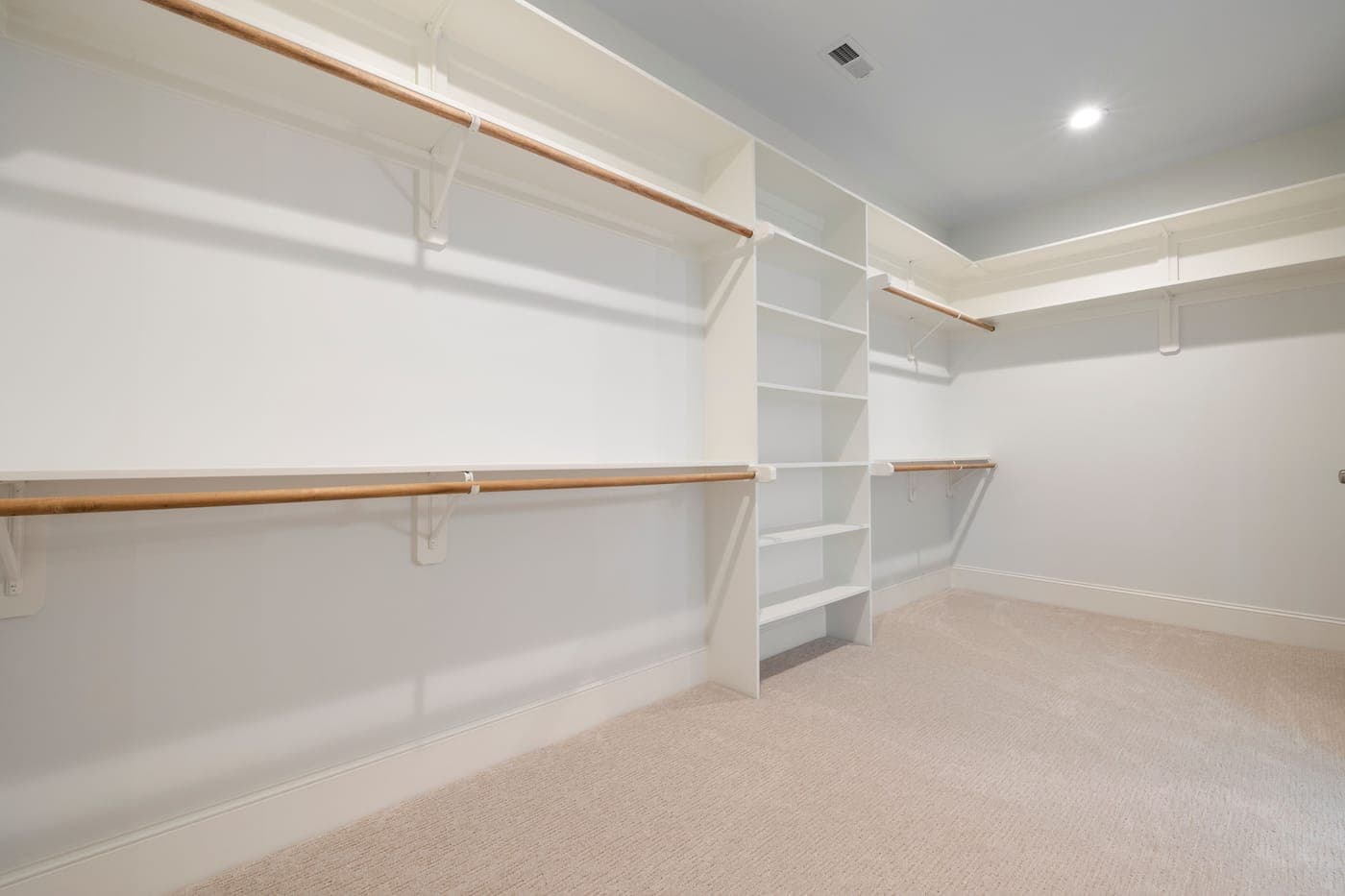
This guide is about small and mid-size home safes: fire chests, fire and water safes, security boxes and wall safes, from about 14 lb to around 130 lb. Full-size gun safes weigh far more and raise different questions about floor loads, doorways and humidity, which we cover in where to put a gun safe.
We haven't installed any of the safes mentioned here. The rules below come from the makers' owner's manuals and installation instructions, and from the standards behind the ratings. Where a manual says something specific about placement, we quote it, because breaking those rules can quietly cancel the rating you paid for.
The three rules
- Out of sight. SentrySafe recommends storing its safes "in closets, offices, basements, bedrooms and any other locations that are convenient for you but out of direct line of sight from prying eyes" (SentrySafe manual). It adds that the location "does not affect the safe's ability to protect your valuables inside", so you can choose for concealment and convenience.
- Anchored to the floor, the way the maker says. A light safe that isn't bolted down can be carried out whole. Anchoring is also built into UL's burglary standard: products of 750 lb or less must pass a drop test unless reliably mounted using the maker's installation provisions (UL).
- Dry. Honeywell's safe manual says to "avoid placing your safe in areas of high humidity" (Honeywell 2605 manual), and a water rating only covers the depth and time on the label.
Every placement decision below is one of these three rules applied to a real room.
Best and worst rooms
| Spot | Why it can work | Watch out for |
|---|---|---|
| Bedroom or walk-in closet floor | Out of sight, usually dry, and a floor you can bolt into | It's a common choice, so don't count on it staying hidden: anchor it |
| Home office (inside a cabinet or closet) | Convenient for papers you use; easy to keep out of view | A safe in plain view from a window or doorway |
| Basement | A concrete floor takes masonry anchors well | Water. If it has ever taken on water, choose another room or a rating that covers what you've seen |
| Inside a wall (wall safe) | The best concealment for small valuables | No fire rating on the wall safes we track; hidden pipes and wires |
| Garage | Often a concrete floor | Visible whenever the door is open; check for damp before you commit |
| Kitchen, laundry or bathroom cabinets | Out of sight | Water lines nearby; a leak can sit unnoticed under a cabinet |
| Living room or entryway | Convenient | Visible to every visitor, delivery driver and passer-by |
We couldn't find published data on where burglars search first that we'd trust enough to cite, so we don't rank rooms by burglar habits. The table follows the three rules instead: can it be seen, can it be anchored, can it stay dry.
Closets, cabinets and furniture
A closet floor is the default for good reasons: it's out of sight and usually has a solid floor beneath the carpet. Push the safe into a back corner, keep the door side clear enough to open it fully, and leave room to work if you need to reach bolt holes in the base. A small security box like a 14.2 lb keypad safe can go inside a cabinet or on a closet shelf, but at that weight it has to be bolted to something solid, or it's simply a box with a handle for whoever finds it.
Measure before the delivery arrives, including the space the door needs to swing fully open. Published exterior sizes vary more than the word "small" suggests: the SentrySafe X055 is 8.7 x 13.8 x 10.2 in (H x W x D), while the Master Lock STW123GTCML is 17.8 x 16.3 x 19.3 in and weighs 128.2 lb. A closet with a low shelf or a deep baseboard can rule out the bigger box, and a safe that sits at an angle to fit is harder to anchor properly.
Chests have their own rule: store them the way the maker says. SentrySafe's chest manual says to keep a chest "closed and locked, with the feet down" so it performs properly in a fire (SentrySafe chest manual). Honeywell says its chests "must always be stored flat with the lid on top" and never on a side or upside down (Honeywell chest manual). Standing a chest on end to fit a narrow shelf is the mistake to avoid.
Which floor, and what's under it
The three picks below run from 14.2 lb to 128.2 lb, far lighter than a full-size gun safe. For safes this size, what's under the floor matters mainly because it decides how you anchor. SentrySafe's manuals give two routes, lag screws for a wood floor and masonry anchors for concrete. Honeywell supplies hardware for concrete only and says "If bolting to wood or metal additional hardware will be needed." If you're placing a heavier safe, our guide to whether your floor can support a gun safe covers floor loads.
Upstairs or downstairs also matters in a fire. A safe on an upper floor can fall if the floor fails, which is what fire-impact tests simulate. UL's fire standard includes a fire-and-impact test with a 30 ft drop for impact-rated equipment (UL 72). Among the safes we track, SentrySafe lists an ETL-verified 15 ft drop for the SFW123GDC, and Master Lock an ETL-verified 30 ft drop for the STW123GTCML. If your safe will live upstairs, favor one with a published fire-impact result.
Anchor it without voiding the rating
This is the section most owners skip, and the one where the fine print bites. Read your model's manual before you drill; these are the rules for the models we track:
- Floor, not wall. SentrySafe's fire safe manuals say "The safe should not be bolted to a wall, this will compromise the fire rating," and to drill through the feet only, never the back or sides.
- Anchoring can end a water rating. The SentrySafe SFW123GDC manual is explicit: "Product is not water resistant once it is bolted down. The ETL verified water resistance claim applies to product prior to the application of a bolt-down kit."
- Some models keep both. Master Lock says the STW123GTCML's bolt-down hardware secures the safe "while maintaining fire and water protection" (Master Lock STW123GTCML page). Its manual still specifies floor mounting only.
- Shelf mounting is model-specific. Honeywell says of its 2605 that "You may bolt your safe to a shelf or floor for added theft protection and resistance to tipping." Don't assume another brand allows the same.
For the drilling itself, follow the manual's sequence and hardware. Our step-by-step on how to bolt down a gun safe covers wood and concrete floors, and the same principles apply to a small safe. If you rent, get your landlord's permission before drilling.
Where the keys, codes and manual go
A well-placed safe can be undone by a key left next to it. Honeywell's 2605 manual tells owners to store the override key "in a safe place away from the safe" and says, "never store it or the keys inside the safe!" SentrySafe's chest manual warns that keys "could potentially be locked inside unit" if you put them in before relocking. The FDIC gives the same advice about bank boxes: don't keep identifying details such as the bank's name or box number with the key. Keep the manual somewhere you can find it, because you'll need it for the backup entry, battery changes and the bolt-down rules above.
If children live in or visit the home, choose a spot where they can't watch you enter the code, and keep the backup key somewhere they won't find it. A keypad safe on a closet floor protects nothing from a child who has seen the code typed in.
Concealment: wall and floor safes
A safe nobody finds doesn't need to resist much. That's the case for a wall safe: a shallow steel box set between studs and hidden behind a picture, mirror or cabinet. The trade-off is fire. None of the wall safes we track (Protex, Homak and SnapSafe models) states a fire rating, so they protect small valuables by concealment and a lock, not against heat. Keep papers in a fire-rated box elsewhere.
What to check before you cut drywall:
- Stud spacing. The wall safes we track are sized for studs 16 in on center; SnapSafe's instructions say to confirm 14.5 in between studs.
- Depth. They are shallow. The Protex PWS-1814E is 3 7/8 in deep with a 16 x 20 in flange that covers the cut.
- What's in the wall. SnapSafe's instructions warn: "Walls contain hidden pipes, wires, and other obstructions. Cutting into these obstructions can be very dangerous or cause significant property damage." They tell you to use "an interior wall that is free of all hidden obstructions" (SnapSafe instructions). If you aren't sure, hire a contractor.
Floor safes follow the same logic under your feet. Homak says its small wall safe also fits between 16 in center floor studs. Our ranking of the best wall safes compares in-wall options on stud fit, steel and backup entry.
Our picks for this
Safes that suit the placement rules
One for each approach: anchor a fire safe to the floor, hide valuables in a wall, or bolt a small box inside a cabinet. The Master Lock is scored on our fire-safe rubric and the other two on the access-control rubric, so their scores aren't comparable across those groups.
 Stock photo
Best 2-hour UL fire rating
Master Lock STW123GTCML
Fire chest8.0/10For a floor you can bolt into: UL-classified for 2 hours at 1,850°F, and the maker says fire and water protection hold when bolted down (floor mounting only).
Check price · Amazon#ad · Price set by Amazon · Disclosure for the link to Master Lock STW123GTCML
 Stock photo
Best between-studs wall safe
Protex PWS-1814E
Access box5.9/10For concealment: sized for a 16 in on-center stud bay, with a flange that hides the cut and a key and power override. No fire rating.
Check price · Amazon#ad · Price set by Amazon · Disclosure for the link to Protex PWS-1814E
 Stock photo
Best budget non-fire security safe
SentrySafe X055
Access box6.6/10For a cabinet or closet shelf: 14.2 lb with bolt-down hardware and two override keys. No fire rating, and it needs anchoring to be more than portable.
Check price · Amazon#ad · Price set by Amazon · Disclosure for the link to SentrySafe X055
Weighing a wider set of options? Our best home safes ranking sorts them by the threat each one actually stops.
Keep it dry
Moisture comes from two directions: outside water reaching the safe, and damp air trapped inside it.
Outside water. A water rating tells you exactly how much the safe was tested against. The SFW123GDC's is up to 8 in of water for up to 24 hours; the SentrySafe FPW082HTC's is 5 in for 24 hours; SentrySafe's chests list 72 hours of flood protection; the SentrySafe 1170 file box and the wall safes we track list none. FEMA's preparedness kit notes that "Floods are the nation's most common natural disaster" and that flood damage "is rarely covered under your homeowners or renters insurance" (FEMA EFFAK). If your basement has ever taken on water, weigh that before putting your papers there.
Inside moisture. Sealed fire safes can trap damp. SentrySafe says its fire insulation "has a high moisture content" and its water-resistant safes "close airtight", so it asks owners to keep the supplied desiccant inside and open the unit "once every two weeks". Honeywell asks for at least 30 minutes of airing every two weeks for its safes and every week for its chests, and warns of "a musty smell, especially on paperwork" if you don't. Both makers suggest an airtight container for photos and delicate items.
Put together, the dry spot is an interior room, above any level that has flooded, away from water lines, and somewhere you'll actually open the safe now and then.
How we scored this
Safes we claim to have lab-tested: 0
Plenty of sites say they drilled, burned and flooded every safe they list. We didn't, and we say so. What we do instead: check whether an independent lab listed the safe (UL for burglary under UL 1037, UL or Intertek for fire), read the maker's published steel, lock and bolt-down specs, search CPSC recalls, and score every pick on a public rubric. Every figure links to where it came from.
Scores are editorial judgments from that documented research, not lab results. Commissions never set a score or decide a pick. The rubric and its weights are published.
Questions
Frequently asked
Where is the best place to put a safe in your house?
Should a small safe be bolted down?
Can I bolt a fire safe to a wall?
Can I put a fire safe in the basement?
Where do you hide a small safe?
Does a wall safe protect against fire?
Keep reading
Related on Bolt & Vault
- Best wall safesIn-wall safes between studs: concealment vs protection.
- Best home safesHome safes ranked by the threat they actually stop.
- How to bolt down a gun safeWood and concrete anchoring, step by step.
- Where to put a gun safePlacement for heavy gun safes: floors, garages, closets and humidity.
- How to choose a home safeThreat, rating, size, then placement.
Receipts
Sources
- UL — Residential Security Container Standard Revised (UL 1037, drop test and mounting)
- UL Standards & Engagement — UL 72, Fire Resistance of Record Protection Equipment
- SentrySafe — SFW123GDC owner's manual P44621 (placement, bolt-down and moisture notes; checked 2026-09-19)
- SentrySafe — waterproof fire-resistant chests & files manual P44679 (checked 2026-09-19)
- SentrySafe / Master Lock — STW123GTCML product page (checked 2026-09-19)
- Honeywell Safes — 2605/2607/2609 Waterproof Fire Safe manual (checked 2026-09-19)
- Honeywell Safes — 1101-1108 Waterproof Fire Chest manual (checked 2026-09-19)
- SnapSafe — In-Wall Safes installation instructions (checked 2026-09-19)
- FEMA — Emergency Financial First Aid Kit (FEMA P-1075, September 2019)
- FDIC — Five Things to Know About Safe Deposit Boxes, Home Safes and Your Valuables
We don't lab-test safes and we don't pretend to. Ratings come from the listing body or the maker's own spec pages (linked on every product), recall status from CPSC searches, and law summaries from official sources. Prices are set by Amazon and change often, so we don't print them. Where a figure isn't published, we say so. Read the full method.