Safe Ratings Explained · Guide
Fire rating vs burglary rating: two different tests, and most safes pass only one
A fire rating and a burglary rating measure unrelated things, are issued by different programs, and appear on the same spec sheet in the same font. Reading them as one number is the most common mistake in this category.
By Mike M.Updated Researched
#adReader-supported: we may earn a commission if you buy through our links, at no extra cost to you. It never decides a ranking. How we rate · Disclosure
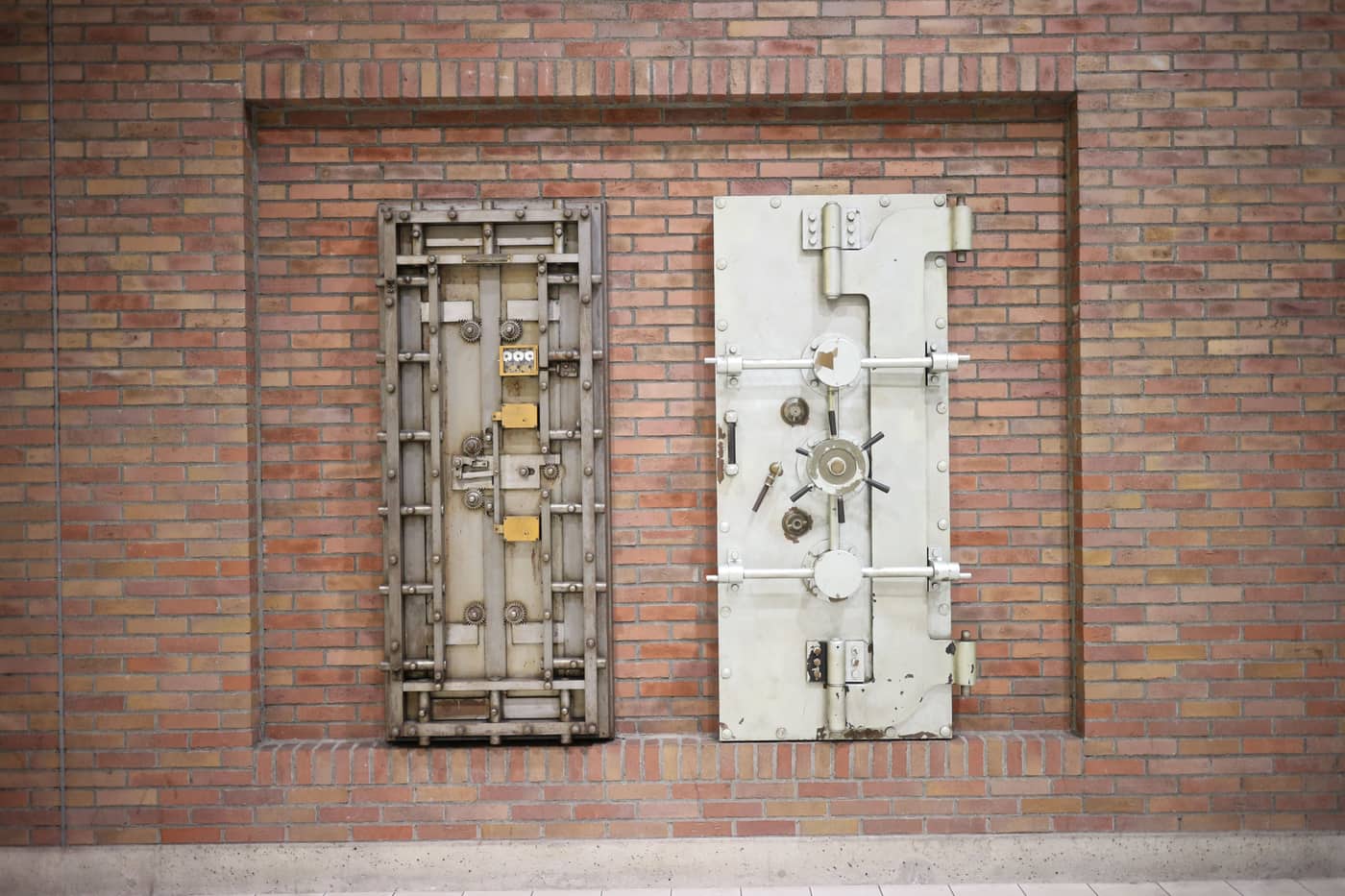
Two numbers appear on almost every safe listing, printed the same way: something like "60 minutes at 1,200°F" and something like "UL RSC." They look like two halves of one quality score. They are not related at all. One is a heat test, the other is an attack test, and a safe can be excellent at one while offering nothing on the other.
This page separates them properly, shows how to tell which label you are actually being sold, and lists the safes in our registry that hold both. Everything comes from the standards' published scope, UL's own notices and maker documentation, linked where used and checked 2026-10-10.
The short version
Two tests, two standards, two units
| Fire rating | Burglary rating | |
|---|---|---|
| Standard | UL 72 (record protection equipment) | UL 1037, Residential Security Containers; TL ratings above that |
| What is measured | Interior temperature over time in a furnace | Resistance to a timed attack by a technician with tools |
| Units on the label | Class (interior limit), minutes, furnace temperature | Level, minutes, tool set |
| Typical residential figure | 30, 60 or 120 minutes | RSC Level 1: one person, five minutes, common hand tools |
| Who can verify it | UL classification, or Intertek ETL verification | UL listing (RSC or TL) |
| Common substitute claim | "60 min at 1,200°F" with no lab named | "RSC-style construction", or a CA DOJ listing (a child-access standard) |
Safe and Vault Store publishes readable summaries of both ladders — fire ratings and burglary ratings — and our own explainers go deeper: safe fire ratings explained, UL RSC rating explained and TL-15 vs TL-30 vs RSC.
Why so few safes hold both
The two jobs pull the construction in different directions. Fire resistance comes from insulation: layers of gypsum-based fireboard, or a concrete-amalgam wall, which take up volume and add weight without adding much resistance to a pry bar. Burglary resistance comes from steel plate, bolt diameter and bolt coverage, which does nothing for heat. A maker optimizing for one is spending money that does not help the other, and most pick a side.
The result is a clear pattern across our registry. Document chests and fire safes carry UL or ETL fire evidence and no burglary rating at all. Full-size gun safes carry an RSC listing and a maker's own fire claim. The safes that hold independently measured evidence on both sides are a small group, and they are heavy.
The safes that hold both, side by side
The AMSEC BF1512 is the clearest example of a genuine both: a UL RSC Level I security rating and a UL 60-minute fire rating at 1,700°F, in a 288-lb home safe with a half-inch plate door. The AMSEC NF6036 does the same job at gun-safe scale: UL RSC Level 1 plus an ETL-verified 90 minutes at 1,200°F.
The other two are the common cases. The Stealth HS4 has the burglary half — a maker-stated UL RSC rating on a 12-gauge body — with a manufacturer fire claim and no lab named. The SentrySafe SFW123GDC has the fire half — UL Classified for an hour, with an ETL-verified water rating — and no burglary rating whatsoever.
How to read a spec sheet in thirty seconds
- Find the burglary line. Look for the letters UL with "Residential Security Container", "RSC", or a TL number, attached to this exact model. Anything else — including "RSC-style", "burglary resistant construction" or a California DOJ listing — is not a burglary rating. Our CA DOJ page explains that distinction, which is the most frequently conflated pair in the category.
- Find the fire line, then find the lab. "UL Classified", "UL 72", "ETL-verified" or "independently tested by ETL" means somebody outside the company ran it. A bare "60 minutes at 1,200°F" means the company did.
- Check whether the fire figure has a temperature. Minutes without a furnace temperature cannot be compared with anything.
- Treat water as a third, separate claim, usually ETL-verified when it is verified at all. See best waterproof home safes.
Which rating should you buy first?
It depends entirely on what is in the safe, and this is the one place where the honest answer is specific:
- Firearms: burglary first. Theft is the measured risk, and fire damages the contents of a gun safe less than the heat damages paper. Start with UL RSC gun safes.
- Documents, cash and records: fire first, because paper is the thing a fire genuinely destroys and these items are rarely the primary target of a burglary. Start with UL fire-rated safes.
- Both in one box: you are shopping the small group above, and you should expect to pay for weight. The alternative — a fire chest inside a listed gun safe — is cheaper and works well.
- Ammunition: read our ammo storage guide; the published guidance there is about heat and ignition sources rather than either rating.
One more point in favor of the chest-in-a-safe approach: it separates the two jobs the way the standards do. The listed safe buys you minutes against an attack; the rated chest buys the paper inside it a measured temperature limit. Neither is asked to do the other's work.
Picks with evidence on both sides
Our picks for this
Two with both, two with one
The first two hold an independent burglary listing and an independently measured fire rating. The second two show what the common half-and-half looks like, so you can recognize it on a spec sheet.
- American Security (AMSEC)No image
Best UL burglary and fire-rated home safe
AMSEC BF1512
UL RSC7.1/10Carries both a UL RSC Level I burglary rating and a 60-minute, 1,700°F fire rating the maker attributes to UL, built around a 1/2 in steel plate door; a dealer-sold benchmark, not an Amazon buy.
Check price · Amazon#ad · Price as of October 19, 2026 · Disclosure for the link to AMSEC BF1512
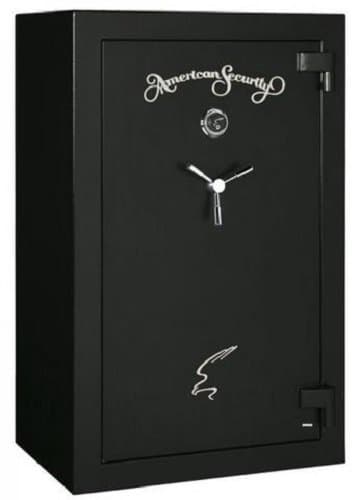
Best independently rated gun safe on Amazon
American Security NF6036
UL RSC8.5/10A UL RSC Level I gun safe with an ETL-verified 90-minute fire rating, an 11-gauge body and a 1/4-in plate door, sold on Amazon, for buyers who want independent burglary and fire evidence without a dealer visit.
$2,679.83Amazon#ad · Price as of October 19, 2026 · Disclosure for the link to American Security NF6036
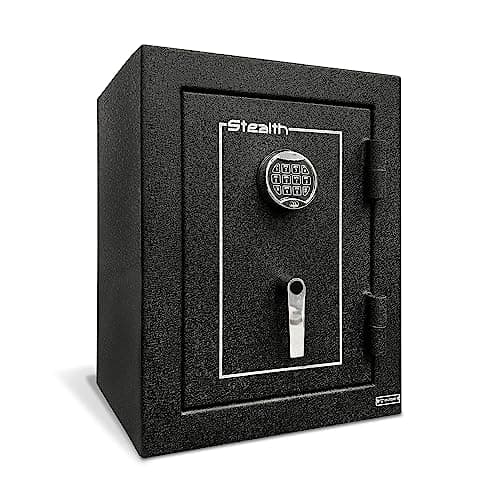
Best UL RSC home safe on Amazon
Stealth HS4
UL RSC5.6/10A 12-gauge home safe that the maker states carries a UL RSC burglary rating and a UL-listed electronic lock, sold on Amazon; its 60-minute fire rating is a maker claim at 1,200°F with no lab named.
$1,199.99Amazon#ad · Price as of October 19, 2026 · Disclosure for the link to Stealth HS4
- SentrySafeNo image
Best all-round fire and water safe
SentrySafe SFW123GDC
Fire chest7.5/10A 1.23 cu ft steel-cased fire and water safe that UL classifies for 1 hour at 1,700°F and Intertek (ETL) verifies against 8 in of water for 24 hours: the evidence-backed default for papers, passports and USB drives.
Check price · Amazon#ad · Price as of October 19, 2026 · Disclosure for the link to SentrySafe SFW123GDC
Common mistakes
- Assuming a fireproof safe is secure. Most fire safes and document chests have a privacy key lock and weigh under 130 lb.
- Assuming an RSC safe protects paper. Most RSC-listed gun safes carry only a maker's own fire claim.
- Reading a CA DOJ listing as a burglary rating. It is a child-access and lock certification.
- Comparing fire minutes across brands without checking the lab or the temperature.
- Forgetting the anchor. Neither rating assumes a safe lying on its back; see how hard is it to break into a gun safe.
Read next
Two pages take this trade into the products themselves:
- gun safe fire ratings — who measured the fire figure on a gun safe, and how to check.
- best safes for guns and documents — the safes that publish evidence for both tests, and the two-box alternative.
How we scored this
Every pick, checked against the paperwork
Here is exactly what goes into a score: whether an independent lab listed the safe (UL for burglary under UL 1037, UL or Intertek for fire), the maker's published steel, lock and bolt-down specs, the owner's manual, a dated CPSC recall search, and a public rubric applied the same way to every safe. Every figure links to where it came from, so you can confirm the pick in a couple of clicks and buy with confidence.
Scores are our editorial judgment of that documented evidence. Commissions never set a score or decide a pick. The rubric and its weights are published.
Questions
Frequently asked
What is the difference between a fire rating and a burglary rating?
Does a gun safe have a fire rating and a burglary rating?
Which matters more, fire or burglary protection?
Is a CA DOJ approved safe burglary rated?
Keep reading
Related on Bolt & Vault
- UL RSC rating explainedThe burglary half, in detail, including how to verify a claim.
- Safe fire ratings explainedThe fire half: class, time, temperature and tester.
- Is a 30-minute fire rating enough?How much of the fire half you actually need.
- How hard is it to break into a gun safe?What the burglary minutes mean in a real house.
- CA DOJ approved gun safesThe third label makers put where a burglary rating belongs.
- Best burglary safesThe safes that carry a real burglary rating, and the few that carry both.
Receipts
Sources
- UL — Residential Security Container Standard Revised, including the statement that RSCs differ from fire resistant containers
- UL Standards & Engagement — UL 1037, Antitheft Alarms and Devices (scope, RSC Levels I-III)
- UL Standards & Engagement — UL 72, Fire Resistance of Record Protection Equipment
- Safe and Vault Store — fire ratings explained
- Safe and Vault Store — burglary ratings explained
- Intertek — ETL Verified mark, what a verified performance claim covers
- American Security — BF1512 product page, UL RSC Level I and UL fire rating (checked 2026-10-10)
- Dean Safe (retailer) — AMSEC NF6036 spec sheet, UL RSC Level 1 and ETL-verified fire rating (checked 2026-10-10)
- Stealth Safes — HS4 home safe product page, UL RSC wording and maker fire claim (checked 2026-10-10)
Every figure above is traceable. Ratings come from the listing body or the maker's own spec pages (linked on every product), recall status from dated CPSC searches, and law summaries from official sources. Prices come live from Amazon so the number you see is the number you pay. Read the full method.