Home & Fire Safes · The rankings
Best safes for sports cards: a paper fire rating is not enough
A standard fire safe is allowed to let its interior reach 350 degrees. Graded slabs, toploaders and sleeves are plastic. That one number is why most card collections are in the wrong safe.
By Mike M.Updated Researched
#adReader-supported: we may earn a commission if you buy through our links, at no extra cost to you. It never decides a ranking. How we rate · Disclosure
Quick picks
The rankings at a glance
| # | Product | Best for | Score | Price |
|---|---|---|---|---|
| 1 | 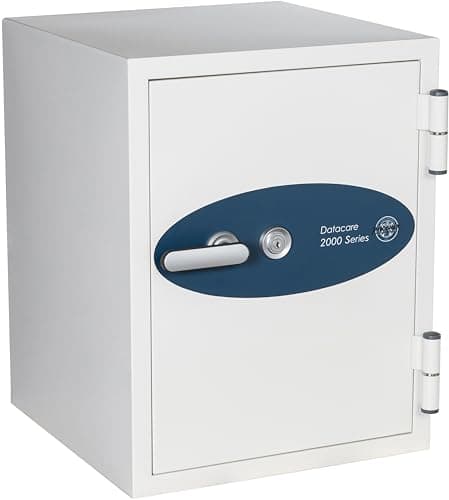 Phoenix DataCare 2002 Classified UL Class 125 for 2 hours, meaning the interior is held under 125°F rather than the 350°F a paper safe may reach. 238 lb, key-locked, and no burglary rating. | Best for cards and slabs overallFire chest | 6.8 /10 | $2,099.00Amazon |
| 2 | Phoenix DataCare 2001 The same media protection in a 108 lb body at 0.26 cu ft, rated 1 hour on Phoenix's own range table. Enough for a few hundred slabs or a working set, not a whole collection. | Best compact Class 125 safeFire chest | 6.2 /10 | Check price · Amazon |
| 3 | 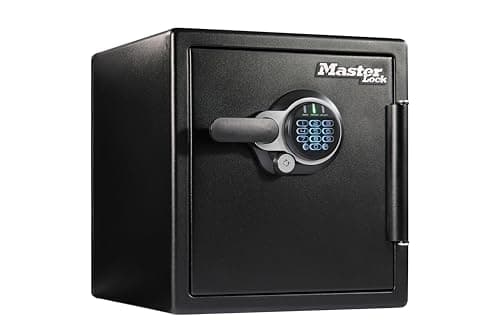 Master Lock STW123GTCML UL-classified for 2 hours at 1,850°F, ETL-verified against water, and the maker says both hold when bolted down. It is a Class 350 paper safe, so plastic is at risk even when the safe performs. | Best paper-class safe for cards in sleevesFire chest | 8.0 /10 | $356.24Amazon |
| 4 | AMSEC BF1512 A UL RSC Level I burglary rating plus a UL 60-minute fire rating, behind a 1/2 in steel plate door. 288 lb for a 15 x 12 x 13 in interior, which is a lot of safe for a small, valuable box. | Best if theft is the real threatUL RSC | 7.1 /10 | Check price · Amazon |
| 5 | 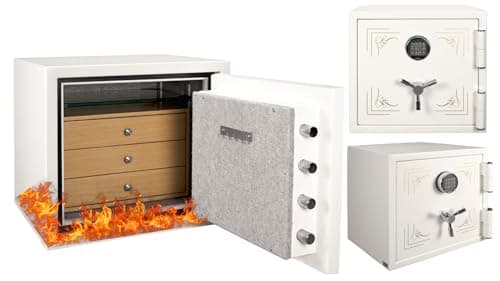 Barska AX13616 Keypad Jewelry Safe 1.91 cu ft with a three-drawer jewellery box and a glass shelf, four bolts and a failed-code alarm. Its 30-minute fire claim names no testing lab, so treat it as a secure cabinet. | Best for display and organisationAccess box | 5.9 /10 | $1,929.65Amazon |
#ad · Prices come live from Amazon, last checked October 19, 2026. Scores are ours, built from certifications, published specs and recall records. Photos are illustrative stock. Tap a row for the full write-up.
Searches for a fireproof safe for sports cards almost always end up on paper safes, because that is what the market sells. The problem is in the rating itself. A UL fire class is a promise about the interior temperature, and the classes are not interchangeable: a paper class protects paper, which is more heat-tolerant than anything a modern card collection is stored in.
We do not test safes. Every figure here is the maker's published specification, linked at the value it supports and checked 2026-10-17. Each brand carries a dated CPSC recall search on its product card.
Class 125 and Class 350: the whole argument
Phoenix is the one maker in our registry publishing Class 125 ratings on a product a household can actually buy, and it does so on its own media-safe range table. That is why the DataCare pair leads this page despite having no burglary rating at all. The same reasoning drives our digital media roundup, which is the sister page to this one.
How we ranked them
The published rubric at how we rate, with the fire class promoted above fire duration:
- Class first, minutes second. Two hours of Class 350 is worth less to a slab than one hour of Class 125.
- Who classified it. Phoenix and the UL-classified SentrySafe and Master Lock models name a lab. Barska's 30-minute figure does not, and it is scored accordingly.
- Does it resist a person. Cards are small, portable and liquid, which makes theft a more likely loss than fire. Only the AMSEC pick carries a burglary rating.
The published evidence, side by side
Three things stand out. The DataCare 2002 is the only two-hour Class 125 safe here, and Phoenix also describes it as explosion-tested. The 2001 is the same protection in a 108 lb body, but Phoenix's own range table rates it for one hour even though several dealers advertise it as two, and we publish the maker's figure. And the Master Lock STW123GTCML has the best-documented fire performance on the page in absolute terms, with a UL-classified two hours at 1,850°F plus a verified water rating: it is simply the wrong class for plastic.
Theft is the likelier loss
A sealed box of high-value cards is close to cash: small, anonymous, easy to carry, easy to sell. The media safes that win on fire class are key-locked and carry no burglary rating, which means the honest answer for a valuable collection is often two measures rather than one.
- Bolt whatever you buy to the structure. A 108 lb safe is a two-person lift. Anchoring is what converts weight into security; how to bolt down a gun safe covers the method for any heavy safe.
- Buy the burglary rating where the value justifies it. The AMSEC BF1512 carries a UL RSC Level I rating, which means the design resisted a timed hand-tool attack (UL's notice on the standard), and a UL 60-minute fire rating. It is a paper class, so pair it with the next point.
- Consider the nested approach. A Class 125 media box inside a burglary-rated safe gives each threat the right answer, which is the same logic as our guns and documents page.
Humidity is the damage you will actually see
Fires are rare. Condensation is not. A sealed steel box in a basement or against an exterior wall cycles through dew points, and cardboard, autographs and card surfaces take the damage slowly enough that nobody notices until it is permanent. Class 125 includes a humidity limit for exactly this reason, but that applies during a fire test, not in your basement.
The practical kit is small: measure first with an in-safe hygrometer, then add a desiccant unit sized to the interior volume from our dehumidifier rankings. Avoid warming rods in a media safe: raising the interior temperature is the wrong move around plastic and adhesives, and electric vs rechargeable explains the difference in how the two types work.
What a safe does not do
A safe is not a substitute for a schedule on your insurance policy, and no safe on this page is rated to a standard an insurer underwrites for jewellery or collectibles (that is the TL-rated commercial tier; see TL-15 vs TL-30 vs RSC). Photograph the collection, keep a serial or certification list somewhere other than in the safe, and talk to your insurer about what storage they require for a scheduled item. We are not insurance advisers and this page is not advice on coverage.
Common mistakes
- Buying minutes instead of class. "Two hour fire safe" tells you nothing about whether plastic survives.
- Assuming "media safe" on a listing means Class 125. Check for the class and the lab. Plenty of listings use the word without the rating.
- Putting a warming rod in with cards. It fixes humidity by adding heat, which is not what you want around slabs and adhesives.
- Storing the only inventory list inside the safe. If the safe is stolen, the list goes with it.
- Leaving it unbolted because it is heavy. 108 lb walks out of a house in under a minute with two people.
In detail
The picks, in full
Rank 1
Best for cards and slabs overall
Phoenix DataCare 2002
Classified UL Class 125 for 2 hours, meaning the interior is held under 125°F rather than the 350°F a paper safe may reach. 238 lb, key-locked, and no burglary rating.
EvidenceResearched
How the 6.8 score breaks down
- Fire rating evidence (35%)
- 9.5
- Water rating evidence (15%)
- 6
- Burglary resistance (20%)
- 3
- Lock & entry (15%)
- 6
- Capacity & fit (10%)
- 6.5
- Support & transparency (5%)
- 8
What the evidence supports
- UL Class 125: the interior limit is 125°F, the threshold that matters for drives and tapes
- Two hours at that limit, the longest media rating in Phoenix's compact range
- Impact- and explosion-tested, with internal seals against sprinkler and hose water
- Three-year warranty plus after-fire replacement, and no batteries anywhere
Where it falls short
- 238 lb for 0.58 cu ft: media insulation is heavy, and this needs a ground floor
- No burglary rating at all: it resists fire, not a person with tools
- Key lock only, so key control is your whole access policy
Skip this if…
…you want burglary resistance, or you only need to protect paper (a Class 350 safe is cheaper and lighter)
#ad · Price as of October 19, 2026 · Disclosure for the link to Phoenix DataCare 2002
Rank 2
Best compact Class 125 safe
Phoenix DataCare 2001
The same media protection in a 108 lb body at 0.26 cu ft, rated 1 hour on Phoenix's own range table. Enough for a few hundred slabs or a working set, not a whole collection.
EvidenceResearched
| Tier | Fire chest. Heat for its rated time. Burglary resistance is usually minimal. |
|---|---|
| Burglary rating | None stated by the maker |
| Fire rating | UL Class 125, 1 hr per Phoenix's published media-safe range table. Several dealer listings advertise the same model as 2-hour; we publish the maker's figure |
| Water rating | Dealer listing states tight seals to repel fire-hose and sprinkler spray; no rated depth or duration published by Phoenix |
| Lock | Pick-resistant 7-pin dimple key lock |
| Backup entry | Key only: no keypad, no batteries |
| Capacity | 0.26 cu ft; interior 9.5 x 6.25 x 7.75 in (H x W x D). Rated for 14 LTOs in cases, 12 DLT tapes or 31 CDs in cases |
| Exterior dimensions | 16.5 x 13.875 x 17 in (H x W x D) |
| Weight | 108 lb |
| Warranty | Phoenix states a full three-year materials and labour warranty across its range, with after-fire replacement |
| Recall check | Sep 26, 2026: No CPSC recall found for Phoenix Safe media or data safes in a search of CPSC.gov recall notices. |
How the 6.2 score breaks down
- Fire rating evidence (35%)
- 8.5
- Water rating evidence (15%)
- 5.5
- Burglary resistance (20%)
- 3
- Lock & entry (15%)
- 6
- Capacity & fit (10%)
- 5
- Support & transparency (5%)
- 8
What the evidence supports
- A real UL Class 125 media classification in a body small enough for a home office
- 108 lb rather than 238 lb, so it can go upstairs
- Pick-resistant key lock with no electronics
Where it falls short
- Phoenix's own table says 1 hour; treat the 2-hour claims you see at retail as unverified
- 0.26 cu ft: a couple of drives and a short stack of discs, no more
- No burglary rating, and 108 lb is carryable by two people
Skip this if…
…you need two hours of media protection, or more than about a quarter of a cubic foot
#ad · Price as of October 19, 2026 · Disclosure for the link to Phoenix DataCare 2001
Rank 3
Best paper-class safe for cards in sleeves
Master Lock STW123GTCML
UL-classified for 2 hours at 1,850°F, ETL-verified against water, and the maker says both hold when bolted down. It is a Class 350 paper safe, so plastic is at risk even when the safe performs.
EvidenceResearched
How the 8.0 score breaks down
- Fire rating evidence (35%)
- 10
- Water rating evidence (15%)
- 8
- Burglary resistance (20%)
- 6
- Lock & entry (15%)
- 5.5
- Capacity & fit (10%)
- 8
- Support & transparency (5%)
- 9
What the evidence supports
- UL-classified for 2 hours at 1,850°F, twice the 1-hour rating of the SFW123GDC
- A documented drop test while heated (the manual says an ETL-verified 30 ft; the product page says a UL-classified 15 ft impact), relevant if a floor collapses in a fire
- Maker says the fire and water protection is kept when bolted down
- Limited lifetime warranty
Where it falls short
- No burglary rating: a heavy fire safe, not a UL RSC
- No override key; the key only adds a second lock
- 128 lb for 1.19 cu ft, so plan placement before delivery
Skip this if…
…you need more than about 1.2 cu ft of space or a UL-rated burglary safe
#ad · Price as of October 19, 2026 · Disclosure for the link to Master Lock STW123GTCML
Rank 4
Best if theft is the real threat
AMSEC BF1512
A UL RSC Level I burglary rating plus a UL 60-minute fire rating, behind a 1/2 in steel plate door. 288 lb for a 15 x 12 x 13 in interior, which is a lot of safe for a small, valuable box.
EvidenceResearched
| Tier | UL RSC. A timed hand-tool attack under UL 1037 (Level 1: one person, five minutes, common hand tools). |
|---|---|
| Burglary rating | UL RSC Level I security rating (per maker) |
| Fire rating | UL 60 min at 1,700°F (maker says "independently tested by UL") |
| Door steel | 1/2 in solid steel plate door; full-length dead bar |
| Lock | Mechanical key-locking spy-proof dial standard; ESL5 or ESL10 electronic lock options; three 1 in solid steel bolts |
| Bolt-down | 1 recessed anchor bolt hole; mounting hardware provided |
| Capacity | Interior 15 x 12 x 13 in (H x W x D) |
| Exterior dimensions | 20.25 x 17.25 x 18.75 in (H x W x D) |
| Weight | 288 lb |
| Warranty | Lifetime fire replacement warranty |
| Recall check | Sep 19, 2026: No CPSC recall found for American Security (AMSEC) safes in a search of CPSC.gov recall notices. |
How the 7.1 score breaks down
- Fire rating evidence (35%)
- 9
- Water rating evidence (15%)
- 0
- Burglary resistance (20%)
- 9
- Lock & entry (15%)
- 7.5
- Capacity & fit (10%)
- 6.5
- Support & transparency (5%)
- 7.5
What the evidence supports
- UL RSC Level I burglary rating plus a UL 60-minute fire rating at 1,700°F
- 1/2 in solid steel plate door with a full-length dead bar
- Made in the USA with a choice of mechanical or electronic lock
Where it falls short
- Not sold on Amazon; buy through an AMSEC dealer (plain reference link)
- 288 lb for a small 15 x 12 x 13 in interior
- No water rating
Skip this if…
…you want an Amazon purchase or need more than a small interior
#ad · Price as of October 19, 2026 · Disclosure for the link to AMSEC BF1512
Rank 5
Best for display and organisation
Barska AX13616 Keypad Jewelry Safe
1.91 cu ft with a three-drawer jewellery box and a glass shelf, four bolts and a failed-code alarm. Its 30-minute fire claim names no testing lab, so treat it as a secure cabinet.
EvidenceResearched
| Tier | Access box. Children and unauthorized hands. Not a determined burglar with tools. |
|---|---|
| Burglary rating | Not stated by the maker |
| Fire rating | Manufacturer claim: up to 30 min at 1,200°F (testing lab not named) |
| Body steel | 3 mm steel with 36 mm fire-resistant gypsum board |
| Lock | Keypad (1 PIN, 3-8 digits); alarm after 3 failed access attempts; four solid steel locking bolts; pry-resistant recessed door |
| Backup entry | 2 emergency backup keys |
| Bolt-down | Pre-drilled mounting holes; floor mounting kit included |
| Capacity | 1.91 cu ft (maker-stated); three-drawer wooden jewelry box and glass shelf; interior 13.25 x 18.5 x 16.5 in (D x W x H) |
| Exterior dimensions | 19.5 x 21.5 x 19.5 in (D x W x H) |
| Weight | 190 lb |
| Warranty | 1-year limited warranty |
| Recall check | Sep 19, 2026: No CPSC recall found for Barska safes in a search of CPSC.gov recall notices. |
How the 5.9 score breaks down
- Access reliability evidence (30%)
- 6.5
- Construction & pry resistance (25%)
- 6.5
- Child-access standards (20%)
- 3
- Mounting (15%)
- 7.5
- Support & transparency (10%)
- 6
What the evidence supports
- Three-drawer wooden jewelry box plus open shelf space
- Four locking bolts, recessed door and a failed-code alarm
- 190 lb with a floor mounting kit included
Where it falls short
- Fire claim at 1,200°F names no testing lab
- No water rating
- Freight delivery and a 1-year warranty
Skip this if…
…you need a verified fire rating or cannot take a 190 lb freight delivery
#ad · Price as of October 19, 2026 · Disclosure for the link to Barska AX13616 Keypad Jewelry Safe
How to buy a safe for a card collection
1. Decide what you are protecting against
Fire, theft, water or slow humidity damage. The products that lead on each are different, and the strongest setups use two boxes rather than one compromise.
2. If fire is the priority, buy a class, not a duration
Class 125 for anything with plastic or adhesive in it. Expect to pay in weight: the DataCare pair is 108 and 238 lb.
3. If theft is the priority, buy a UL RSC listing and bolt it down
A burglary rating is the only part of a safe's specification that was measured against a person with tools.
4. Size on volume, then check the shelf layout
Slabs stack efficiently; graded cases do not. Measure a stack of what you own and add half again. Our sizing guide walks the arithmetic.
5. Budget for a hygrometer on day one
It is the cheapest item in this whole purchase and the only way to know whether the inside of your safe is a problem.
How we scored this
Every pick, checked against the paperwork
Here is exactly what goes into a score: whether an independent lab listed the safe (UL for burglary under UL 1037, UL or Intertek for fire), the maker's published steel, lock and bolt-down specs, the owner's manual, a dated CPSC recall search, and a public rubric applied the same way to every safe. Every figure links to where it came from, so you can confirm the pick in a couple of clicks and buy with confidence.
Scores are our editorial judgment of that documented evidence. Commissions never set a score or decide a pick. The rubric and its weights are published.
Corrections & updates
- First published. Ranked on UL fire class rather than fire duration, because Class 350 permits an interior temperature that deforms the plastic cards are stored in.
Questions
Frequently asked
What safe is best for sports cards?
Will a normal fireproof safe protect graded cards?
Do I need a burglary rating for a card collection?
What humidity should cards be stored at in a safe?
Is a safe deposit box better for valuable cards?
Keep reading
Related on Bolt & Vault
- Best fireproof safes for digital mediaThe same Class 125 argument, applied to drives and memory cards.
- Best jewelry safesSmall, high-value, portable: the same threat profile as a card collection.
- Safe fire ratings explainedWhat each UL class measures and why the ceiling matters more than the minutes.
- Gun safe hygrometersMeasure the inside of the safe before you buy anything to fix it.
- Home safe vs safe deposit boxThe other option for a collection you rarely touch.
Receipts
Sources
- Phoenix Safe USA — media safes range: DataCare UL Class 125 ratings, dimensions and weights (checked 2026-10-17)
- SentrySafe / Master Lock — STW123GTCML product page: UL 2 hr at 1,850°F and ETL water rating (checked 2026-10-17)
- American Security (AMSEC) — BF1512: UL RSC Level I and UL 60 min fire rating (checked 2026-10-17)
- Barska — AX13616 product page: construction, fire claim and the maker's dehumidifier recommendation (checked 2026-10-17)
- Safe & Vault Store — published explanation of UL Class 350, 150 and 125
- UL — Residential Security Container Standard Revised (what an RSC listing requires)
- CPSC — recall database searched per brand on this page
Every figure above is traceable. Ratings come from the listing body or the maker's own spec pages (linked on every product), recall status from dated CPSC searches, and law summaries from official sources. Prices come live from Amazon so the number you see is the number you pay. Read the full method.