Setup & Safe Storage · Guide
Gun safe hygrometers: measure first, then buy a dehumidifier
Almost everyone in this category buys the dehumidifier first and the meter never. That is backwards: a ten-dollar reading tells you whether you need a dehumidifier at all, and whether the one you own is working.
By Mike M.Updated Researched
#adReader-supported: we may earn a commission if you buy through our links, at no extra cost to you. It never decides a ranking. How we rate · Disclosure
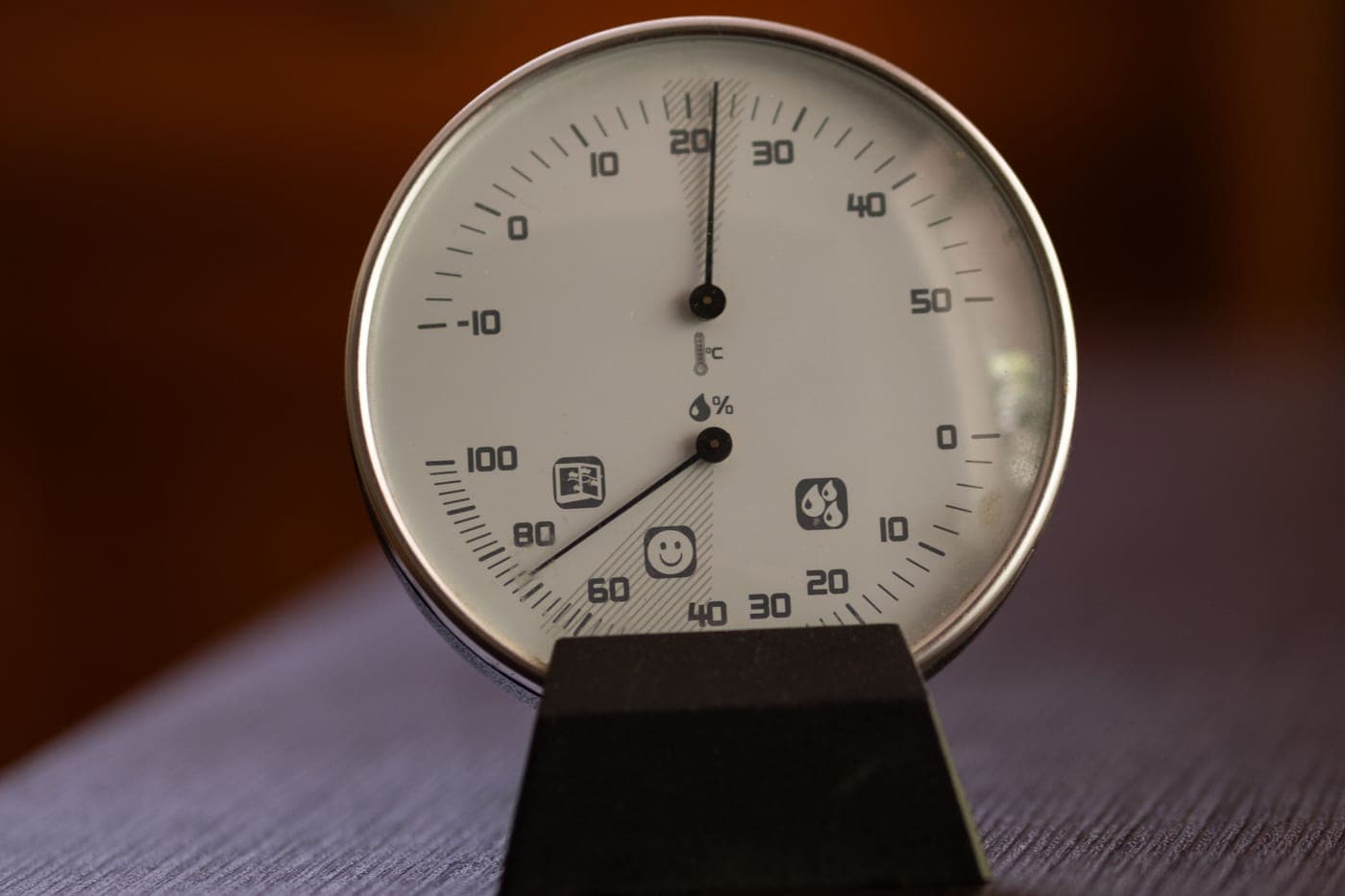
Rust is the damage that actually happens to stored firearms, and it happens quietly, over months, inside a box nobody opens. A hygrometer is the cheapest instrument in this hobby and the only one that tells you whether the rest of your moisture spending is doing anything. Buy it before the dehumidifier, not after.
This page is about the instrument: what to look for, where to put the sensor, and how to read the result. For the target range itself and the physics behind it, our gun safe humidity levels guide does that job with the published sources. Every specification below is the maker's own, checked 2026-10-10.
Why measure at all
What to look for in a safe hygrometer
- Humidity and temperature together. Condensation is a relationship between the two. A humidity-only reading hides the pattern Liberty describes in its environmental control guidance: warm moist air meeting cold steel.
- Recorded highs and lows. The overnight low and the afternoon high are the numbers that matter in a garage or an exterior-wall closet. Both monitors here record them.
- A sensible refresh rate. The Liberty monitor refreshes every ten seconds, which is more than enough.
- Mounting that works inside steel. Magnets are the easiest option in a safe: both picks here offer magnetic mounting, and the Liberty unit also has a flip-out stand.
- Battery life you can live with. The Liberty monitor runs on a single AAA, included. A monitor whose battery dies unnoticed is worse than no monitor, because you will trust a stale number.
Wireless remote sensor, or a display inside the door?
This is the one decision that changes the price. A self-contained monitor sits inside the safe and you read it when you open the door. A wireless unit puts a sensor inside and a display outside, so you can see the inside of the safe without unlocking it.
For a safe you open daily, the self-contained unit is fine. For a long-gun safe you open twice a year, a document safe, or a safe in a garage or basement you rarely visit, the wireless version is the one that actually gets read. The Hornady Wireless Hygrometer 95907 shows temperature and humidity from a remote sensor, with highs and lows on both the base and remote units, and mounts by integrated stand, magnets, hanging hole or Hornady's Square-Lok system.
Where the sensor goes
- Low, not on the door. Cool air and moisture settle. A sensor on the door panel reads the warmest, driest part of the safe and will under-report your problem.
- Away from the dehumidifier. Six inches from a warming rod and you are measuring the rod, not the safe.
- Not touching bare steel if you can help it, which reads the wall temperature rather than the air.
- In the same place every time. Comparability over months is the whole point.
What to buy
Our picks for this
Two monitors, and the thing you buy after the reading
Measure first with one of the two monitors. If the reading says you have a problem, the Eva-Dry E-500 is the cordless option for a safe with no interior outlet.
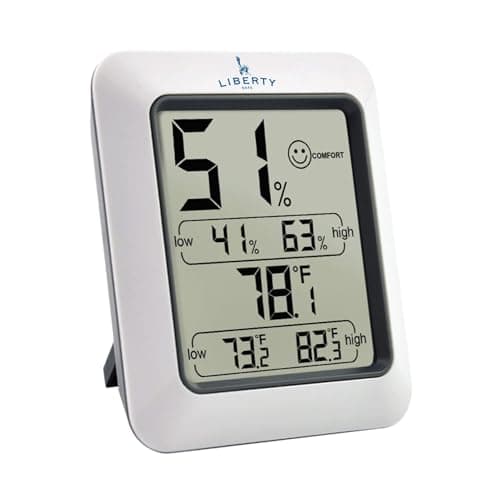
Best in-safe hygrometer
Liberty Safe Humidity and Temperature Monitor
Accessory7.3/10A small battery hygrometer that records highs and lows inside the safe, so you can confirm your dehumidifier is working instead of guessing.
$16.00Amazon#ad · Price as of October 19, 2026 · Disclosure for the link to Liberty Safe Humidity and Temperature Monitor
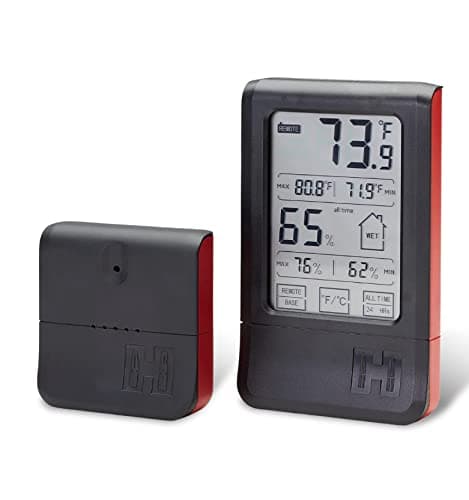
Best for reading humidity without opening the safe
Hornady Wireless Hygrometer 95907
Accessory6.6/10A two-piece hygrometer whose remote sensor sits inside the safe and reports to a touchscreen base, for checking humidity without opening the door.
$40.98Amazon#ad · Price as of October 19, 2026 · Disclosure for the link to Hornady Wireless Hygrometer 95907
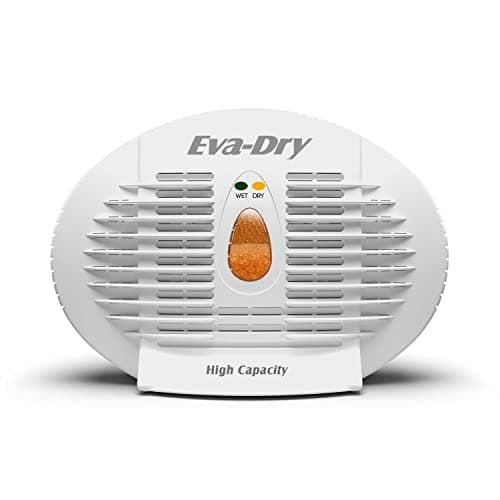
Best cordless pick for a large safe
Eva-Dry E-500 High-Capacity Dehumidifier
Accessory7.0/10Eva-Dry's larger cordless unit, rated for 500 cu ft and up to 20 oz per charge, so it goes longer between recharges in a large safe or closet vault.
$33.51Amazon#ad · Price as of October 19, 2026 · Disclosure for the link to Eva-Dry E-500 High-Capacity Dehumidifier
| Evidence | Liberty Safe Humidity and Temperature Monitor | Hornady Wireless Hygrometer 95907 | Eva-Dry E-500 High-Capacity Dehumidifier |
|---|---|---|---|
| Tier | Accessory | Accessory | Accessory |
| Readings | Humidity and temperature; 10-second refresh; records highs and lows | Temperature and humidity from a remote sensor; high/low shown in °F or °C on both the base and remote units | — |
| Display | — | Large touchscreen | — |
| Power | 1 AAA battery (included) | — | Cordless in use; recharges from 110-120V in about 10-12 hours (maker says to plug it into a power strip) |
| Mounting | Flip-out stand or magnet | Integrated stand, magnets, hanging hole or Hornady Square-Lok mount | — |
| Coverage | — | — | Up to 500 cu ft (maker-stated) |
| Warranty | 1 year, parts only, on Liberty accessories | — | Limited warranty against manufacturer defects; must be registered within 30 days of purchase (length not stated) |
| Score | 7.3/10 | 6.6/10 | 7.0/10 |
The Liberty monitor is 3.1 by 2.6 by 0.8 inches, runs on one AAA and records highs and lows — everything a safe owner needs and nothing more, with a one-year parts warranty on Liberty accessories. The Eva-Dry E-500 is in the list for a different reason: it is the cordless dehumidifier you buy once the meter says you have a problem and the safe has no outlet, rated by Eva-Dry for up to 500 cubic feet and up to 20 oz of moisture per charge, with a 10 to 12-hour recharge. Our dehumidifier roundup ranks the whole category, and electric vs rechargeable dehumidifiers compares the two approaches.
Reading the numbers
One reading tells you very little. A fortnight of highs and lows tells you what you have:
- High and steady: a dehumidifier sized to the safe's interior volume is the fix.
- Swinging widely day to night: the location is the problem before the equipment is. A garage or an uninsulated exterior wall does this; see where to put a gun safe and best gun safes for a garage.
- Spiking after you open the door in humid weather: normal, and it should settle. If it does not settle within a day, the desiccant is saturated.
- Low and stable: you are done. Check it quarterly and spend the money elsewhere.
Accuracy and calibration
Consumer hygrometers are not laboratory instruments and neither maker here publishes an accuracy tolerance. That is fine for this job, because you are watching a trend rather than certifying a number. Two practical habits: let a new monitor sit in the safe for several hours before you believe its first reading, and if you own two, keep them side by side for a day to see how far apart they read. If they disagree by a lot, trust the direction of change rather than the absolute value.
Common mistakes
- Buying the dehumidifier and not the meter. You then have no idea whether it works.
- Sticking the sensor on the door. It reads the driest, warmest spot in the box.
- Trusting a single reading taken the day it arrived. Give it time to equalise.
- Ignoring the temperature column. Condensation is about both numbers together.
- Letting the battery die. A frozen display looks like a stable safe.
How we scored this
Every pick, checked against the paperwork
Here is exactly what goes into a score: whether an independent lab listed the safe (UL for burglary under UL 1037, UL or Intertek for fire), the maker's published steel, lock and bolt-down specs, the owner's manual, a dated CPSC recall search, and a public rubric applied the same way to every safe. Every figure links to where it came from, so you can confirm the pick in a couple of clicks and buy with confidence.
Scores are our editorial judgment of that documented evidence. Commissions never set a score or decide a pick. The rubric and its weights are published.
Questions
Frequently asked
Do I need a hygrometer in my gun safe?
Where should I put a hygrometer in a gun safe?
Is a wireless gun safe hygrometer worth it?
What humidity should a gun safe be kept at?
Keep reading
Related on Bolt & Vault
- Gun safe humidity levelsThe target range and the physics, with the published sources.
- Best gun safe dehumidifiersWhat to buy once the meter says you have a problem.
- Electric vs rechargeable dehumidifiersWhich type suits a safe with no interior outlet.
- Best gun safes for a garageWhere a day-night humidity swing is the default condition.
- Best gun safes with humidity controlSafes that ship with the interior power a rod needs.
- Best gun safe door organizersWhere a meter and a dehumidifier go once the shelves are full.
Receipts
Sources
- Liberty Safe — Humidity and Temperature Monitor product page (checked 2026-10-10)
- Hornady Security — Wireless Hygrometer 95907 product page (checked 2026-10-10)
- Eva-Dry — E-500 renewable dehumidifier product page, rated coverage and recharge time (checked 2026-10-10)
- EPA — A Brief Guide to Mold, Moisture and Your Home (indoor humidity control)
- National Park Service — Conserve O Gram 10/1, care of historic longarms (PDF)
- Liberty Safe — Safe Environmental Control: Managing Temperature and Humidity Inside Your Safe (checked 2026-10-10)
Every figure above is traceable. Ratings come from the listing body or the maker's own spec pages (linked on every product), recall status from dated CPSC searches, and law summaries from official sources. Prices come live from Amazon so the number you see is the number you pay. Read the full method.