Home & Fire Safes · Head to head
Home safe vs safe deposit box: what belongs in each
A bank box is harder to rob but closed when you need it most. A home safe is always there but only as good as its rating. Here is how to split your papers between them.
By Mike M.Updated Researched, not lab-tested
#adReader-supported: we may earn a commission if you buy through our links, at no extra cost to you. It never decides a ranking. How we rate · Disclosure
The contenders
Side by side
 Stock photo
The home safe for quick-access papers
SentrySafe SFW123GDC
Fire chest7.5 /10UL-classified for 1 hour at 1,700°F with ETL-verified water resistance: a fixed home for the passport, powers of attorney and backup drive you may need when the bank is closed.
Check price · Amazon#ad · Price set by Amazon · Disclosure for the link to SentrySafe SFW123GDC
 Stock photo
The grab-and-go chest
SentrySafe CFW20201
Fire chest6.3 /10A 1-hour UL-classified chest with a 72-hour ETL flood rating and a carry handle. Portable, which also means a thief can carry it off.
Check price · Amazon#ad · Price set by Amazon · Disclosure for the link to SentrySafe CFW20201
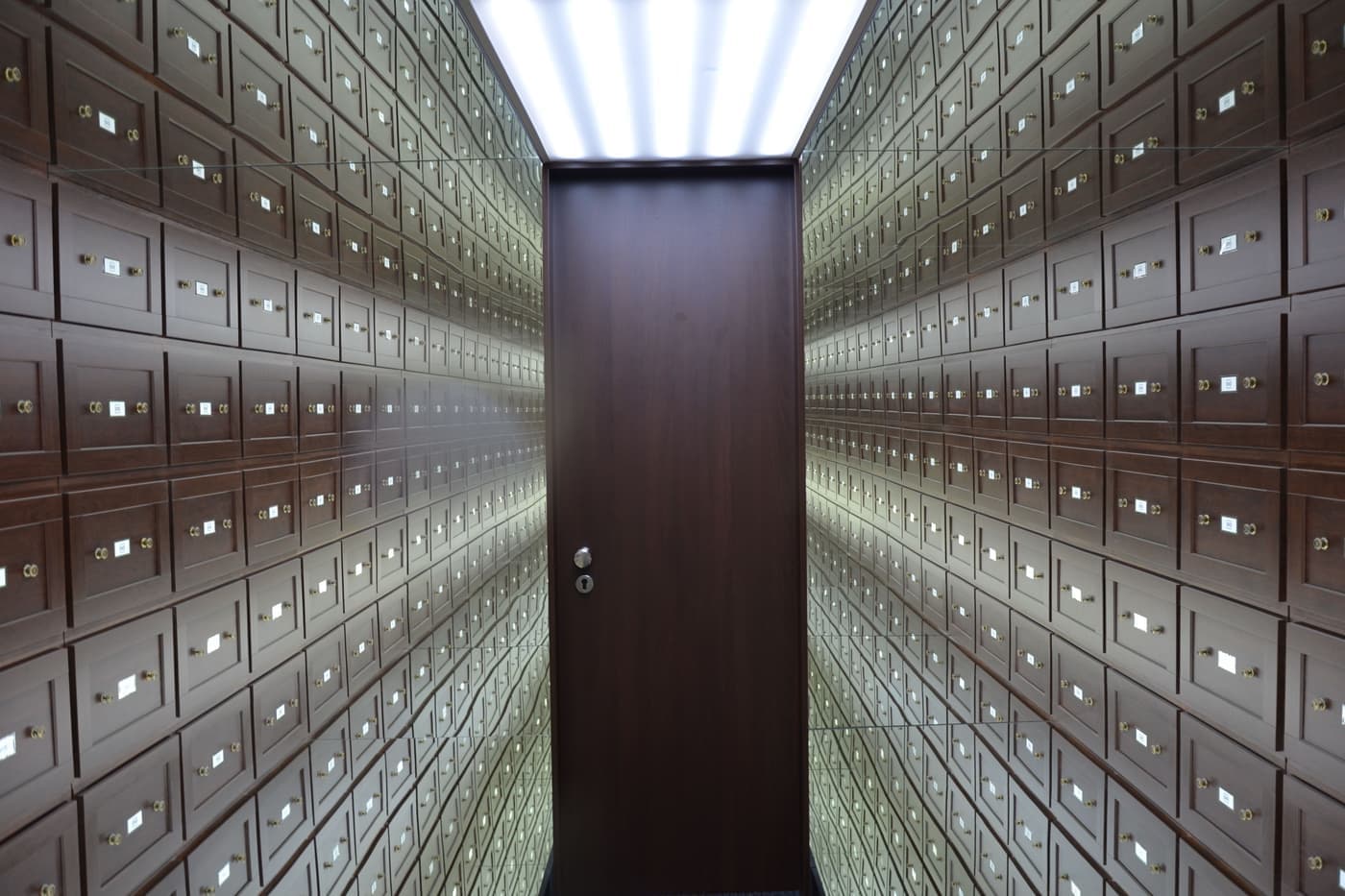
A note on method. We haven't handled or tested the safes on this page, and we don't sell bank boxes or insurance. This comparison is built from what the FDIC, the Office of the Comptroller of the Currency, FEMA and the Insurance Information Institute publish, plus the makers' own specifications for the two home safes. The safes are scored on the fire-safe rubric on how we rate.
At a glance
| Question | Home safe | Safe deposit box |
|---|---|---|
| When can you reach it? | Any time you're home | When the bank is open |
| FDIC-insured? | No. Cash outside a deposit account isn't FDIC-protected | No. The FDIC lists "Safe Deposit Boxes or their contents" as not insured |
| Other insurance | Ask your homeowners or renters agent | Banks typically don't insure contents; ask your agent |
| Burglary | The FDIC says a burglar could more easily break into a home safe | Inside a bank's secured vault |
| Fire and flood | Only what the safe's rating covers, for its rated time | Not guaranteed; the FDIC suggests waterproof bags |
| After the owner dies | Whoever has the code or key | Access rules depend on state law |
| Ongoing cost | A one-time purchase | An annual rental fee |
Each row is sourced in the sections below.
Access: when you can reach it
Access is the biggest practical difference. The FDIC's advice is direct: "Be mindful not to use your bank safe deposit box to store anything you might need to access quickly or when the bank is not open. That could include passports and originals of your 'powers of attorney'" (FDIC). A medical emergency on a Saturday night or a trip that comes up on a holiday is exactly when a bank box fails you.
Who can open the box matters too. You can rent a box jointly, but the FDIC notes that banks typically aren't responsible for items an authorized co-renter removes without your permission. After a renter dies, "the rules under which safe deposit boxes may be accessed upon the death of a safe deposit box owner depends on state law". FEMA's Emergency Financial First Aid Kit suggests asking your bank or checking state law "to confirm who can and cannot access the safe deposit box if the owner dies or cannot access it themselves due to illness" (FEMA EFFAK). This is a general summary, not legal advice; your bank's agreement and your state's rules decide the details.
A bank box can also be lost to neglect. If the annual fee goes unpaid, the OCC's consumer site says the box would likely be treated as dormant after three to five years of inactivity, depending on the state, and "the bank may be required to transfer the contents of the safe deposit box to the state treasurer or unclaimed-property office in a process called escheat" (HelpWithMyBank.gov). Keep the rental current, and make sure someone you trust knows the box exists.
A home safe's access problem is the opposite one: the lock. Know your safe's backup entry before you need it. Some keypad fire safes have a true override key and some don't; the SFW123GDC's manual calls its key "a secondary locking feature not an override key" (SentrySafe manual). If you're locked out, follow the manual's backup entry, then call the maker or a licensed locksmith.
Insurance: what's covered
Neither option is FDIC-insured. The FDIC's list of products it does not insure includes "Safe Deposit Boxes or their contents" (FDIC), and it explains why: a safe deposit box is a storage space, not a deposit account, so its contents "are not insured by FDIC deposit insurance if damaged or stolen". The same applies to cash in a home safe. As the FDIC puts it, "Cash that's not in a deposit account isn't protected by FDIC insurance."
Banks don't fill that gap by default. The FDIC says financial institutions generally don't insure box contents and suggests: "If you want protection for the valuables in your safe deposit box or home safe, talk to your homeowner's or renter's insurance agent." When you do, ask about two limits the Insurance Information Institute flags for standard homeowners policies: jewelry, art, collectibles and similar items are covered, "but there are usually dollar limits if they are stolen", and "a standard policy will not pay for damage caused by a flood" (Insurance Information Institute). For full value, the III points to a special personal property endorsement or floater based on an appraisal.
Fire, flood and theft
Theft. The FDIC quotes its own outreach chief: "A burglar could more easily break into your home and open the safe than get inside your safe deposit box at your bank." That matches our tier view of home fire safes. Most carry a fire rating and no burglary rating at all, so a heavy, anchored steel fire safe slows a thief down but isn't a UL-listed burglary container.
Fire and flood. The FDIC is careful here: neither a bank box nor a home safe is completely protected from theft, fire, flooding or other damage. It suggests "placing items in water-safe, zippered plastic bags or other plastic containers" in either place. At home, the level of protection is whatever the rating says, and only if a named lab measured it. A UL fire classification is a time-and-temperature result for paper (see our fire ratings explainer). A water rating tells you how deep and for how long, and it matters because fires are fought with water.
What to keep where
This split follows the FDIC's guidance, with FEMA's advice on copies:
| Item | Best place | Why |
|---|---|---|
| Original birth certificates, property deeds, car titles, U.S. Savings Bonds | Safe deposit box | The FDIC's named "good candidates"; rarely needed in a hurry |
| Irreplaceable photos, keepsakes, collections | Safe deposit box (in a waterproof bag) | The FDIC lists these too; a bank vault is harder to burgle |
| Passports | Home safe | The FDIC: you may need them quickly or after hours |
| Originals of powers of attorney | Home safe | Same reason; they may be needed in an emergency |
| Original will | Ask an attorney | The FDIC says requirements depend on state law |
| A small amount of emergency cash | Home safe | Ready.gov advises keeping a small amount of cash at home; larger sums belong in an insured deposit account |
| Copies of everything above, plus a backup drive of scans | The other location | FEMA suggests paper copies at home, in a bank box or with a trusted person |
On cash, the FDIC adds that money in a home safe or safe deposit box "cannot earn interest", and that a bank's rental agreement may restrict what you store, including cash. Ready.gov's preparedness advice is to "keep a small amount of cash at home in a safe place" (Ready.gov). FEMA's kit explains why: keep some cash with your important papers "to pay for emergency purchases in the event that ATMs are not functioning or banks are closed", sized to your family's basic needs such as food and gas. That is exactly the moment a bank box can't help. Our guide to what to keep in a "fireproof" safe goes through the home list item by item, including why a paper rating doesn't cover every kind of media.
If you keep it at home
A home safe earns its place when its ratings are measured by someone other than the maker. Both picks below carry fire ratings SentrySafe says are UL-classified and water ratings it says Intertek (ETL) verified. Neither states a burglary rating, so both sit in our fire-chest tier.
The SFW123GDC is the fixed home for quick-access papers. It has a steel case, a keypad and bolt-down hardware, with one catch its manual spells out: the ETL water claim applies only before the bolt-down kit is installed. The CFW20201 is the grab-and-go option, a 20 lb chest with the same 1-hour UL classification and 72 hours of ETL-verified flood protection. Its privacy lock keeps children out; it won't stop anyone from carrying it away. For more options, see our rankings of the best home safes and the best fire safes, and read where to put a safe in your house before you pick a spot.
Which setup fits you
- Mostly originals you rarely touch: a safe deposit box, plus a small UL-rated chest at home for copies and passports.
- You travel often or care for someone who may need a power of attorney quickly: a home fire and water safe for those originals, with copies in the bank box.
- No convenient branch, or you'd rather not pay a yearly rental: a home safe with a UL fire classification and an ETL water rating, plus scans stored off-site.
- Valuables worth insuring properly: whichever place you choose, talk to your insurance agent about scheduling them. Neither a bank box nor a home safe is insurance.
In detail
The contenders, in full
Stock photoThe home safe for quick-access papers
SentrySafe SFW123GDC
UL-classified for 1 hour at 1,700°F with ETL-verified water resistance: a fixed home for the passport, powers of attorney and backup drive you may need when the bank is closed.
EvidenceResearched · not lab-tested
How the 7.5 score breaks down
- Fire rating evidence (35%)
- 9
- Water rating evidence (15%)
- 8
- Burglary resistance (20%)
- 5.5
- Lock & entry (15%)
- 5.5
- Capacity & fit (10%)
- 8
- Support & transparency (5%)
- 7.5
What the evidence supports
- Fire rating is UL-classified (1 hr at 1,700°F), not a maker-only claim
- Water resistance is ETL-verified (8 in of water for 24 hr)
- The manual lists an ETL-verified 15 ft fire-impact drop and UL explosion-hazard classification
- Interior light, locking drawer and key rack; after-fire replacement program
Where it falls short
- Per the manual, the water rating no longer applies once you bolt it down
- No burglary rating: a steel-cased fire safe, not a UL RSC
- No override key: the key only adds a second lock, so a keypad fault can lock you out
Skip this if…
…you plan to bolt it down and still count on the water rating, or you need a UL burglary rating
#ad · Price set by Amazon · Disclosure for the link to SentrySafe SFW123GDC
Stock photoThe grab-and-go chest
SentrySafe CFW20201
A 1-hour UL-classified chest with a 72-hour ETL flood rating and a carry handle. Portable, which also means a thief can carry it off.
EvidenceResearched · not lab-tested
| Tier | Fire chest. Heat for its rated time. Burglary resistance is usually minimal. |
|---|---|
| Burglary rating | Not stated; maker describes a privacy key lock |
| Fire rating | UL Classified: 1 hr at up to 1,700°F (UL-classified per maker) |
| Water rating | ETL-verified: flood protection up to 72 hr (Intertek/ETL per maker) |
| Body steel | Resin-cased fire insulation (no steel body) |
| Lock | Tubular key lock |
| Capacity | 0.28 cu ft (maker-stated); interior 4.4 x 12.8 x 8.5 in (H x W x D); letter/legal fit not stated |
| Exterior dimensions | 6.6 x 15.4 x 14.3 in (H x W x D) |
| Weight | 20 lb |
| Warranty | Limited one-year manufacturing warranty plus Limited Lifetime After-Fire Replacement Program |
| Recall check | Sep 19, 2026: No CPSC recall found for SentrySafe fire, water or security safes in a search of CPSC.gov recall notices. |
How the 6.3 score breaks down
- Fire rating evidence (35%)
- 9
- Water rating evidence (15%)
- 8.5
- Burglary resistance (20%)
- 1.5
- Lock & entry (15%)
- 3.5
- Capacity & fit (10%)
- 6.5
- Support & transparency (5%)
- 7
What the evidence supports
- UL-classified for a full hour at 1,700°F, double the CHW20221 30-minute rating
- ETL-verified 72-hour flood protection
- Carry handle; about 20 lb
Where it falls short
- Privacy lock only: offers no resistance to someone taking the chest
- Small 0.28 cu ft interior; no room for hanging files
- One-year manufacturing warranty
Skip this if…
…you need to store file folders or keep the contents from being carried off
#ad · Price set by Amazon · Disclosure for the link to SentrySafe CFW20201
How we scored this
Safes we claim to have lab-tested: 0
Plenty of sites say they drilled, burned and flooded every safe they list. We didn't, and we say so. What we do instead: check whether an independent lab listed the safe (UL for burglary under UL 1037, UL or Intertek for fire), read the maker's published steel, lock and bolt-down specs, search CPSC recalls, and score every pick on a public rubric. Every figure links to where it came from.
Scores are editorial judgments from that documented research, not lab results. Commissions never set a score or decide a pick. The rubric and its weights are published.
Questions
Frequently asked
Is a home safe or a safe deposit box better?
Are safe deposit boxes insured?
Should I keep my passport in a safe deposit box?
Where should I keep my original will?
Is it safe to keep cash in a home safe?
Can a safe deposit box be damaged in a fire or flood?
Keep reading
Related on Bolt & Vault
- Best home safesHome safes ranked by the threat they actually stop.
- What to keep in a "fireproof" safeThe documents worth protecting at home, and what belongs elsewhere.
- Best fire safesFire-rated safes ranked by who certified the rating.
- Where to put a safe in your houseHide it, anchor it and keep it dry.
- Safe fire ratings explainedWhat a UL time-and-temperature rating does and doesn't promise.
Receipts
Sources
- FDIC — Five Things to Know About Safe Deposit Boxes, Home Safes and Your Valuables
- FDIC — Financial Products That Are Not Insured by the FDIC
- HelpWithMyBank.gov (OCC) — What happened to my lost safe deposit box contents?
- Insurance Information Institute — What is covered by standard homeowners insurance?
- FEMA — Emergency Financial First Aid Kit (FEMA P-1075, September 2019)
- Ready.gov — Financial Preparedness
- SentrySafe — SFW123GDC owner's manual P44621 (checked 2026-09-19)
We don't lab-test safes and we don't pretend to. Ratings come from the listing body or the maker's own spec pages (linked on every product), recall status from CPSC searches, and law summaries from official sources. Prices are set by Amazon and change often, so we don't print them. Where a figure isn't published, we say so. Read the full method.