Safe Ratings Explained · Guide
Are fireproof safes really fireproof? What a fire rating means when the house burns
No safe is immune to fire. A good rating buys time under known conditions. Here is how much, where it runs out, and what to do about the gap.
By Mike M.Updated Researched, not lab-tested
#adReader-supported: we may earn a commission if you buy through our links, at no extra cost to you. It never decides a ranking. How we rate · Disclosure
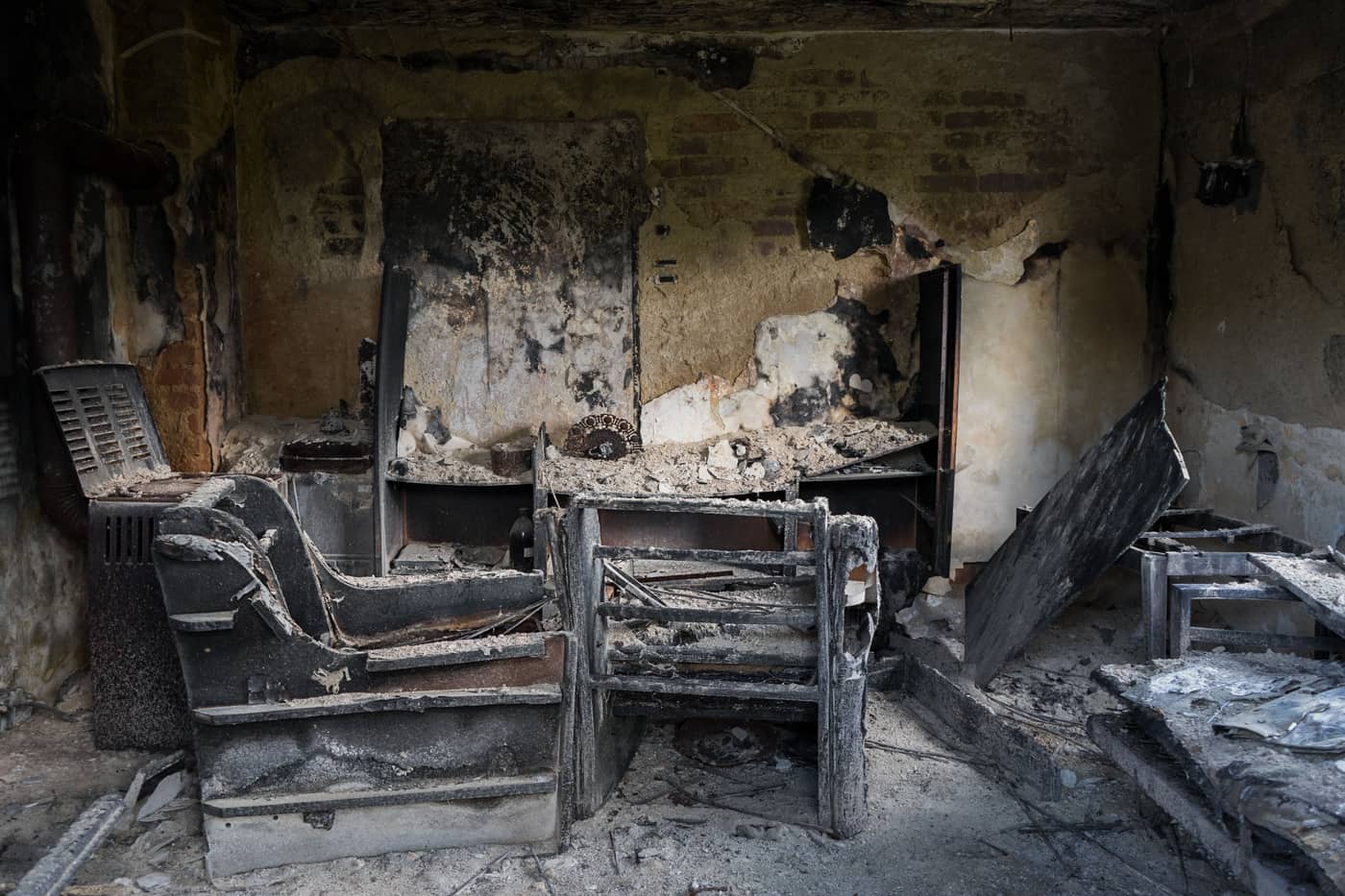
The short version, from the people who make them
You don't have to take our word for it. FireKing, a maker of fire-rated safes and files, answers the question in its own product FAQ: "No product on the market is totally fireproof in all conditions." Safe dealer Safe and Vault Store says the same in its fire-rating guide: "No safe is completely fireproof. Safes are designed to resist heat and smoke for a period of time, but cannot withstand fire indefinitely."
That is not a reason to skip a fire-rated safe. A good rating buys real time under known conditions, and for most household papers that is the difference between a scorched box and a lost passport. It is a reason to know exactly what the rating covers, and to plan for the fires that go past it.
A note on method: we haven't tested any safe in a fire. Everything below comes from the UL 72 standard's published scope, makers' own pages and manuals, state fire-agency guidance and one piece of attributed reporting, each linked where it is used.
Fire-resistant vs "fireproof": what the words mean
The US standard for fire-rated record storage is titled UL 72, Tests for Fire Resistance of Record Protection Equipment. "Fire resistance" is the honest word. It describes something that slows heat getting in, for a rated time, under test conditions. "Fireproof" is a marketing and search term. It suggests a permanent immunity that no standard tests and no lab certifies.
That is why this site says "fire-resistant" or "fire-rated" in its own voice, and puts "fireproof" in quotes when we mean the label on the box. When you see "fireproof" on a listing, read it as "has some kind of fire claim" and go looking for the actual rating.
It also explains why a steel box alone isn't fire protection. FireKing makes the point about ordinary metal file cabinets: they "do not provide any protection in the event of a fire," because their "conductive material actively draws the heat of the blaze into the cabinet." Steel stops hands and tools. Slowing heat is the job of the insulation inside it, and the rating is the only evidence of how well that insulation works.
What a fire rating actually promises
A rating makes a narrow, specific promise. Under UL 72:
- The class is the interior limit. Class 350 equipment is "intended to protect paper records"; Classes 150 and 125 are for photographic records, tapes and disks, with humidity limits as well. FireKing puts it plainly: fire ratings refer to the temperature the contents must not exceed, "not the exterior temperature of the fire itself."
- The time is how long the interior stayed under that limit in the furnace, at a stated furnace temperature. Master Lock's STW123GTCML, for example, is "UL Classified to protect your valuables in a fire for 2 hours in up to 1850°F."
- The extra tests are specific. UL 72 includes an explosion test for sudden high heat and, for equipment rated for impact, a fire-and-impact test covering a 30 ft fall. Not every rated safe carries the impact rating.
And one thing it doesn't promise. UL says its tests show performance "during exposure to fire, but are not intended to determine acceptability for use after fire exposure." A safe that has been through a fire is not certified for the next one.
How much fire time independent labs actually vouch for
It helps to see the real range. These are the independently verified fire ratings in our product registry, as the makers publish them:
| Rating | Tester | Examples |
|---|---|---|
| 30 minutes at up to 1,550°F | UL | SentrySafe CHW20221 and FHW40100 chests and files; SentrySafe 1170; Honeywell 1103 |
| 1 hour at up to 1,700°F | UL | SentrySafe SFW123GDC, SFW205GQC, FPW082HTC and CFW20201 |
| 2 hours at up to 1,850°F | UL | Master Lock STW123GTCML |
| 60, 90 and 120 minutes at 1,200°F | ETL (Intertek) | AMSEC SF6030, NF6036 and BFX6030 gun safes |
Two hours is the longest independently verified rating in our registry. Every longer figure we track is a manufacturer claim (Liberty's 2.5 hours for the Presidential, for example), and a fire that outlasts the rating is outside what any of these tests describe. For a full walk-through of classes, temperatures and testers, see our safe fire ratings explainer.
How a real house fire differs from the furnace
A furnace test is controlled and repeatable. A house fire is neither. FireKing explains why makers think 30- and 60-minute ratings are still useful: "the most intense heat and flames tend to travel from one location to another over the course of the fire," so a safe in one room may not sit in peak heat for the whole event. That is a maker's reasoning, not a guarantee, and it describes a fire that moves on. These are the situations a rating does not cover:
- Heat that lasts longer than the rating. Once exposure outlasts the rated time, the rating no longer describes what happens inside. A 30-minute chest and a two-hour safe are very different bets in a fire that burns for an hour.
- A collapsing structure. The impact test covers a fall only for models rated for it. Master Lock, for example, says the STW123GTCML is "UL Classified to withstand impact from up to 15 feet." A safe without an impact rating makes no promise about a fall.
- Water. Firefighting puts a lot of water on a house, and a fire rating says nothing about it. Water resistance is a separate test and a separate line on the label, often verified by Intertek (ETL). Check whether it survives bolting down: SentrySafe's manual for its SFW line says the water claim applies only before the bolt-down kit is installed.
- The wrong contents for the class. A Class 350 rating is about paper. Drives, film and photos need a lower interior limit or a separately verified media claim.
Wildfires and long-burning fires
Wildfire is the hardest case for any time-limited rating. When a whole neighborhood burns and no one is fighting the fire at your address, a house can burn to the ground with the safe inside it.
Student reporters at Colorado College's Burning Questions wildfire newsletter spoke with a Grand County, Colorado homeowner whose log home was reduced to ash in the 2020 East Troublesome Fire. He had left a SentrySafe document safe behind. It was locked and closed, and he told them there was nothing salvageable inside. The report does not identify the model or its rating, so it tells us nothing about one brand. It tells us that exposure like that goes beyond what a 30-minute to two-hour furnace rating describes.
California's fire agency plans around exactly that. CAL FIRE's Go Bag checklist includes "Copies of important documents (birth certificates, passports, etc.)" and, if time allows, "Family photos and irreplaceable items" and "Personal computer data on hard drives and disks." Its evacuation guide suggests keeping the emergency supply kit, including "papers you need," in your car. In wildfire country, the safe is the backup plan. The go bag is the plan.
What about gun safes?
Most gun-safe fire ratings are the maker's own. In our registry of full-size gun safes, only three carry a fire rating a named outside lab verified: American Security's SF6030, NF6036 and BFX6030, all ETL-verified at 1,200°F. The rest publish a time and a temperature the maker measured, from Stealth's 60 minutes at 1,200°F to Steelwater's two hours at 1,875°F, with no lab named.
A maker's claim isn't worthless. It is simply unchecked, and ratings stated at different furnace temperatures can't be compared minute for minute. Check whether the interior limit is stated at all: Stealth says its UL28 keeps the interior under 350°F during its test, while many gun-safe makers publish only a time and a furnace temperature, which tells you how hot the test got but not how hot the inside of the safe was allowed to get. The same limits apply as for any safe: time, water and a collapsing floor. If fire is your first worry for long guns, our fire-rated gun safe rankings put independently verified ratings first.
After a fire: don't open it too soon
FireKing's FAQ gives specific advice: "do not open your FireKing cabinet until it has cooled enough for you to comfortably rest your hand on it. Do not artificially cool down the exterior with water. The interior contents may still be extremely hot and at risk of spontaneous combustion if you open the cabinet too soon." It is written about FireKing's own products, and it follows the same logic for any fire-rated container: the heat that soaked into the insulation doesn't leave when the flames do. Check your own safe's manual as well.
Then call the maker. Many fire safes come with an after-fire replacement program; SentrySafe's, for example, asks owners to register within 30 days, so register the day you buy. Given UL's note that its tests don't cover use after fire exposure, plan to replace a safe that has been through a fire rather than trust it again.
How to close the gap between the rating and a real fire
- Buy a rating someone else measured. A UL classification or an Intertek (ETL) verification tells you the time and temperature were checked. See the best UL fire-rated safes.
- Buy more time than you think you need. A two-hour rating covers a longer exposure than a 30-minute chest. Neither covers everything.
- Match the class to the contents. Paper in a Class 350 safe; drives and photos in a media-rated container or with a separately verified media claim.
- Choose water protection you can keep. If you need the safe bolted down, pick one whose maker says the water rating survives bolting down.
- Keep copies somewhere else. A go bag, a relative's house or digital scans stored off-site. Our guide to what to keep in a fire safe covers which originals belong inside.
- Register the warranty. After-fire replacement programs only help if you're enrolled.
Two more details from FireKing's FAQ are worth passing on, with the caveat that they come from a maker describing its own products. On photographs, it says its document ratings apply "as long as the photographs are stored in an album or moisture-resistant container." And on insurance, it points out that fire insurance pays for losses that can be documented, so the records that prove what you owned are worth protecting in their own right. An up-to-date home inventory, stored as a copy outside the house, is one of the cheapest hedges there is.
Two picks for when fire is the threat
Both carry UL-classified fire ratings and ETL-verified water ratings, named on the makers' own pages. Neither has a burglary rating: they are fire safes, and they should be bolted down or hidden if theft also worries you. For more options, see our fire safe rankings.
Our picks for this
The most fire time for the evidence
The longest UL-classified rating in our registry, and a larger one-hour safe for households with more paper.
 Stock photo
Best 2-hour UL fire rating
Master Lock STW123GTCML
Fire chest8.0/10UL-classified for 2 hours at up to 1,850°F and for impact, with an ETL-verified water rating the maker says is kept when bolted down.
Check price · Amazon#ad · Price set by Amazon · Disclosure for the link to Master Lock STW123GTCML
- Stock photo
Best large fire and water safe
SentrySafe SFW205GQC
Fire chest7.5/102 cu ft with a UL-classified 1 hour at up to 1,700°F and ETL-verified water resistance; per the manual, the water rating stops applying once bolted down.
Check price · Amazon#ad · Price set by Amazon · Disclosure for the link to SentrySafe SFW205GQC
How we scored this
Safes we claim to have lab-tested: 0
Plenty of sites say they drilled, burned and flooded every safe they list. We didn't, and we say so. What we do instead: check whether an independent lab listed the safe (UL for burglary under UL 1037, UL or Intertek for fire), read the maker's published steel, lock and bolt-down specs, search CPSC recalls, and score every pick on a public rubric. Every figure links to where it came from.
Scores are editorial judgments from that documented research, not lab results. Commissions never set a score or decide a pick. The rubric and its weights are published.
Questions
Frequently asked
Are fireproof safes really fireproof?
How long does a fireproof safe last in a fire?
Is fire resistant the same as fireproof?
Do gun safes protect from fire?
Will a fire safe survive a wildfire?
Can I reuse a safe after a fire?
Keep reading
Related on Bolt & Vault
- Safe fire ratings explainedClass, time, furnace temperature and who ran the test.
- Best UL fire-rated safesOnly safes whose fire rating an independent lab verified.
- What to keep in a fire safeWhich originals belong inside, and which only need copies.
- Best fire-rated gun safesGun safes ranked with independent fire evidence first.
- Best fire safesLarger home fire safes for papers, passports and drives.
Receipts
Sources
- UL Standards & Engagement — UL 72, Tests for Fire Resistance of Record Protection Equipment
- FireKing — 1-Hour Fire-Rated Safe page and product FAQ
- Safe and Vault Store — Fire Ratings Explained (dealer explainer)
- Burning Questions (Colorado College Journalism Institute) — 'Fireproof' safes, a new wildfire documentary, and more
- CAL FIRE, Ready for Wildfire — Create Your Go Bag
- CAL FIRE, Ready for Wildfire — Go! Evacuation Guide
- Master Lock / SentrySafe — STW123GTCML product page
- SentrySafe — owner's manual P44621 (SFW line)
We don't lab-test safes and we don't pretend to. Ratings come from the listing body or the maker's own spec pages (linked on every product), recall status from CPSC searches, and law summaries from official sources. Prices are set by Amazon and change often, so we don't print them. Where a figure isn't published, we say so. Read the full method.