Home & Fire Safes · The rankings
Best fireproof safes for cash: fire is the easy half of the problem
Banknotes are paper, and a paper-rated fire safe protects paper. The part that catches people out is that the same safe weighs 86 lb and walks out of the house.
By Mike M.Updated Researched, not lab-tested
#adReader-supported: we may earn a commission if you buy through our links, at no extra cost to you. It never decides a ranking. How we rate · Disclosure
Quick picks
The rankings at a glance
| # | Product | Best for | Score | Price |
|---|---|---|---|---|
| 1 |  AMSEC BF1512 The only pick with both a UL RSC Level I burglary rating and a fire rating the maker says UL tested (60 min at 1,700°F), in a 288 lb body. Sold through AMSEC dealers. | Best safe for cash overallUL RSC | 7.1 /10 | Where to buy |
| 2 | Stealth HS4 A UL RSC burglary rating plus a 60-minute fire rating at 1,200°F, 12-gauge door and body, 191 lb, with a lifetime warranty covering burglary and fire. | Best UL RSC cash safe you can buy onlineUL RSC | 5.6 /10 | Check price · Amazon |
| 3 | Hollon B2500 Floor Safe A 1/2 in steel door set into concrete. No fire rating, no UL listing of the container, and nothing to carry off. The hiding place is the product. | Best for cash you want nobody to findAccess box | 7.2 /10 | Check price · Amazon |
| 4 |  Master Lock STW123GTCML UL-classified 2 hr at 1,850°F and ETL-verified water resistance. No burglary rating at all: bolt it down or it is a 128 lb handle for your cash. | Best fire protection, weakest against theftFire chest | 8.0 /10 | Check price · Amazon |
| 5 | Stealth EHS4 A steel home safe with no UL burglary listing. Included here because it is the tier most people actually buy, and because anchoring changes what it is worth. | Best mid-size steel safe if you bolt it downAccess box | 5.7 /10 | Check price · Amazon |
#ad · Prices are set by Amazon and change often, so we don't print them. Scores are ours, built from certifications, published specs and recall records, not lab tests. Photos are illustrative stock. Tap a row for the full write-up.
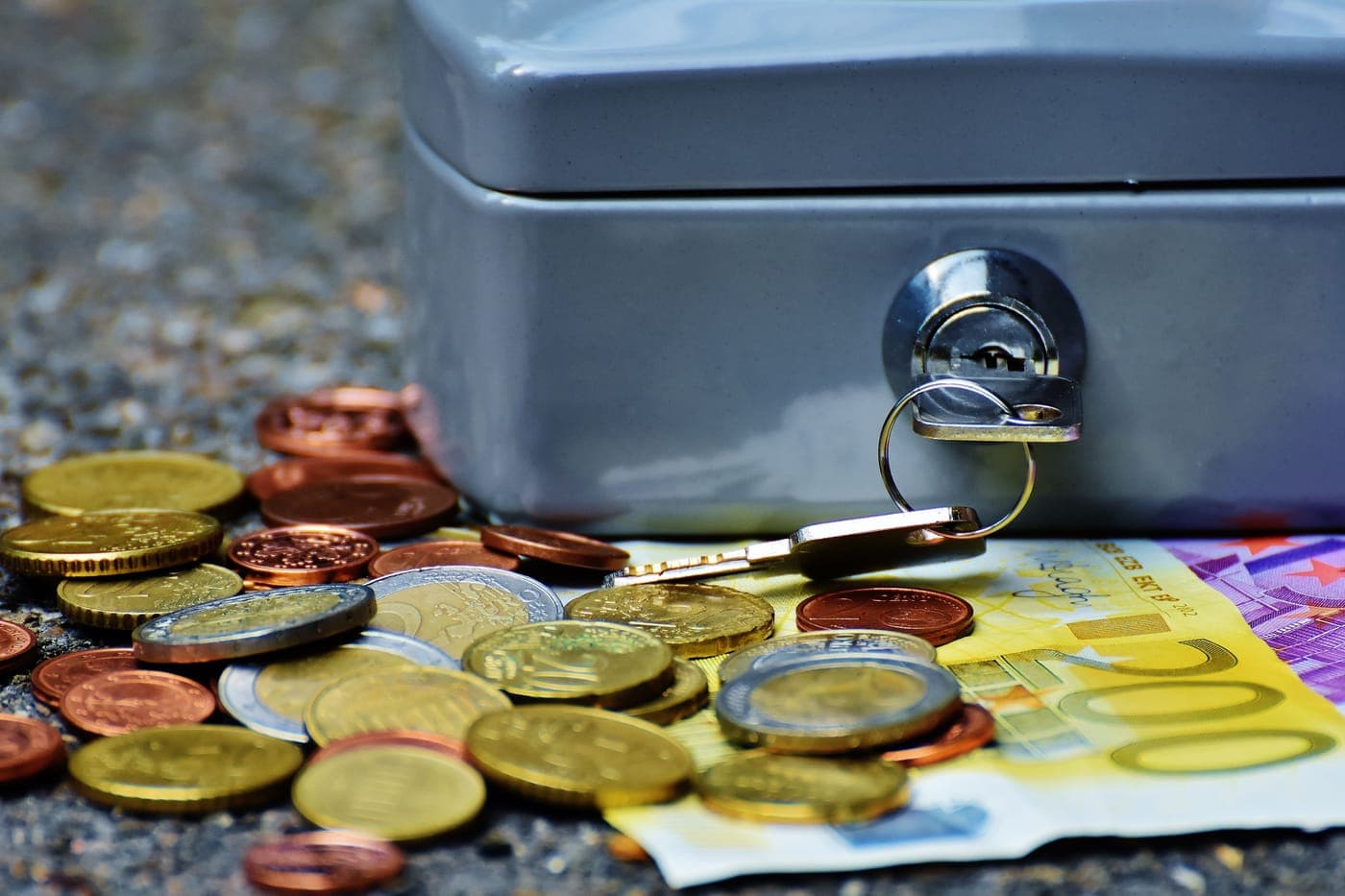
Search for a cash safe and you will be sold fire ratings. That is the wrong emphasis, because the fire half of this problem is already solved. Banknotes are paper. A safe classified to UL 72 Class 350 keeps its interior below 350°F for the rated time, which is the threshold the standard sets for paper records (UL Standards & Engagement). Any credible consumer fire safe already does that.
Cash has a second property paper records do not: it is anonymous, untraceable and instantly spendable. That makes it the single most attractive thing in your house to a burglar, and it means the question is not "will this safe survive a fire" but "will this safe still be here on Tuesday".
Fire is the easy half of the problem
The pattern behind almost every "my safe was stolen" story is the same: a 50 to 130 lb fire safe, unbolted, in a bedroom closet, taken away whole and opened somewhere else with time and tools. The fire rating was never tested. If you take one thing from this page, take this: for cash, weight and anchoring beat minutes and degrees.
What cash actually needs from a safe
- A burglary rating, or concealment. A UL RSC listing means a technician was timed attacking the safe with hand tools. Failing that, being in a slab where nobody looks.
- Anchoring, used. A bolt-down kit in the box does nothing. Bolted through the floor, a 191 lb safe stops being portable.
- A fire rating, any credible one. Class 350 for an hour handles cash comfortably.
- Discretion. Cash in a safe nobody knows about is safer than cash in a better safe everyone has seen.
- Dryness. Fire insulation holds moisture, and damp notes stick, stain and eventually rot.
The picks side by side
The AMSEC BF1512 is the only model here doing both jobs at once, and at 288 lb it is also the hardest to move. The Stealth HS4 is the version you can buy without finding a dealer: a UL RSC listing, a 60-minute fire rating at 1,200°F, 12-gauge door and body, and a warranty Stealth says covers burglary and fire damage (Stealth). The Hollon B2500 solves the problem from the other direction: no ratings at all, but set in concrete it cannot be taken (Hollon).
The two ratings that matter, and what each proves
- UL RSC (burglary). UL describes a Level 1 residential security container test as a five-minute attack by one technician with common hand tools such as drills, screwdrivers and hammers (UL). Five minutes sounds short. It is the difference between a safe that has been timed and one that has not. Our RSC explainer goes deeper.
- UL 72 Class 350 (fire). The interior stays below 350°F for the rated time, which is the paper threshold. For cash this is sufficient, and a 2-hour rating is margin rather than necessity. The fire ratings explainer covers the classes.
- "B-rate", which you will see on cash safes and floor safes. A construction convention describing a 1/2 in door, not a laboratory listing. Useful information, not a test result.
- TL-15 and TL-30. Genuine burglary listings above RSC, sold as commercial safes. If you are storing serious sums, read TL-15 vs TL-30 vs RSC before assuming an RSC is the top of the market.
Your homeowners policy probably caps cash at a small number
This is the part that changes how much cash people keep. Standard homeowners policies cover valuables but apply specific dollar limits to easily stolen categories. The Insurance Information Institute puts it plainly: "Expensive items like jewelry, furs, art, collectibles and silverware are covered, but there are usually dollar limits if they are stolen" (III).
Money is normally the tightest of those limits, and it is usually far lower than people expect. We are not going to quote a figure at you, because it is set by your own policy form, not by us. Find the section headed Special Limits of Liability in your policy documents and read the line for money, bank notes and coins. The III publishes a sample HO-3 form that shows where that section sits in a standard policy.
Two consequences. First, cash above that limit is effectively self-insured, so the safe is not a backstop, it is the entire protection. Second, some insurers will raise a limit or write an endorsement if valuables are in a rated, anchored safe. It is worth a phone call before you buy.
How we ranked these
We have not bought, opened or attacked any of these safes. Each is scored on the published rubric at how we rate. Note that the Hollon floor safe is scored on the access-control rubric and the other four on the fire and home-safe rubric, so its number is not directly comparable; it is placed by argument, not by score.
The BF1512 leads because it is the only pick carrying both ratings. The HS4 is second because it carries both and can be bought without a dealer account. The B2500 is third because concealment in concrete answers the actual threat to cash better than an unbolted fire safe does. The Master Lock is fourth on the best fire evidence on the site and no burglary rating. The EHS4 is fifth: a competent steel box with no listing, included because it is the tier most buyers land on.
We searched CPSC recall notices on 2026-09-26 for AMSEC, Stealth, Master Lock and Hollon and found no recall covering these models.
In detail
The picks, in full
Rank 1
Stock photoBest safe for cash overall
AMSEC BF1512
The only pick with both a UL RSC Level I burglary rating and a fire rating the maker says UL tested (60 min at 1,700°F), in a 288 lb body. Sold through AMSEC dealers.
EvidenceResearched · not lab-tested
| Tier | UL RSC. A timed hand-tool attack under UL 1037 (Level 1: one person, five minutes, common hand tools). |
|---|---|
| Burglary rating | UL RSC Level I security rating (per maker) |
| Fire rating | UL 60 min at 1,700°F (maker says "independently tested by UL") |
| Door steel | 1/2 in solid steel plate door; full-length dead bar |
| Lock | Mechanical key-locking spy-proof dial standard; ESL5 or ESL10 electronic lock options; three 1 in solid steel bolts |
| Bolt-down | 1 recessed anchor bolt hole; mounting hardware provided |
| Capacity | Interior 15 x 12 x 13 in (H x W x D) |
| Exterior dimensions | 20.25 x 17.25 x 18.75 in (H x W x D) |
| Weight | 288 lb |
| Warranty | Lifetime fire replacement warranty |
| Recall check | Sep 19, 2026: No CPSC recall found for American Security (AMSEC) safes in a search of CPSC.gov recall notices. |
How the 7.1 score breaks down
- Fire rating evidence (35%)
- 9
- Water rating evidence (15%)
- 0
- Burglary resistance (20%)
- 9
- Lock & entry (15%)
- 7.5
- Capacity & fit (10%)
- 6.5
- Support & transparency (5%)
- 7.5
What the evidence supports
- UL RSC Level I burglary rating plus a UL 60-minute fire rating at 1,700°F
- 1/2 in solid steel plate door with a full-length dead bar
- Made in the USA with a choice of mechanical or electronic lock
Where it falls short
- Not sold on Amazon; buy through an AMSEC dealer (plain reference link)
- 288 lb for a small 15 x 12 x 13 in interior
- No water rating
Skip this if…
…you want an Amazon purchase or need more than a small interior
Sold through dealers, not Amazon. Plain link: we don't earn a commission there.
Rank 2
Stock photoBest UL RSC cash safe you can buy online
Stealth HS4
A UL RSC burglary rating plus a 60-minute fire rating at 1,200°F, 12-gauge door and body, 191 lb, with a lifetime warranty covering burglary and fire.
EvidenceResearched · not lab-tested
| Tier | UL RSC. A timed hand-tool attack under UL 1037 (Level 1: one person, five minutes, common hand tools). |
|---|---|
| Burglary rating | UL RSC (Residential Security Container) burglary rating (per maker) |
| Fire rating | Manufacturer claim: 60 min at 1,200°F (testing lab not named) |
| Body steel | 12 gauge |
| Door steel | 12 gauge |
| Lock | UL-listed electronic lock (NL UR-2020) behind a hard plate with internal re-locker; mechanical dial upgrade available; six 1.25 in bolts |
| Bolt-down | 4 pre-drilled bolt-down holes; hardware included |
| Capacity | Interior 21 x 15 x 13 in (H x W x D); leather-lined shelf; interior power outlet |
| Exterior dimensions | 24 x 18 x 20 in (H x W x D), add 1 5/8 in depth for handle |
| Weight | 191 lb |
| Warranty | Lifetime burglary, attempted burglary and house fire warranty plus 2-year parts and labor |
| Recall check | Sep 19, 2026: No CPSC recall found for Stealth safes; the biometric gun-safe recalls found in the search (Awesafe, Fortress, SA Consumer Products) are other brands. |
How the 5.6 score breaks down
- Fire rating evidence (35%)
- 4
- Water rating evidence (15%)
- 0
- Burglary resistance (20%)
- 8.5
- Lock & entry (15%)
- 8.5
- Capacity & fit (10%)
- 7.5
- Support & transparency (5%)
- 9
What the evidence supports
- Maker states a UL RSC burglary rating, rare for a home safe sold on Amazon
- UL-listed electronic lock protected by a hard plate and re-locker
- 12-gauge door and body with six 1.25 in bolts
- Lifetime burglary and fire replacement warranty
Where it falls short
- Fire rating is a maker claim at 1,200°F with no lab named
- No water rating
- 191 lb: needs a plan for delivery and placement
Skip this if…
…fire is your main risk and you want a UL-classified fire rating; look at the AMSEC BF1512 or a UL-classified fire safe
#ad · Price set by Amazon · Disclosure for the link to Stealth HS4
Rank 3
Stock photoBest for cash you want nobody to find
Hollon B2500 Floor Safe
A 1/2 in steel door set into concrete. No fire rating, no UL listing of the container, and nothing to carry off. The hiding place is the product.
EvidenceResearched · not lab-tested
How the 7.2 score breaks down
- Access reliability evidence (30%)
- 8.5
- Construction & pry resistance (25%)
- 8
- Child-access standards (20%)
- 3.5
- Mounting (15%)
- 8.5
- Support & transparency (10%)
- 6.5
What the evidence supports
- 1/2 in solid steel door with five chrome-plated steel locking bolts
- UL-listed S&G Group 2 dial behind a drill-resistant hard plate, with an external relocker
- Mechanical lock: no batteries, no electronics, nothing to fail in a damp slab
- An air-spring bar and a full-length dead bar are published features, not marketing adjectives
Where it falls short
- "B-rate" is a construction description, not a laboratory listing of the container
- No fire rating: the maker makes no claim about a house fire above the slab
- Installation means cutting and re-pouring concrete, which is not reversible
Skip this if…
…you cannot cut into a concrete slab, or you need a fire rating for papers
#ad · Price set by Amazon · Disclosure for the link to Hollon B2500 Floor Safe
Rank 4
Stock photoBest fire protection, weakest against theft
Master Lock STW123GTCML
UL-classified 2 hr at 1,850°F and ETL-verified water resistance. No burglary rating at all: bolt it down or it is a 128 lb handle for your cash.
EvidenceResearched · not lab-tested
How the 8.0 score breaks down
- Fire rating evidence (35%)
- 10
- Water rating evidence (15%)
- 8
- Burglary resistance (20%)
- 6
- Lock & entry (15%)
- 5.5
- Capacity & fit (10%)
- 8
- Support & transparency (5%)
- 9
What the evidence supports
- UL-classified for 2 hours at 1,850°F, twice the 1-hour rating of the SFW123GDC
- A documented drop test while heated (the manual says an ETL-verified 30 ft; the product page says a UL-classified 15 ft impact), relevant if a floor collapses in a fire
- Maker says the fire and water protection is kept when bolted down
- Limited lifetime warranty
Where it falls short
- No burglary rating: a heavy fire safe, not a UL RSC
- No override key; the key only adds a second lock
- 128 lb for 1.19 cu ft, so plan placement before delivery
Skip this if…
…you need more than about 1.2 cu ft of space or a UL-rated burglary safe
#ad · Price set by Amazon · Disclosure for the link to Master Lock STW123GTCML
Rank 5
Stock photoBest mid-size steel safe if you bolt it down
Stealth EHS4
A steel home safe with no UL burglary listing. Included here because it is the tier most people actually buy, and because anchoring changes what it is worth.
EvidenceResearched · not lab-tested
| Tier | Access box. Children and unauthorized hands. Not a determined burglar with tools. |
|---|---|
| Burglary rating | Not stated by the maker (no RSC rating listed for the EHS4) |
| Fire rating | Manufacturer claim: 30 min at 1,200°F (testing lab not named) |
| Body steel | 14 gauge |
| Door steel | 14 gauge |
| Lock | SecuRam SafeLogic TopLight electronic lock, 5-minute lockout after four wrong codes; mechanical dial upgrade available; four 3/4 in bolts |
| Bolt-down | 2 pre-drilled bolt-down holes |
| Capacity | Interior 21 x 15 x 13 in (H x W x D); 1 adjustable shelf; interior power outlet |
| Exterior dimensions | 24 x 18 x 20 in (H x W x D), add 1.5 in depth for handle |
| Weight | 110 lb |
| Warranty | Lifetime burglary and fire warranty (break-in, attempted break-in, house fire) plus 2-year parts and labor |
| Recall check | Sep 19, 2026: No CPSC recall found for Stealth safes; the biometric gun-safe recalls found in the search (Awesafe, Fortress, SA Consumer Products) are other brands. |
How the 5.7 score breaks down
- Access reliability evidence (30%)
- 5
- Construction & pry resistance (25%)
- 6.5
- Child-access standards (20%)
- 4
- Mounting (15%)
- 6
- Support & transparency (10%)
- 9
What the evidence supports
- Published 14-gauge door and body with bolt-down holes
- Lifetime replacement warranty after break-in, attempted break-in or house fire
- Built-in power outlet and door storage pockets
Where it falls short
- Fire rating is a maker claim at 1,200°F with no lab named
- No RSC burglary rating; the same maker's HS4 carries one
- No water rating
Skip this if…
…you want a UL-rated burglary safe; the Stealth HS4 is the same footprint with a UL RSC rating
#ad · Price set by Amazon · Disclosure for the link to Stealth EHS4
What to look for in a cash safe
- A burglary rating stated by the maker, naming UL. "Burglary resistant" is a phrase. "UL RSC Level I" is a listing.
- Weight you would struggle to move. 288 lb on the BF1512, 191 lb on the HS4. Under about 150 lb, two people and a hand truck solve it.
- Bolt-down provision, and a floor that takes it. Concrete is ideal. On a timber floor, bolt into joists, and read can your floor support it first.
- A fire rating from a named lab, at any duration. For cash, one hour at Class 350 is sufficient. Do not pay a premium for two hours unless documents are going in too.
- A backup entry route you understand. Several excellent fire safes ship a key that is a second lock, not an override. Check before, not after.
- A body you can hide. A safe in a wardrobe behind clothes beats the same safe in a study with a chair pulled up to it.
How much cash should you keep at home?
We are not financial advisers and will not put a number on your household. What we can do is name the inputs, because they are the same for everyone:
- Your policy's special limit for money. Everything above it is uninsured. That is usually the real ceiling.
- Why you are holding it. A few days of expenses for a power cut or a card outage is a different product from a long-term store of value, which belongs in an account or a deposit box.
- Who knows. Every additional person who knows is a meaningful increase in risk, and most domestic thefts involve someone who had been in the house.
If the honest answer is "more than my insurer will cover and more than I need on hand", the fix is a bank, not a bigger safe. Our comparison of a home safe vs a safe deposit box sets out what each does and does not protect.
Storing cash so it survives both threats
- Bolt the safe down before you put anything in it. The job never gets easier and the safe never gets lighter.
- Bag the notes. Fire insulation holds moisture on purpose; SentrySafe warns its own insulation "has a high moisture content". A sealed bag with a desiccant sachet keeps notes crisp.
- Split it. A working amount somewhere accessible and the rest in the rated safe means you are not opening the main safe in front of people.
- Keep a written record outside the safe. A claim without evidence of the amount is a hard claim.
- Add a hygrometer. Cheap, and it tells you whether the room is the problem. See our humidity guide.
- Do not store cash with firearms if that means opening the gun safe often. Every extra opening in front of an audience erodes the point.
Common mistakes with cash at home
- Buying on the fire rating and ignoring the burglary column, when cash is the thing burglars want most.
- Leaving the bolt-down kit in the packaging.
- Putting the safe in the garage, which is where the tools already are.
- Assuming homeowners insurance covers the full amount. Read the special limit for money.
- Telling people. The safest safe is the one nobody mentions.
- Storing damp notes for years with no desiccant and no hygrometer.
How we scored this
Safes we claim to have lab-tested: 0
Plenty of sites say they drilled, burned and flooded every safe they list. We didn't, and we say so. What we do instead: check whether an independent lab listed the safe (UL for burglary under UL 1037, UL or Intertek for fire), read the maker's published steel, lock and bolt-down specs, search CPSC recalls, and score every pick on a public rubric. Every figure links to where it came from.
Scores are editorial judgments from that documented research, not lab results. Commissions never set a score or decide a pick. The rubric and its weights are published.
Corrections & updates
- Published. Maker listings, UL definitions, III insurance guidance and CPSC recall searches checked.
Questions
Frequently asked
Will cash burn in a fireproof safe?
What is the best safe for storing cash at home?
Does homeowners insurance cover cash stolen from a safe?
Is a fireproof safe enough to stop a burglar?
Should I keep cash in a bank instead?
Does cash need a dehumidifier in a safe?
Keep reading
Related on Bolt & Vault
- Best home safesHome safes ranked by the threat each one stops.
- Best floor safesThe hide-it-in-concrete answer to the same problem.
- Home safe vs safe deposit boxWhere cash and documents are actually safest.
- UL RSC rating explainedWhat a five-minute timed attack test does and doesn't prove.
- TL-15 vs TL-30 vs RSCThe burglary listings above RSC, and when they're worth it.
- Best "fireproof" home safesSorted by who certified the fire and water ratings.
Receipts
Sources
- UL — Residential Security Container standard revised
- UL Standards & Engagement — UL 72, Tests for Fire Resistance of Record Protection Equipment
- Insurance Information Institute — What is covered by standard homeowners insurance?
- Insurance Information Institute — Sample HO-3 Homeowners 3 Special Form (PDF)
- Stealth Safes — UL RSC Home 4 Safe HS4 product page
- Hollon Safe — Floor Safes series page
- U.S. Consumer Product Safety Commission — Recalls (searched 2026-09-26)
We don't lab-test safes and we don't pretend to. Ratings come from the listing body or the maker's own spec pages (linked on every product), recall status from CPSC searches, and law summaries from official sources. Prices are set by Amazon and change often, so we don't print them. Where a figure isn't published, we say so. Read the full method.