Setup & Safe Storage · Guide
Swapping a digital safe lock for a mechanical dial
Electronic locks fail in ways dials do not, and most safe locks share an industry mounting footprint, so the swap is usually possible. Whether it is worth paying a technician is the real question.
By Mike M.Updated Researched
#adReader-supported: we may earn a commission if you buy through our links, at no extra cost to you. It never decides a ranking. How we rate · Disclosure
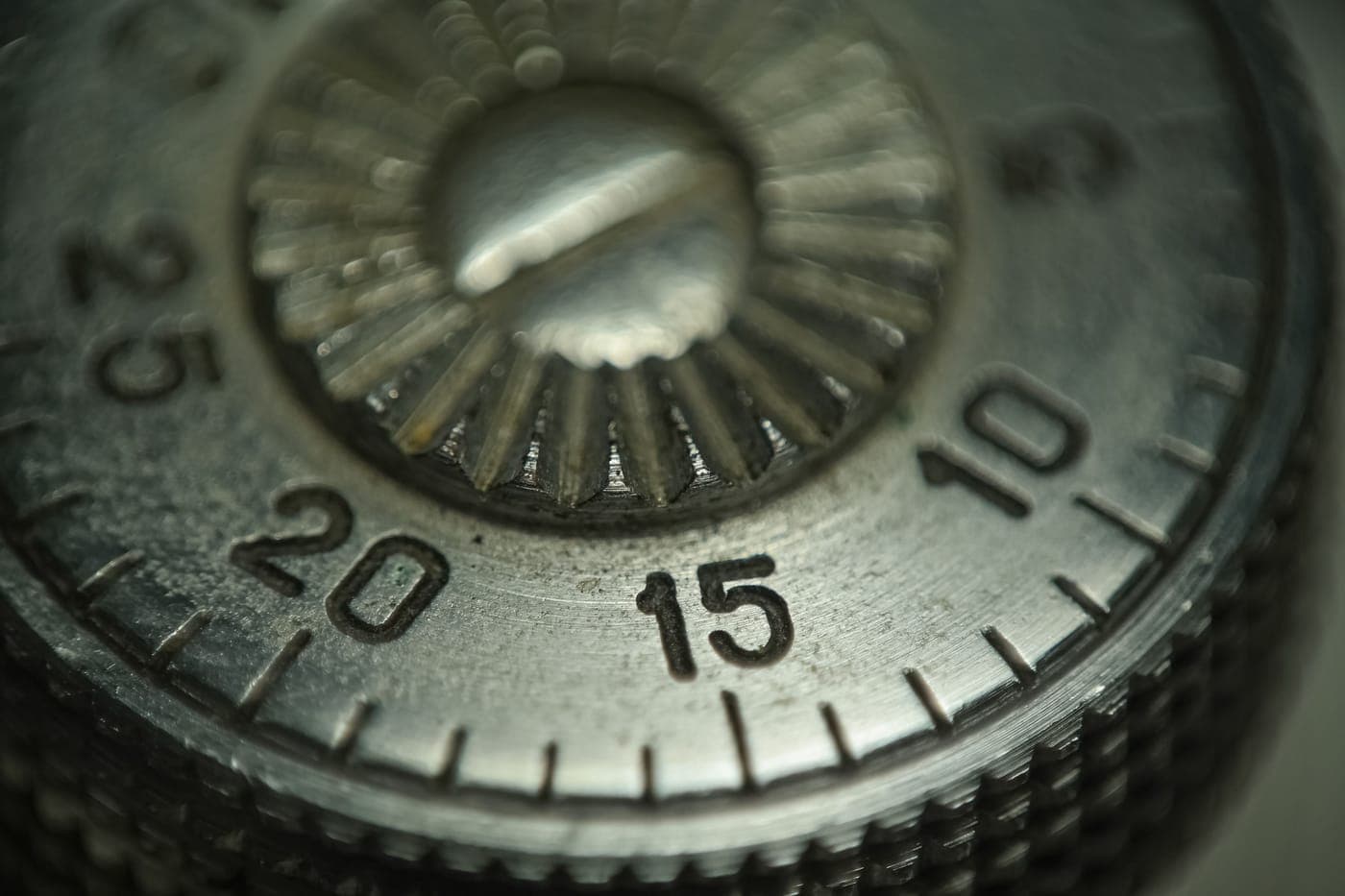
This page covers one job: replacing a working or dead electronic safe lock with a mechanical dial, on a safe you own. It is a parts-and-labor question, and the answer is mostly about footprints, door thickness and who is allowed to touch the lock.
Every figure below is quoted from the maker's or the dealer's published listing, linked at the value it supports and checked 2026-10-26.
Why owners make this swap
The reasons are consistent, and they are mostly about failure modes rather than preference:
- Batteries. A keypad introduces a consumable into the one device you need to work under stress. A dial has no batteries and nothing to replace on a schedule.
- Lockout behavior. Electronic locks commonly penalize wrong entries with a timed lockout, which is a feature until you are the one standing there.
- Service life. A keypad is electronics in a steel box that may sit in a garage or basement through temperature and humidity cycles. A Group 2 dial is a mechanical assembly.
- Resale and insurance conversations. A UL-rated mechanical dial is what many makers fit as their own premium option, so it is a known quantity rather than a brand-specific module.
None of that makes a dial strictly better. Our electronic vs mechanical safe locks comparison lays out the case on both sides, including the speed argument that keeps most households on a keypad. Read that first if you have not decided; this page assumes you have.
Is it even possible on your safe?
Usually, and for a structural reason: safe locks are mounted to the inside of the door on a standardized bolt pattern, so the lock body is closer to a module than a bespoke part. The dealer listing for the S&G 6730-100 puts it directly — it uses S&G's "Magic Module footprint to match the mounting dimensions of most mechanical and electronic safe locks", and Model 6730 locks "don't require additional boltwork or mounting screw location changes".
Two honest qualifications. First, that is a claim about most safe locks, and the same listing still tells you to verify compatibility with your safe's manufacturer. Second, a shared footprint says nothing about the rest of the door: the hole through which the spindle passes, the thickness of the door, and whether the existing lock is a swing-bolt or a deadbolt-style body all affect what a technician can fit without modifying anything.
The three things that decide fit
- Door thickness. The dial connects to the lock through a spindle, and the spindle has to be long enough. The 6730-100 kit is listed with a 5 in spindle, stated as long enough for a 3.4 in door thickness. A thick composite fire door can exceed that, and the fix is a different spindle, not force.
- The existing lock type and boltwork. A dial lock moves a bolt that has to engage the safe's own boltwork the way the old lock did. This is the part a technician assesses in person and the part you cannot settle from a product page.
- The hard plate and relocker. Better safes protect the lock with a drill-resistant hard plate and an internal relocker that fires if the lock body is attacked. Whatever goes in has to sit correctly behind that protection, so "it bolted up fine" is not the same as "it is still protected".
The practical version of all three: photograph the inside of your door, note the model number of the safe and the existing lock, and give a technician those before you buy a part.
Who is allowed to do it
A certified safe technician, and this is not a formality. The S&G dealer listing states plainly that all locks must be installed by a certified locksmith or the warranty may be void, and that warranty repairs go back to the manufacturer, which it puts at two to three weeks. A self-fitted lock can therefore cost you the lock warranty, and on many safes the safe's own warranty too.
SAVTA — the trade association for safe and vault technicians — publishes a "Safe Tech Search" tool for finding a qualified technician, which is the sane starting point if you do not already have a locksmith. Ask two questions when you call: whether they fit customer-supplied locks, and whether they stock the dial you want. Many prefer to supply the lock themselves, which also puts the warranty in one place.
What it costs, honestly
We publish no prices beyond the ones our sources state, and labor is local, so treat this as the shape of the bill rather than a quote. The part is a sub-$150 item at the dealer we cite. The labor is a service call from a safe technician, which is the larger and far more variable number, and it may include a trip charge. Two consequences follow:
- On a mid-range safe, the swap can approach a meaningful share of what the safe cost. That is the moment to ask whether you are fixing a lock or buying the wrong safe twice.
- On a good safe you intend to keep, it is cheap insurance against the one consumable part. A dial on a safe you will own for twenty years is a different calculation from a dial on a $400 cabinet.
The lock, and the alternative worth pricing first
Below: the dial kit to specify if you are converting, and two safes that come with a mechanical dial as standard equipment, because for many buyers the honest answer is that the next safe should simply have the lock you want.
Our picks for this
The retrofit kit, and two safes that ship with a dial
The lock is a technician-fit part: have it installed rather than attempting it yourself, or the warranty may be void. The two safes are here because a dial fitted at the factory costs nothing in labor.
- Sargent & GreenleafNo image
Best mechanical dial for a lock swap
Sargent & Greenleaf 6730-100 Mechanical Dial Lock
Accessory7.9/10A UL Group 2 dial supplied as a complete kit, on a footprint the dealer states matches most mechanical and electronic safe locks with no boltwork changes. Shown in stock when we checked; must be fitted by a certified locksmith.
Check price · Amazon#ad · Price as of November 3, 2026 · Disclosure for the link to Sargent & Greenleaf 6730-100 Mechanical Dial Lock
- American Security (AMSEC)No image
Best for independent burglary and fire ratings
American Security BFX6030
UL RSC9.1/10Fits a UL-rated mechanical dial as standard, with an electronic lock as the option rather than the default, plus UL RSC Level 1 and an ETL-verified fire rating. Dealer-sold.
Check price · Amazon#ad · Price as of November 3, 2026 · Disclosure for the link to American Security BFX6030
- Fort KnoxNo image
Best entry into a Fort Knox
Fort Knox Maverick 6031
UL RSC6.8/10Fort Knox fits an S&G mechanical dial at its entry price point, so the lock you would be paying a technician to retrofit is the lock it arrives with. Built to order through a dealer.
Check price · Amazon#ad · Price as of November 3, 2026 · Disclosure for the link to Fort Knox Maverick 6031
What you give up with a dial
Worth being even-handed, because the swap is irreversible in practical terms once you have paid the labor:
- Speed. Dialing a three-wheel combination under stress is slower than a keypad, and much slower in the dark. If this is a quick-access safe, the swap is probably the wrong call — see our mechanical pistol safes for the quick-access designs that are mechanical by design rather than by conversion.
- Multiple users. Electronic locks commonly hold several user codes. A dial holds one combination.
- No key override. That is the point for some owners and a problem for others. Lose the combination and the answer is a technician.
- Audit features and alarms. Wrong-entry alarms and lockouts disappear with the keypad.
And one thing that does not change: the burglary rating of the container. Swapping locks does not upgrade the safe. If the body is the weak point, our burglary safe rankings and UL RSC explainer are the pages that matter, not this one. If the safe is UL-listed, note also that fitting an unapproved lock can put you outside what the listing was issued against — another reason to let a technician specify the part.
What to ask the technician before you book
One phone call settles most of this, and it is a much better use of ten minutes than reading forum threads about your safe model. Have the safe's make, model and the existing lock's name in front of you, then work through six questions:
- "Will you fit a customer-supplied lock, or do you supply it?" If they supply it, the part warranty and the labor warranty sit with one business, which is usually what you want.
- "Does my door thickness need a longer spindle?" The stock kit is listed for a 3.4 in door. Ask rather than discover.
- "Will the dial drive my existing boltwork without modification?" The answer you want is yes. "We can make it work" means drilling or fabrication, which is a different job on a rated safe.
- "Does the safe keep its hard plate and relocker coverage afterward?" The lock has to sit behind the protection that was there before.
- "Is this a shop job or an on-site job, and what is the trip charge?" A full-size safe is not going in a van, so on-site is usually the answer, and the travel is part of the bill.
- "Will you set the combination with me, and show me how to exercise it?" A dial wants to be opened a few dozen times before you trust it, and the technician should hand the safe back working rather than just closed.
Write the combination down and keep it somewhere outside the safe before the technician leaves. A dial has no key override, which is the feature you paid for and the risk you accepted in the same stroke.
Common mistakes
- Buying the lock before measuring the door. Spindle length is the first thing that stops a swap, and the kit states a 3.4 in allowance.
- Fitting it yourself to save the service call. The listing says this can void the warranty, and a mis-fitted lock on a loaded safe is the worst possible place to learn.
- Assuming "fits most safes" means yours. The dealer tells you to confirm with the safe maker. Do that.
- Converting a quick-access safe. A dial is the wrong lock for a bedside box.
- Expecting a security upgrade. The lock is not the rating; the container is.
- Throwing away the old lock and keys. Keep them until the new lock has been exercised a few dozen times and the combination is written down somewhere outside the safe, as do safes have master codes explains.
How we scored this
Every pick, checked against the paperwork
Here is exactly what goes into a score: whether an independent lab listed the safe (UL for burglary under UL 1037, UL or Intertek for fire), the maker's published steel, lock and bolt-down specs, the owner's manual, a dated CPSC recall search, and a public rubric applied the same way to every safe. Every figure links to where it came from, so you can confirm the pick in a couple of clicks and buy with confidence.
Scores are our editorial judgment of that documented evidence. Commissions never set a score or decide a pick. The rubric and its weights are published.
Questions
Frequently asked
Can you replace a digital safe lock with a mechanical dial?
Can I install a safe lock myself?
What decides whether a dial will fit my safe?
Is a mechanical dial more secure than an electronic lock?
Is it cheaper to buy a safe that already has a dial?
I am locked out of my safe. Does this help?
Keep reading
Related on Bolt & Vault
- Electronic vs mechanical safe locksThe decision this page assumes you have already made, argued from both sides.
- Dead battery, safe shutThe maker-sanctioned steps when a keypad goes dark, which is what prompts most swaps.
- Best gun safes with mechanical locksSafes that fit a dial as standard, so no retrofit is needed.
- Do safes have master codes?What happens to codes and overrides when the lock changes.
- Gun safe hinges explainedThe other door hardware owners worry about, and what it actually affects.
- Stealth Safes reviewThe brand that names UL for burglary and no lab at all for fire.
Receipts
Sources
- Safe and Vault Store — S&G 6730-100 Mechanical Dial Combination Lock: UL Group 2, kit contents, Magic Module footprint claim, 5 in spindle / 3.4 in door thickness, price, stock and the certified-installer warranty condition (checked 2026-10-26)
- SAVTA (Safe & Vault Technicians Association) — trade association for safe and vault technicians, with its public Safe Tech Search tool (checked 2026-10-26)
- American Security (AMSEC) — BFX6030 product page, Wayback capture 2026-02-14 (the live site blocks automated requests): UL-rated mechanical dial standard with an electronic lock option
- Safe and Vault Store — Fort Knox Maverick 6031 spec sheet: UL-rated Sargent & Greenleaf Group II mechanical dial fitted as standard (checked 2026-10-05)
Every figure above is traceable. Ratings come from the listing body or the maker's own spec pages (linked on every product), recall status from dated CPSC searches, and law summaries from official sources. Prices come live from Amazon so the number you see is the number you pay. Read the full method.