Setup & Safe Storage · Guide
How to open a gun safe with a dead battery, in the right order
A flat battery almost never locks you out permanently. The problem is that most owners try the four routes in the wrong order, and two of them stop working once the keypad has been forced.
By Mike M.Updated Researched
#adReader-supported: we may earn a commission if you buy through our links, at no extra cost to you. It never decides a ranking. How we rate · Disclosure
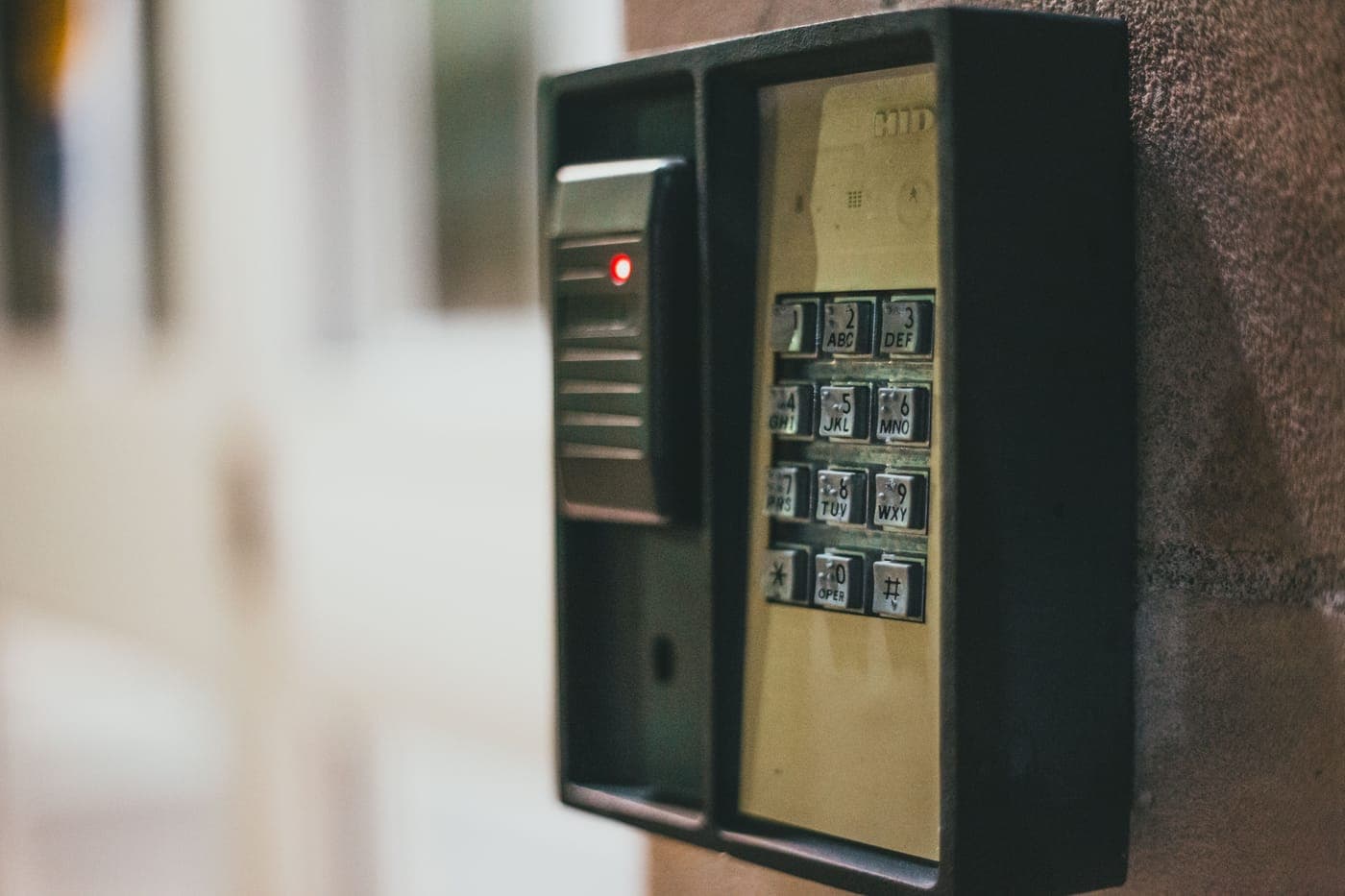
An electronic lock with a flat battery is the single most common reason people cannot open their own safe. It is also, in almost every case, a twenty-minute problem rather than a disaster. What turns it into a disaster is panic: forcing the keypad, prying the door, or drilling, all of which can trip the relocker that is designed to lock the safe permanently when someone attacks the lock.
This page is the order of operations, plus what the makers of the safes we document actually publish about backup entry. It is not a bypass guide, and we are not going to publish anything that helps someone open a safe that is not theirs. Everything here comes from maker documentation, checked 2026-10-10.
Do this first: confirm it really is the battery
Three symptoms point at power rather than the lock:
- No keypad backlight, no beep and no response at all.
- A low-battery indicator you have been ignoring. Makers publish these and they differ: the Hornady RAPiD Safe 4800KP has a battery-check LED that flashes green, yellow or red per its instructions; Vaultek's V20i blinks the "1" key red with rapid beeps; GunVault's low-battery light flashes while you enter your code, and GunVault suggests changing batteries at least every six months.
- The keypad lights but the motor does not move the bolt — a classic half-dead battery symptom, because the display needs far less current than the lock motor.
If instead the keypad works and rejects your code, this is a different problem: see the lockout and combination notes below and in our electronic vs mechanical safe locks comparison.
The four routes in
- Fresh batteries, correctly fitted.
- External power, where the lock provides it.
- The mechanical override key, where the safe has one.
- A safe technician or the maker's service route.
1. Replace the battery properly
Most "dead safe" calls end here, and most failed attempts fail for one of these reasons:
- Replace all cells at once, from a sealed pack. Mixing an old cell with new ones gives you a pack that reads fine and cannot drive the motor.
- Use the chemistry the maker specifies. Alkaline is what most safe locks are specified for — Energizer publishes the datasheet for its E91 alkaline AA if you want to see what the cell is rated to do. Lithium and rechargeable cells have different voltage curves and some locks behave unpredictably on them.
- Find the right compartment. On many safes it is under or behind the keypad, which pops or unscrews off; on some it is inside the door. Stealth, for example, publishes external battery access specifically so a dead battery can be changed from outside the locked safe (UL28 product page).
- Hold the keypad firmly while entering the code. A loose keypad after a battery change is a common cause of intermittent contact.
- Wait out any penalty lockout. Wrong entries trigger a timed lockout on most locks — two minutes on the SentrySafe QAP2BLX after five wrong entries, five minutes on the Stealth EHS4 lock after four. Entering more codes extends it.
2. External power
Several designs let you power the lock from outside without opening anything. Vaultek's LifePod cases have a micro-USB port that powers the lock if the 9V battery is dead, and Vaultek states that on its 20 Series, if the manual keys are lost and the battery dies, the safe can be plugged in (Vaultek FAQ). Hornady's RAPiD Safe models accept a 12V AC adapter as well as batteries. On full-size safes, an external 9V jump point is less common but worth checking the manual for before you do anything else.
3. The override key
This is where makers differ most, and it is worth knowing before you buy rather than at 2am. From the safes we document:
- Steelwater publishes a high-security, double-bitted, drill-resistant bypass key on the HD593924.
- Winchester ships the Bandit 14 with a SECURAM electronic lock and a backup key.
- Stealth's UL series lists no override key — only external battery access. That is a deliberate design choice, because an override keyway is also an attack surface.
- Quick-access boxes almost all have one: two barrel keys on the Hornady vaults, two manual keys on the Vaultek boxes, a high-security manual key on the GunVault MV500.
Keep that key somewhere other than on top of the safe, and not inside it. A spare at a relative's house is the standard advice for a reason.
4. A safe technician
If fresh batteries, external power and the key have all failed, the lock itself has failed and the next step is a professional, not a drill. Two routes: the maker's warranty service, which several brands cover (Sports Afield advertises free locksmith service if you are locked out), or an independent safe technician. Have your serial number and proof of ownership ready — any legitimate technician will ask for both.
If the issue is a forgotten combination rather than a battery, makers have formal processes: Liberty, for example, publishes a combination removal request process, and our do safes have master codes page covers what manufacturers can and cannot do with codes, and under what conditions.
What the makers actually publish
Lock manufacturers document this better than safe brands do. Sargent & Greenleaf, whose locks are fitted to several safes in our registry, publishes a troubleshooting guide for its 6120 and 6123 electronic locks and literature for its 6730 electronic lock. If you know which lock is on your safe — and you should, because it is usually printed on the keypad — go to the lock maker's documentation first. It is more specific than anything the safe brand will tell you.
Preventing it entirely
- Change the batteries on a schedule, not on a warning. GunVault suggests at least every six months for its boxes; annually is a reasonable default for a full-size safe used daily.
- Write the date on the battery pack with a marker when you fit it.
- Keep a sealed spare pack nearby but not inside the safe.
- Store the override key off-site or in a different locked container.
- Consider a mechanical lock if the safe is rarely opened. A dial never has a flat battery; our gun safes with mechanical locks roundup lists the models that take one as standard.
Locks that cannot strand you
Our picks for this
Three safes with no battery to fail, or a documented key
A mechanical dial as standard, a push-button mechanical lock with no electronics at all, and an electronic safe that publishes a drill-resistant bypass key. If being locked out is the thing you worry about, these are the three shapes of answer.
- American Security (AMSEC)No image
Best UL burglary and fire-rated home safe
AMSEC BF1512
UL RSC7.1/10Carries both a UL RSC Level I burglary rating and a 60-minute, 1,700°F fire rating the maker attributes to UL, built around a 1/2 in steel plate door; a dealer-sold benchmark, not an Amazon buy.
Check price · Amazon#ad · Price as of October 19, 2026 · Disclosure for the link to AMSEC BF1512
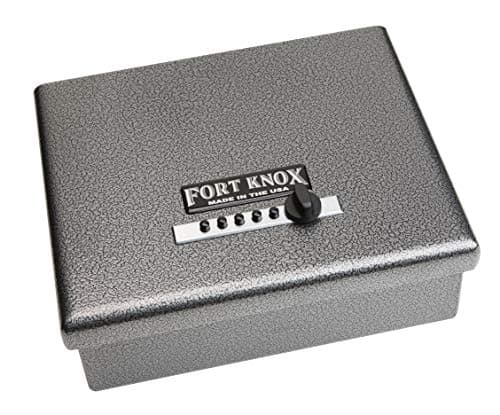
Best mechanical pistol box
Fort Knox Original Pistol Box
Access box8.8/10The heavy-steel mechanical pick: a Simplex push-button lock with no batteries, a maker-stated 10-gauge body and 3/16-inch door, a CA DOJ roster listing and a limited lifetime warranty.
$299.00Amazon#ad · Price as of October 19, 2026 · Disclosure for the link to Fort Knox Original Pistol Box
- SteelwaterNo image
Best heavy-steel pick for a slab floor
Steelwater Extreme Duty 39 (HD593924)
Access box5.8/10Heavy published steel (9 gauge, 20 bolts, 932 lb) with a maker-claimed 2-hour fire rating, for a garage or slab-floor owner who wants mass and plate over a listing.
Check price · Amazon#ad · Price as of October 19, 2026 · Disclosure for the link to Steelwater Extreme Duty 39 (HD593924)
It is worth being even-handed here: electronic locks are faster, reprogrammable and far more convenient for a safe you open daily, and the failure described on this page is routine maintenance rather than a design flaw. The argument for a dial is not that keypads are bad; it is that a dial has no maintenance schedule. Our electronic vs mechanical safe locks comparison sets out both sides properly.
How we scored this
Every pick, checked against the paperwork
Here is exactly what goes into a score: whether an independent lab listed the safe (UL for burglary under UL 1037, UL or Intertek for fire), the maker's published steel, lock and bolt-down specs, the owner's manual, a dated CPSC recall search, and a public rubric applied the same way to every safe. Every figure links to where it came from, so you can confirm the pick in a couple of clicks and buy with confidence.
Scores are our editorial judgment of that documented evidence. Commissions never set a score or decide a pick. The rubric and its weights are published.
Questions
Frequently asked
How do you open a gun safe when the battery is dead?
Where is the battery on a gun safe keypad?
Do all gun safes have an override key?
Can a dead battery erase my safe's combination?
Should I switch to a mechanical lock?
Keep reading
Related on Bolt & Vault
- Electronic vs mechanical safe locksBoth failure modes compared, with the evidence for each.
- Do safes have master codes?What a manufacturer can actually do about a code you have lost.
- Best gun safes with mechanical locksThe safes that take a dial as standard.
- Best fireproof safes with a keypadKeypad home safes ranked on what happens when the battery dies.
- Best mechanical pistol safesNo-battery quick-access boxes for a bedside.
Receipts
Sources
- Sargent & Greenleaf — 6120/6123 electronic lock troubleshooting guide (PDF, checked 2026-10-10)
- Sargent & Greenleaf — 6730 electronic safe lock literature (PDF, checked 2026-10-10)
- Vaultek — FAQ: backup keys, battery life and plugging in a dead safe (checked 2026-10-10)
- Stealth Safes — UL28 product page: external battery access, no override key listed (checked 2026-10-10)
- Steelwater Gun Safes — HD593924 product page: drill-resistant bypass key (checked 2026-10-10)
- Hornady — RAPiD Safe 4800KP instructions (PDF): battery-check LED and barrel key override
- Energizer — E91 alkaline AA datasheet (PDF)
- Liberty Safe — combination removal request process (checked 2026-10-10)
Every figure above is traceable. Ratings come from the listing body or the maker's own spec pages (linked on every product), recall status from dated CPSC searches, and law summaries from official sources. Prices come live from Amazon so the number you see is the number you pay. Read the full method.