Home & Fire Safes · The rankings
Best safes for a dorm room: start with how it anchors, not how it locks
A dorm room gives you no floor to bolt into, a door other people have keys to, and a roommate situation that changes every term. That makes the anchor, not the lock, the thing to shop for.
By Mike M.Updated Researched
#adReader-supported: we may earn a commission if you buy through our links, at no extra cost to you. It never decides a ranking. How we rate · Disclosure
Quick picks
The rankings at a glance
| # | Product | Best for | Score | Price |
|---|---|---|---|---|
| 1 | 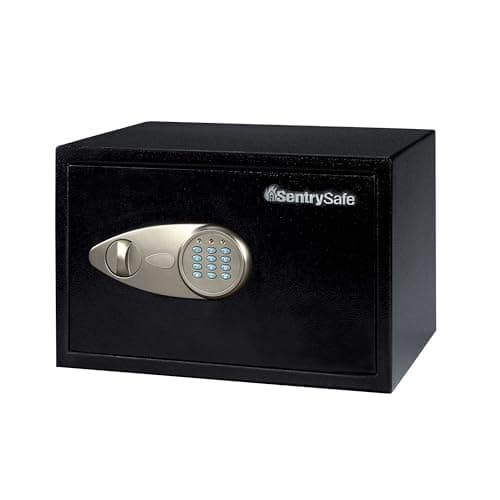 SentrySafe X055 A solid steel body with a digital keypad, two override keys and bolt-down hardware in the box, at 14.2 lb. The published 13.6 x 8.7-inch interior takes documents, a tablet and cash. | Best dorm safe overallAccess box | 6.6 /10 | $104.99Amazon |
| 2 | 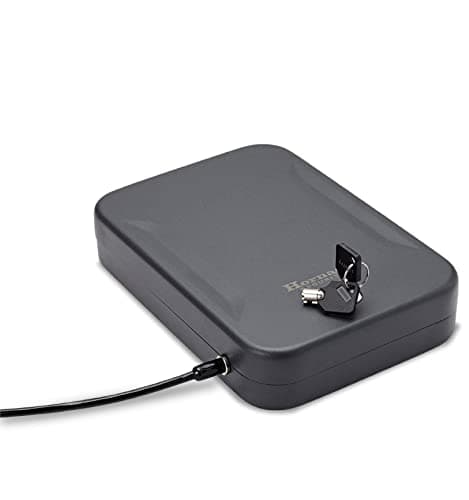 Hornady Lock Box XL (95210) 16-gauge steel, a plain barrel key with no batteries to die, and a 4-foot cable rated to 1,500 lb that Hornady says secures it to furniture. Nothing to program, nothing to forget. | Best anchor for the moneyAccess box | 6.5 /10 | $40.95Amazon |
| 3 | 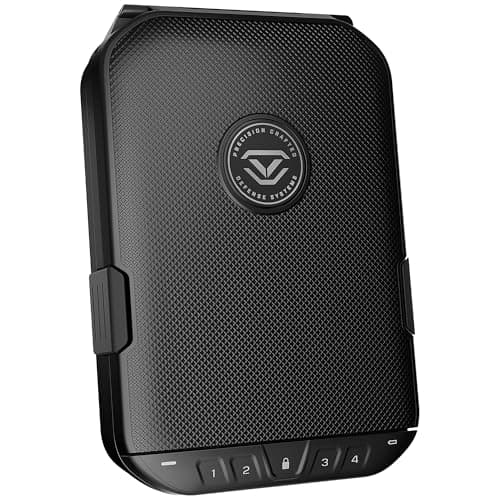 Vaultek LifePod 20 3.3 lb, a backlit keypad, a 48-inch cable and Velcro straps, and a micro-USB port that powers the lock if the 9V battery dies. No steel body: it is a polymer travel case. | Best for taking with youAccess box | 6.4 /10 | $169.99Amazon |
| 4 | 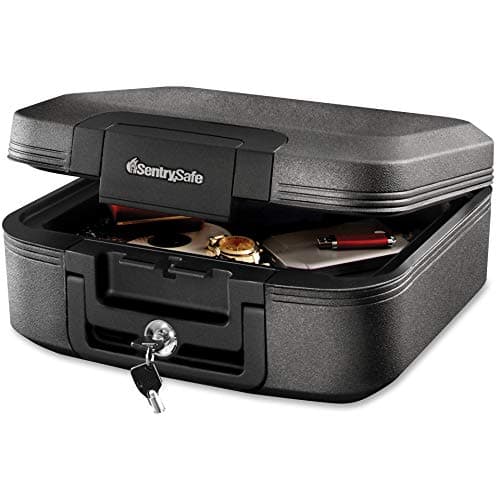 SentrySafe CFW20201 A UL Classified hour of fire protection and an ETL-verified 72 hours of flood protection, for 20 lb. The privacy key lock means it keeps curious hands out and nothing more. | Best fire protection for documentsFire chest | 6.3 /10 | $86.82Amazon |
#ad · Prices come live from Amazon, last checked October 19, 2026. Scores are ours, built from certifications, published specs and recall records. Photos are illustrative stock. Tap a row for the full write-up.
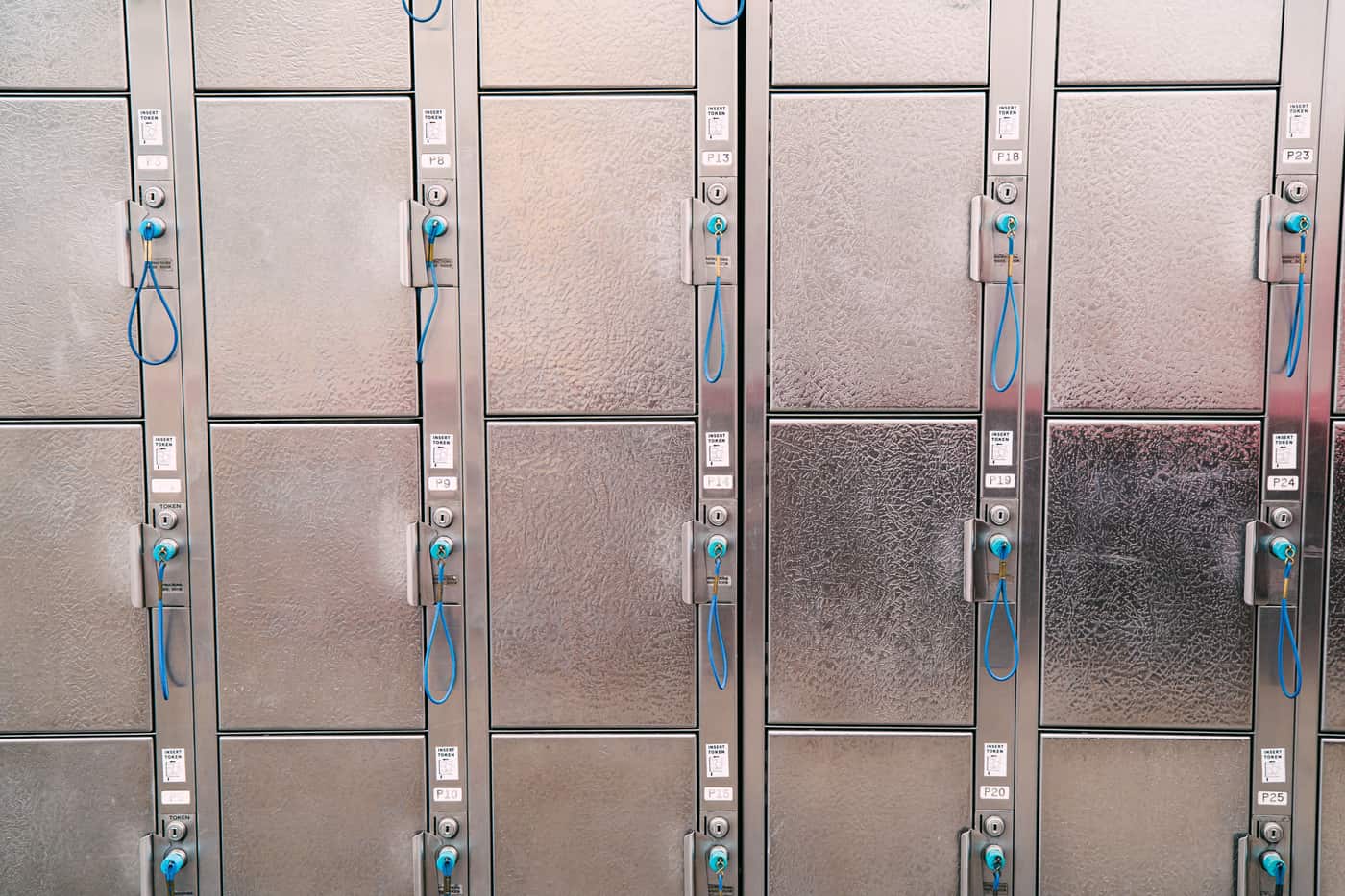
Dorm storage is a different problem from home storage, and it is worth saying why before recommending anything. You cannot drill the floor or the wall. The door is keyed by the institution and opened by maintenance, cleaners and resident staff. The room is shared, often with someone new each term, and in term time it stands empty for whole days with people walking past an unlocked door. Finally, everything has to leave again in June, in a car.
That rules out most of what we normally recommend. What is left is a small category where the security comes from a cable and a hiding place rather than from mass and concrete, so that is what this page ranks on.
You cannot drill, so the anchor is the product
How we ranked them
We use the published rubric at how we rate, which for access boxes weights access reliability 30 percent, construction and pry resistance 25, child-access standards 20, mounting 15 and support 10. For a dorm we gave mounting extra weight in the tie-breaks, and preferred locks that cannot strand you: a key, a mechanical combination, or a keypad with a published backup path. Every specification below is the maker's own, linked where it is used and checked 2026-10-10, with a dated CPSC recall search per brand on each card.
The picks compared
The pattern is clear once it is laid out. The X055 is the only pick with a solid steel body, a keypad and two override keys together. The Hornady Lock Box XL has 16-gauge steel and the best-documented cable. The LifePod 20 is not steel at all and is the one you would actually carry to a library or a summer sublet. The CFW20201 is the odd one out and the one most students actually need: it is a fire and water chest for paper, with a lock that only keeps a curious roommate out.
Anchoring without drilling: what actually works
- A bed frame leg or a radiator pipe. Pass the supplied cable around something structural and through the safe's cable point, not around a desk leg you could lift the whole safe off.
- Inside a locked wardrobe, cabled. Two barriers beats one, and it keeps the safe out of sight, which matters more than it should: most dorm theft is opportunistic.
- Bolted to furniture, if housing permits. Ask before you drill a university wardrobe. Where it is allowed, the X055's included hardware into the base of a built-in is the strongest option here.
- Never under the bed, uncabled. That is the first place anyone looks and the easiest thing to slide out.
A cable is a delay, not a barrier: bolt cutters beat all of these. The point is to make your room a slower target than the unlocked one down the corridor. Our bolt-down guide covers proper anchoring for when you move into a place you can drill.
The threat in a dorm is opportunity, not burglary
None of these products carries a UL burglary listing, and it would be strange if they did: the Residential Security Container standard is built around a timed attack with hand tools on a heavy container (see our UL RSC explainer). A dorm safe is defending against a different situation: a propped door, a five-minute window, someone who is not carrying tools. Against that, a locked steel box cabled to a bed frame and hidden in a wardrobe is genuinely effective, and a passport left in a desk drawer is genuinely not.
Fire and water in a dorm
Student housing has a disproportionate share of cooking fires and sprinkler incidents, and a sprinkler head discharging over your desk is a water event, not a fire one. That is the case for the CFW20201: it carries a UL Classified hour of fire protection and an ETL-verified 72 hours of flood protection, which is the longest water claim in our whole registry. FEMA's Emergency Financial First Aid Kit is the right checklist for what should be in it — and for keeping scans of those documents somewhere else entirely, which costs nothing. Our waterproof home safes page covers how these claims are written and verified.
The honest configuration for a student is often two containers: a steel box with a keypad for electronics, cash and keys, cabled and hidden; and a light fire-and-water chest for paper. Neither does the other's job.
Before you bring anything else to campus
Common mistakes
- Buying on steel and ignoring the cable. In a room you cannot drill, the attachment is the security.
- Choosing a keypad with no backup path. A dead battery in exam week is a bad week. Prefer an override key, a mechanical lock or a USB power port.
- Leaving it in plain sight. Concealment is free, and against opportunistic theft it works.
- Expecting a fire chest to stop theft, or a steel box to stop fire. They are different products with different ratings.
In detail
The picks, in full
Rank 1
Best dorm safe overall
SentrySafe X055
A solid steel body with a digital keypad, two override keys and bolt-down hardware in the box, at 14.2 lb. The published 13.6 x 8.7-inch interior takes documents, a tablet and cash.
EvidenceResearched
| Tier | Access box. Children and unauthorized hands. Not a determined burglar with tools. |
|---|---|
| Burglary rating | Not stated by the maker |
| Fire rating | None (maker lists security protection only) |
| Water rating | None |
| Body steel | Solid steel; gauge not published |
| Lock | Battery-powered digital keypad (1-8 digit code); 2 live-locking bolts |
| Backup entry | Two override keys |
| Bolt-down | Bolt-down hardware included |
| CA DOJ | California DOJ certified for firearm storage (maker states) |
| Capacity | 0.58 cu ft (maker-stated); interior 8.5 x 13.6 x 8.7 in (H x W x D) |
| Exterior dimensions | 8.7 x 13.8 x 10.2 in (H x W x D) |
| Weight | 14.2 lb |
| Recall check | Sep 19, 2026: No CPSC recall found for SentrySafe fire, water or security safes in a search of CPSC.gov recall notices. |
How the 6.6 score breaks down
- Access reliability evidence (30%)
- 7
- Construction & pry resistance (25%)
- 5
- Child-access standards (20%)
- 8.5
- Mounting (15%)
- 6.5
- Support & transparency (10%)
- 6
What the evidence supports
- Maker states California DOJ certification for firearm storage
- Override keys for a dead battery or forgotten code
- Bolt-down hardware included; 14 lb, fits a shelf or cabinet
Where it falls short
- No fire rating and no water rating
- No burglary rating; light enough to carry off unless bolted down
- Small 0.58 cu ft interior
Skip this if…
…you need any fire protection for documents; pair it with a fire chest or choose a fire safe
#ad · Price as of October 19, 2026 · Disclosure for the link to SentrySafe X055
Rank 2
Best anchor for the money
Hornady Lock Box XL (95210)
16-gauge steel, a plain barrel key with no batteries to die, and a 4-foot cable rated to 1,500 lb that Hornady says secures it to furniture. Nothing to program, nothing to forget.
EvidenceResearched
| Tier | Access box. Children and unauthorized hands. Not a determined burglar with tools. |
|---|---|
| Burglary rating | Not stated by the maker (no UL RSC listing cited) |
| Fire rating | Not stated by the maker |
| Body steel | 16-gauge steel housing |
| Lock | Steel barrel key lock, two keys included; no batteries |
| Backup entry | Not applicable: key lock with no electronics |
| Bolt-down | 4 ft steel security cable rated to 1,500 lb; maker says it secures to a vehicle seat or heavy furniture |
| CA DOJ | Listed on the CA DOJ roster as model '95210' |
| Capacity | Fits 1911-size pistols and 4-inch revolvers, maker-stated |
| Exterior dimensions | 10 x 7 x 2 in |
| Recall check | Sep 19, 2026: No CPSC recall found for Hornady RAPiD Safes or Hornady lock boxes in a search of CPSC.gov recall notices; Hornady's own product-recall page lists only ammunition recalls. |
How the 6.5 score breaks down
- Access reliability evidence (30%)
- 6
- Construction & pry resistance (25%)
- 6
- Child-access standards (20%)
- 8.5
- Mounting (15%)
- 6.5
- Support & transparency (10%)
- 5.5
What the evidence supports
- Key lock, so there are no batteries to drain in a parked car
- Cable rated to 1,500 lb secures to a vehicle seat or other stationary object, per Hornady
- Listed on California's roster
- 16-gauge steel housing
Where it falls short
- Key-only entry: no keypad or quick-access method
- A cable tether is less secure than a bolted-in vehicle safe
- No warranty terms on the product page
Skip this if…
…you want fast one-handed access; this box opens only with its key.
#ad · Price as of October 19, 2026 · Disclosure for the link to Hornady Lock Box XL (95210)
Rank 3
Best for taking with you
Vaultek LifePod 20
3.3 lb, a backlit keypad, a 48-inch cable and Velcro straps, and a micro-USB port that powers the lock if the 9V battery dies. No steel body: it is a polymer travel case.
EvidenceResearched
How the 6.4 score breaks down
- Access reliability evidence (30%)
- 7
- Construction & pry resistance (25%)
- 3.5
- Child-access standards (20%)
- 8.5
- Mounting (15%)
- 6
- Support & transparency (10%)
- 8
What the evidence supports
- Fits full-size handguns up to 9.25 inches long
- Keypad plus two backup keys and a micro-USB emergency power port
- Weather-sealed and floats, and Vaultek says it meets TSA guidelines
- Listed on California's roster
Where it falls short
- Not a steel box: Vaultek lists a proprietary material blend
- Battery-powered keypad, and Vaultek publishes no operating temperature range for a hot or cold car
- Cable tether only; no bolt-down holes are listed
Skip this if…
…you want a steel safe fixed to the vehicle; the LifePod is a cable-tethered case.
#ad · Price as of October 19, 2026 · Disclosure for the link to Vaultek LifePod 20
Rank 4
Best fire protection for documents
SentrySafe CFW20201
A UL Classified hour of fire protection and an ETL-verified 72 hours of flood protection, for 20 lb. The privacy key lock means it keeps curious hands out and nothing more.
EvidenceResearched
| Tier | Fire chest. Heat for its rated time. Burglary resistance is usually minimal. |
|---|---|
| Burglary rating | Not stated; maker describes a privacy key lock |
| Fire rating | UL Classified: 1 hr at up to 1,700°F (UL-classified per maker) |
| Water rating | ETL-verified: flood protection up to 72 hr (Intertek/ETL per maker) |
| Body steel | Resin-cased fire insulation (no steel body) |
| Lock | Tubular key lock |
| Capacity | 0.28 cu ft (maker-stated); interior 4.4 x 12.8 x 8.5 in (H x W x D); letter/legal fit not stated |
| Exterior dimensions | 6.6 x 15.4 x 14.3 in (H x W x D) |
| Weight | 20 lb |
| Warranty | Limited one-year manufacturing warranty plus Limited Lifetime After-Fire Replacement Program |
| Recall check | Sep 19, 2026: No CPSC recall found for SentrySafe fire, water or security safes in a search of CPSC.gov recall notices. |
How the 6.3 score breaks down
- Fire rating evidence (35%)
- 9
- Water rating evidence (15%)
- 8.5
- Burglary resistance (20%)
- 1.5
- Lock & entry (15%)
- 3.5
- Capacity & fit (10%)
- 6.5
- Support & transparency (5%)
- 7
What the evidence supports
- UL-classified for a full hour at 1,700°F, double the CHW20221 30-minute rating
- ETL-verified 72-hour flood protection
- Carry handle; about 20 lb
Where it falls short
- Privacy lock only: offers no resistance to someone taking the chest
- Small 0.28 cu ft interior; no room for hanging files
- One-year manufacturing warranty
Skip this if…
…you need to store file folders or keep the contents from being carried off
#ad · Price as of October 19, 2026 · Disclosure for the link to SentrySafe CFW20201
How to buy a dorm safe
1. Decide what is going in it
Passport, documents and cash point you at a fire-and-water chest. A laptop, a tablet, keys and medication point you at a steel box with a keypad. Many students want both, and the combined weight is still under 35 lb.
2. Check the published interior, not the cubic feet
Capacity here runs from 0.28 to 0.58 cubic feet, which means nothing until you compare the interior dimensions against the thing you want to lock up. Measure it first.
3. Plan the anchor point before you order
Look at the room: a bed frame leg, a radiator, a built-in wardrobe base. If there is no structural anchor, a hidden, cabled box in a locked wardrobe is the realistic plan.
4. Pick a lock that cannot lock you out
Every pick here has either a key, a mechanical latch or a published backup power route. Read electronic vs mechanical safe locks before deciding a keypad is automatically better.
5. Think about move-out
Whatever you buy has to go home in a car twice a year. That is a genuine argument for the 3.3-lb polymer case over a 20-lb chest, as long as you are honest that you are trading steel for portability.
How we scored this
Every pick, checked against the paperwork
Here is exactly what goes into a score: whether an independent lab listed the safe (UL for burglary under UL 1037, UL or Intertek for fire), the maker's published steel, lock and bolt-down specs, the owner's manual, a dated CPSC recall search, and a public rubric applied the same way to every safe. Every figure links to where it came from, so you can confirm the pick in a couple of clicks and buy with confidence.
Scores are our editorial judgment of that documented evidence. Commissions never set a score or decide a pick. The rubric and its weights are published.
Corrections & updates
- First published. Ranked on how each product anchors when drilling is not permitted, with the published cable ratings and backup-entry routes weighted ahead of steel thickness.
Questions
Frequently asked
Can you have a safe in a dorm room?
What size safe is best for a dorm room?
How do you secure a safe in a dorm without drilling?
Should a student safe be fireproof?
Keep reading
Related on Bolt & Vault
- Best waterproof home safesHow water claims are written, and which ones a lab verified.
- Best fireproof safes under $100The document-chest bracket, where real UL ratings are affordable.
- How to choose a home safeThe full decision for when you move somewhere you can drill.
- Best portable gun safesThe same cable-and-carry logic, for firearms away from home.
- What to keep in a fireproof safeWhat belongs in the paper chest, and what should live elsewhere.
Receipts
Sources
- SentrySafe — X055 product page, steel body, keypad and override keys (checked 2026-10-10)
- Hornady Security — Lock Box XL product page, 16-gauge steel and 1,500 lb-rated cable (checked 2026-10-10)
- Vaultek — LifePod 20 product page, weight, cable, straps and USB backup power (checked 2026-10-10)
- SentrySafe — CFW20201 product page, UL fire classification and ETL flood verification (checked 2026-10-10)
- Intertek — ETL Verified mark, what a verified performance claim covers
- FEMA — Emergency Financial First Aid Kit (EFFAK): document checklist (PDF)
- CPSC — recall database searched per brand on this page
Every figure above is traceable. Ratings come from the listing body or the maker's own spec pages (linked on every product), recall status from dated CPSC searches, and law summaries from official sources. Prices come live from Amazon so the number you see is the number you pay. Read the full method.