Handgun & Quick-Access Safes · Guide
Are biometric gun safes reliable? What the recalls and manuals show
A fingerprint reader can fail in two ways: it can refuse you, or it can let the wrong person in. The second failure is the one behind a string of federal recalls since 2023.
By Mike M.Updated Researched, not lab-tested
#adReader-supported: we may earn a commission if you buy through our links, at no extra cost to you. It never decides a ranking. How we rate · Disclosure
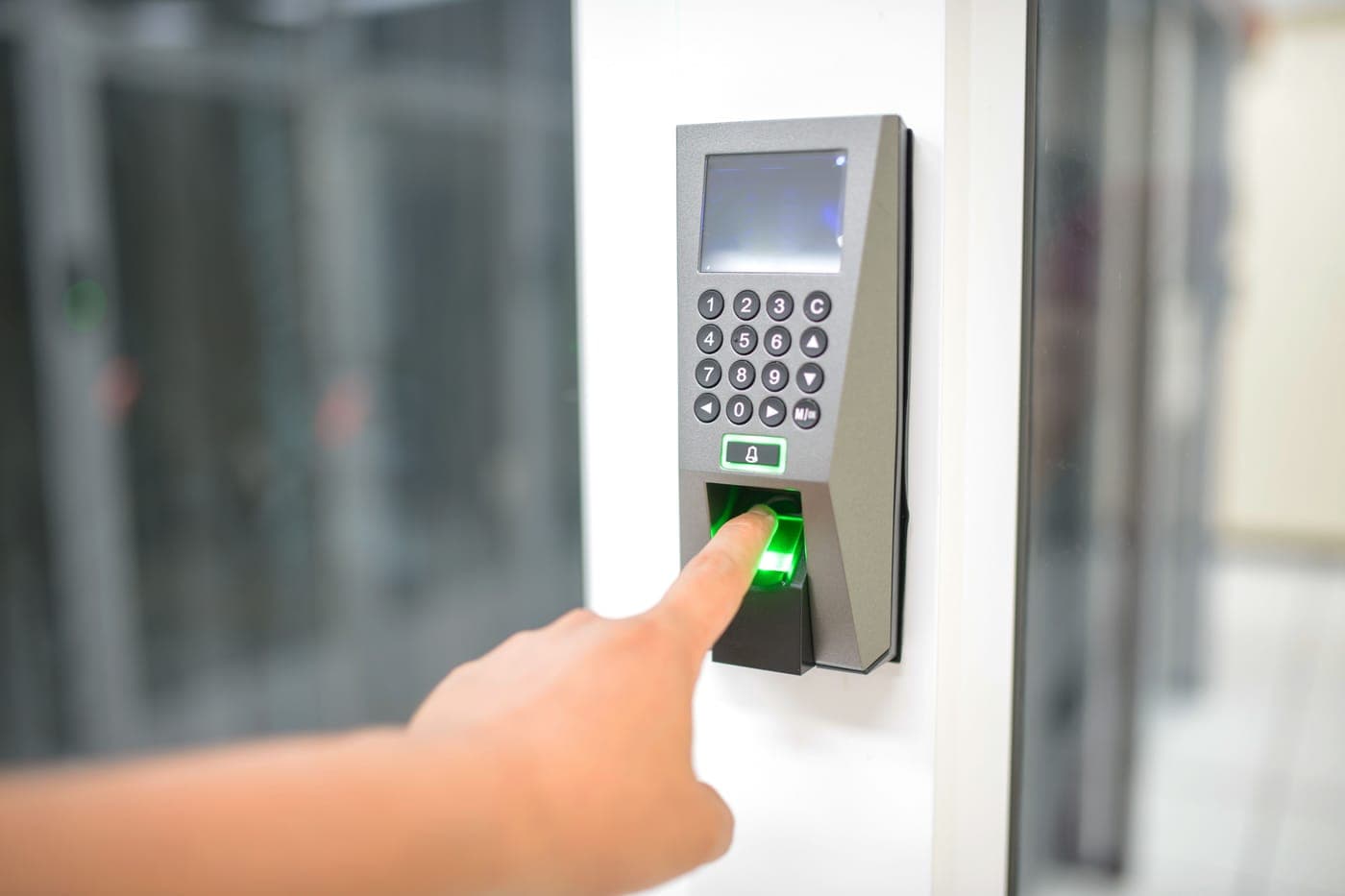
Two ways a fingerprint safe can fail
When people ask whether biometric gun safes are reliable, they usually mean the first failure: you press your finger and the safe will not open. That is an inconvenience with a clear fix, a keypad or key backup. The second failure is worse and harder to notice. The reader opens for a finger it was never taught, and the owner has no idea until someone else is holding the gun.
We have not tested any fingerprint reader ourselves. Everything on this page comes from U.S. Consumer Product Safety Commission (CPSC) recall notices and the owner's manuals and support pages the makers publish, each linked where we use it.
The recall record: what CPSC has found
Since October 2023, CPSC has announced a series of recalls of biometric gun safes. The hazard statement is nearly word for word the same each time: the biometric lock "can be opened by unauthorized users, posing a serious injury hazard and risk of death."
| Firm (as named by CPSC) | Date | Units | What CPSC reported | Remedy |
|---|---|---|---|---|
| Fortress Safe | Oct 19, 2023 | About 61,000 | 39 reports of safes accessed by unpaired fingerprints; a lawsuit alleging a 12-year-old boy died from a firearm obtained from one of the safes | Replacement |
| Bulldog Cases | Feb 22, 2024 | About 33,500 | Four reports of the safe being opened by an unauthorized user; no injuries | Replacement or repair |
| Awesafe | Feb 22, 2024 | About 60,000 | 71 incidents of safes opened by unauthorized users when the biometric lock failed; no injuries | Replacement |
| SA Consumer Products (Sanctuary, Sports Afield) | Jun 6, 2024 | About 133,370 | 77 reports of safes opened by unauthorized users; no injuries | Stop using the biometric feature, remove the batteries, use the key; free repair kit |
| Stack-On (a warning, not a recall) | Jan 30, 2025 | About 183,000 | Three incidents of safes opened with unpaired fingerprints, including by children; a 5-year-old required surgery after using the biometric feature to reach a firearm | CPSC urges owners to stop using the biometric feature and use only the keys; the company refused an acceptable recall |
| BBRKIN and MouTec | Jul 9, 2026 | 9,100 | No incidents reported | Stop using the biometric feature, remove the batteries, use the key; free repair kit |
Two things stand out. First, these are not obscure products: CPSC lists sales through Bass Pro Shops, Cabela's, Walmart, Costco and Amazon, among others. Second, the Stack-On warning says the programming feature "can fail without consumers realizing" the contents can be reached. You cannot rely on noticing the fault yourself.
None of these brands is in our product registry; we excluded Stack-On after the CPSC warning. A CPSC recall search we ran on September 19, 2026 found no recall for Vaultek safes or SentrySafe pistol safes, the brands we recommend below. A clean record today is not a guarantee, which is why the monthly routine further down includes a recall check.
Why readers refuse the right finger
The everyday failure, a reader that will not recognize you, is mostly about the finger and the enrollment. Vaultek's support page for its 10 and 20 Series is blunt about it: "Excessive moisture, lotions, or dirt will affect your fingerprint and may cause inaccurate sensor reading." The same page explains that the reader works best on the core of the print, where most of the detail is, and that a finger enrolled at one angle may not match when it lands at another.
Common causes, from the makers' guidance and the physics of a small sensor:
- Wet, sweaty, lotioned or dirty fingers (named by Vaultek).
- A finger placed off-center or at a very different angle than it was enrolled.
- Too few enrolled variations of the finger, which Vaultek addresses by suggesting you enroll the same print four or five times.
- A finger with less surface to read; Vaultek suggests trying a thumb because it has more surface area.
- Low batteries. SentrySafe's QAP2BLX owner's manual lists a separate light pattern for low power, so check the battery before blaming the reader.
Reader style matters too. Vaultek's readers take a placed finger. SentrySafe's QAP2BLX manual refers to a fingerprint "swipe" and points owners to its scanner-tips section when a swipe will not open the safe. Learn the motion your model expects before you rely on it.
How to enroll fingerprints so the reader works
Enrollment steps differ by model, so follow your manual for the button sequence. The principles below come from Vaultek's published guidance, with our notes on setting up a household safely.
- Start with clean, dry hands. Moisture, lotion and dirt affect the read, per Vaultek, and a poor enrollment scan becomes a poor template.
- Enroll the administrator prints first, and keep them adult. On the Vaultek 10 and 20 Series, the first two fingerprints are administrative prints needed to add users 3 through 20.
- Center the core of the print. Vaultek says to place "the core of the fingerprint flat over the center of the scanner."
- Rotate slightly between scans. Each Vaultek print takes five registration scans. Vaultek says to "rotate your finger slightly between registration scans to store print variations for increased accuracy."
- Enroll your best finger more than once. If a finger reads poorly, Vaultek suggests programming the same print four or five times, or switching to a thumb.
- Enroll a finger on each hand. Our suggestion: if one hand is injured, full or in a cast, the other can still open the safe.
- Test it the way you will use it. Open the safe repeatedly with each enrolled finger, in the lighting and position where the safe will live.
- Test that it refuses the wrong finger. Our suggestion, given the recall record: have an adult whose prints are not enrolled try several times. The safe should refuse every attempt, and on most models it will lock out after repeated failures.
Never enroll a child's fingerprint, and remove the prints of anyone who should no longer have access using the delete procedure in your manual.
What to look for: the backup is the real safety feature
A fingerprint reader is a convenience layered on top of a lock. What makes a biometric safe dependable is everything behind the reader:
- A keypad code and a manual key. Both, not one. A keypad covers a failed read; a key covers a dead battery or a failed keypad.
- A documented low-battery warning. Vaultek says a V20i warns with a red blinking key and rapid beeps; SentrySafe's QAP2BLX manual describes a yellow light that blinks three times. SentrySafe also says to use AA alkaline batteries, not rechargeables.
- A lockout after repeated wrong tries. Vaultek's 10 and 20 Series stop accepting entries for four minutes after six wrong scans or codes; the QAP2BLX manual describes a two-minute wait after five wrong entries, or the owner can open it with the override key.
- A way to bolt it down. A small safe that can be carried off is only as good as the room it is in.
- A clean recall history. Search the brand on CPSC before you buy.
If the reader is ever the only thing between you and the contents, for example because the keys are lost and the battery is dead, use the recovery steps in your manual, then contact the manufacturer or a licensed locksmith. We do not publish ways around a safe's lock.
Our picks for this
Biometric safes with backups you can trust
Each has a keypad and a manual key behind the fingerprint reader, a California roster listing or certification statement, and no CPSC recall in our September 2026 search. None is UL burglary-rated; all three are access boxes.
 Stock photo
Best for several handguns with fingerprint entry
Vaultek MX Series
Access box8.0/10Four ways in (fingerprint, keypad, Nano Key, two manual keys), a 14-gauge body and 12-gauge door on Vaultek's spec sheet, and room for up to eight handguns. Built to stay plugged in.
Check price · Amazon#ad · Price set by Amazon · Disclosure for the link to Vaultek MX Series
- Stock photo
Best compact biometric safe for two pistols
Vaultek 20 Series V20i
Access box7.3/10The compact option: fingerprint, keypad and keys, a documented low-battery warning, a four-minute lockout after six wrong tries, and a plug-in fallback if the keys are lost and the battery dies.
Check price · Amazon#ad · Price set by Amazon · Disclosure for the link to Vaultek 20 Series V20i
- Stock photo
Best biometric safe for two pistols on a shelf
SentrySafe QAP2BLX
Access box7.0/10A two-pistol swipe reader with a keypad and override key; the manual documents a low-battery light and a lockout after five wrong entries. SentrySafe does not publish the steel gauge.
Check price · Amazon#ad · Price set by Amazon · Disclosure for the link to SentrySafe QAP2BLX
Plug-in or batteries: how biometric safes stay powered
A fingerprint reader draws power every time it wakes, so the power design is part of reliability. The three picks above take different approaches, all documented by their makers:
- Built to stay plugged in. Vaultek lists plug-in power as required for the MX Series, with four AAA batteries as backup. That suits a safe on a dresser or closet shelf near an outlet.
- Battery first, with a plug as the fallback. The V20i runs on three AAA batteries for about a year, per Vaultek, and can be plugged in if the batteries die and the keys are lost.
- Battery only. The SentrySafe QAP2BLX runs on four AA alkaline batteries, and its manual says not to use rechargeable or other non-alkaline batteries.
A plugged-in safe never surprises you with a flat battery, but it needs an outlet within reach and a cord you can route neatly. A battery safe can go anywhere, but it depends on you noticing the warning. Either works when the manual key is kept somewhere you can reach and a child cannot.
If you already own a biometric safe
- Find the brand and model number. Check the labels on the safe and the owner's manual.
- Check it against CPSC. Search the brand on CPSC's recall page and compare model numbers with any notice you find. CPSC notices describe the affected products and, where there is a remedy, how to get it.
- If it is covered, follow the notice today. Several of the notices tell owners to stop using the biometric feature, remove its batteries and use only the key until a repair or replacement arrives.
- If it is not covered, test it anyway. Confirm an unenrolled adult finger is refused, re-enroll your own prints using the steps above if reads are unreliable, and check the low-battery signal.
- Replace it if the backups are weak. A safe whose only way in is the reader, or whose key has been lost, is due for replacement.
A monthly routine that keeps it reliable
- Open the safe once with each enrolled finger, once with the keypad code and once with the key.
- Watch for the low-battery signal, and replace batteries on the maker's schedule even if none appears.
- Confirm the backup key is still where you left it and still out of children's reach.
- Check that the safe is still firmly bolted or cabled in place.
- Search the brand name on CPSC's recall page, and register the safe with the maker if you have not.
Registering can matter for support too: Vaultek adds a year to its manufacturer's warranty on metal safes when you register.
Is a biometric gun safe worth it?
For one or two adults who want fast access without remembering a code, yes, if the safe has a keypad and key backup and the brand has a clean recall record. The reader saves seconds; the backups are what make it safe to depend on.
It is not worth it if the fingerprint reader is the only way in, if the maker publishes no low-battery warning, or if the brand appears on a CPSC recall or warning you have not resolved. If your hands are often wet, gloved or worn, or you simply distrust electronics, a keypad or a mechanical push-button lock is the better tool. Our biometric vs keypad vs RFID comparison walks through each lock type, and our best mechanical pistol safes ranking covers the no-battery options. When you are ready to buy, our best biometric gun safes ranking scores fingerprint models on the backups described here. For the bigger picture on lock types in full-size safes, see our electronic vs mechanical locks explainer.
How we scored this
Safes we claim to have lab-tested: 0
Plenty of sites say they drilled, burned and flooded every safe they list. We didn't, and we say so. What we do instead: check whether an independent lab listed the safe (UL for burglary under UL 1037, UL or Intertek for fire), read the maker's published steel, lock and bolt-down specs, search CPSC recalls, and score every pick on a public rubric. Every figure links to where it came from.
Scores are editorial judgments from that documented research, not lab results. Commissions never set a score or decide a pick. The rubric and its weights are published.
Questions
Frequently asked
Are biometric gun safes reliable?
Is there a recall on biometric gun safes?
Why won't my biometric gun safe read my fingerprint?
How do you open a biometric gun safe when the battery is dead?
Is a biometric gun safe worth it?
Keep reading
Related on Bolt & Vault
- Best biometric gun safesFingerprint safes ranked on their backup entry.
- Biometric vs keypad vs RFIDWhich lock fits your hands, household and habits.
- Best mechanical pistol safesNo batteries, no reader: push-button pistol boxes.
- Electronic vs mechanical safe locksHow lock types hold up over years of use.
- Vaultek vs Hornady RAPiD SafeFingerprint vs RFID, model by model.
Receipts
Sources
- CPSC: Fortress Safe biometric gun safe recall, October 19, 2023
- CPSC: Bulldog Cases biometric gun safe recall, February 22, 2024
- CPSC: Awesafe biometric gun safe recall, February 22, 2024
- CPSC: SA Consumer Products (Sanctuary, Sports Afield) biometric gun safe recall, June 6, 2024
- CPSC: Warning on Stack-On biometric gun safes, January 30, 2025
- CPSC: BBRKIN and MouTec biometric gun safe recall, July 9, 2026
- CPSC: Recalls and product safety warnings search
- Vaultek: 10/20 Series Essential support page (enrollment tips, sleep mode, battery warning)
- SentrySafe: QAP1BLX/QAP2BLX owner's manual (troubleshooting, battery, lockout)
We don't lab-test safes and we don't pretend to. Ratings come from the listing body or the maker's own spec pages (linked on every product), recall status from CPSC searches, and law summaries from official sources. Prices are set by Amazon and change often, so we don't print them. Where a figure isn't published, we say so. Read the full method.